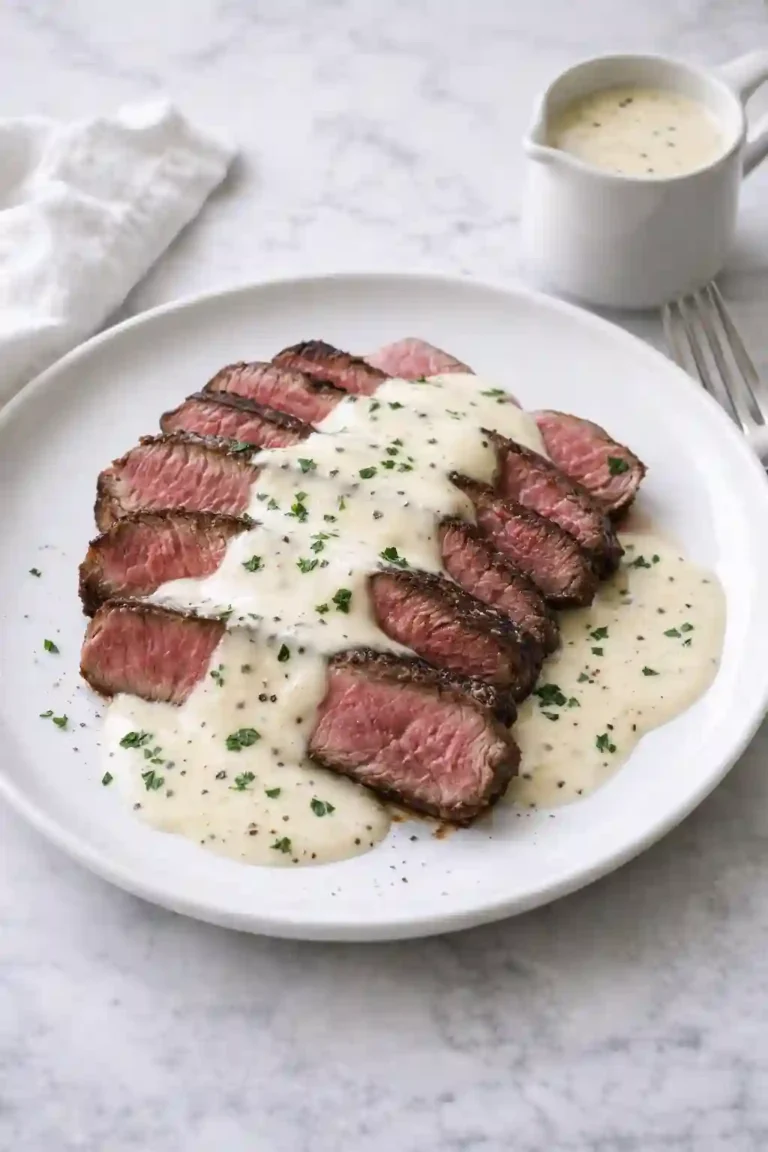
The moment warm garlic hits butter and starts smelling sweet instead of sharp, you already know this garlic cream sauce is headed somewhere good.
If you need a quick sauce for steak but want something flexible enough for chicken, salmon, pasta, or roasted vegetables too, this is the one I make on repeat. It’s rich without being heavy-handed, deeply savory, and ready in about 15 minutes.
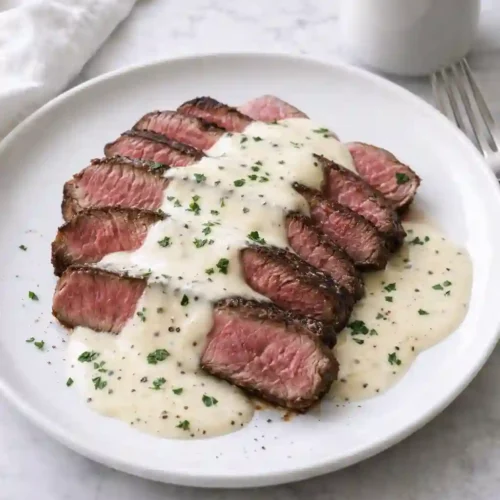
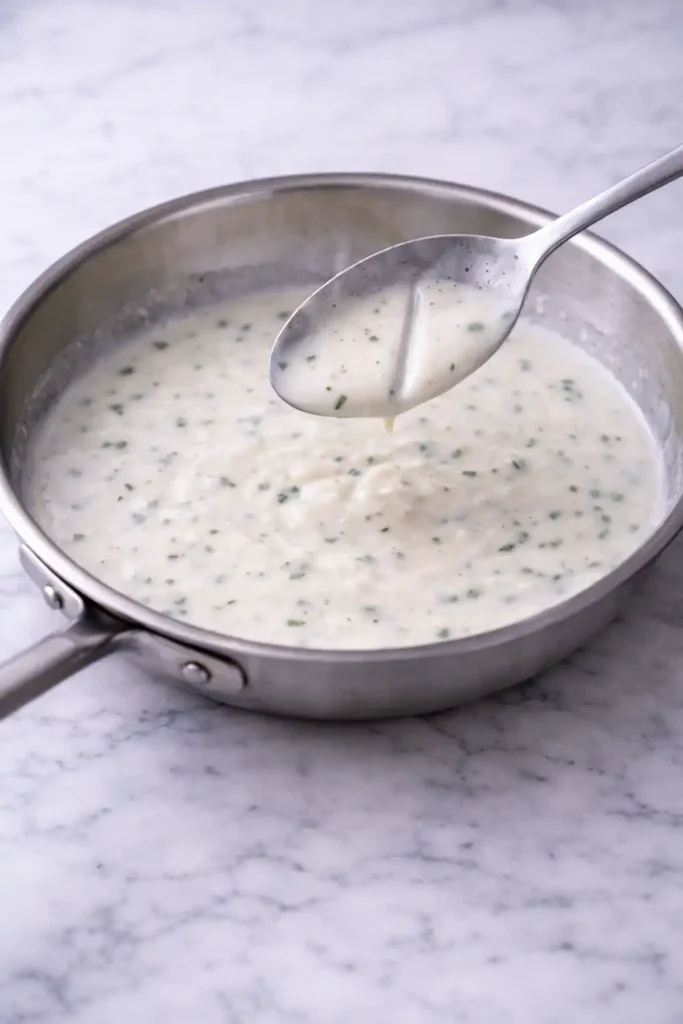
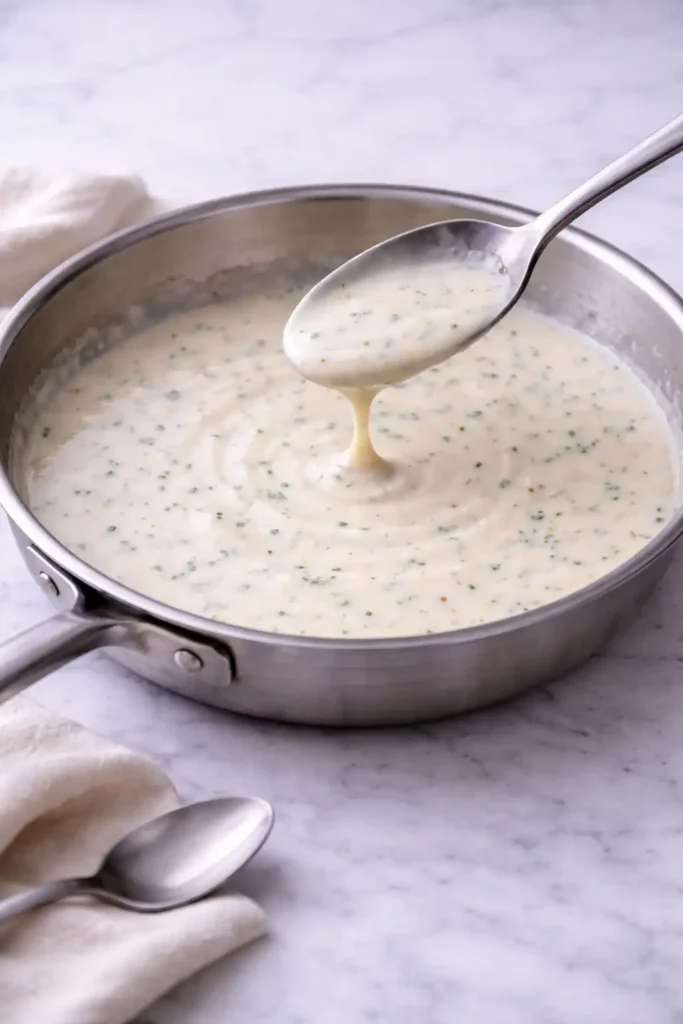
What I love most is the texture. When it’s made right, the sauce turns pale ivory, glossy, and just thick enough to drape over the back of a spoon instead of sliding off like cream soup.
Don’t rush it at the end. That gentle simmer is what gives you the difference between decent and the kind of garlic cream sauce people remember.
Why You’ll Love This Garlic Cream Sauce
- It comes together in about 15 minutes in one skillet, which makes it realistic even on a busy night.
- The texture is silky and spoon-coating, so it clings beautifully to steak, chicken, salmon, or pasta instead of pooling at the bottom of the plate.
- You only need a handful of easy-to-find ingredients like butter, garlic, heavy cream, Parmesan, and black pepper.
- It’s built as a master sauce, so you can keep it a little thicker for steak or loosen it with a splash of pasta water or stock for noodles and chicken.
- The garlic flavor is mellow, rich, and round because it’s softened gently in butter instead of browned into bitterness.
- A little Parmesan gives the sauce body and depth without turning it into a gluey cheese sauce.
- It tastes like the kind of skillet sauce you’d expect at a steakhouse, but it’s simple enough to pull off in a home kitchen.
Key Ingredients
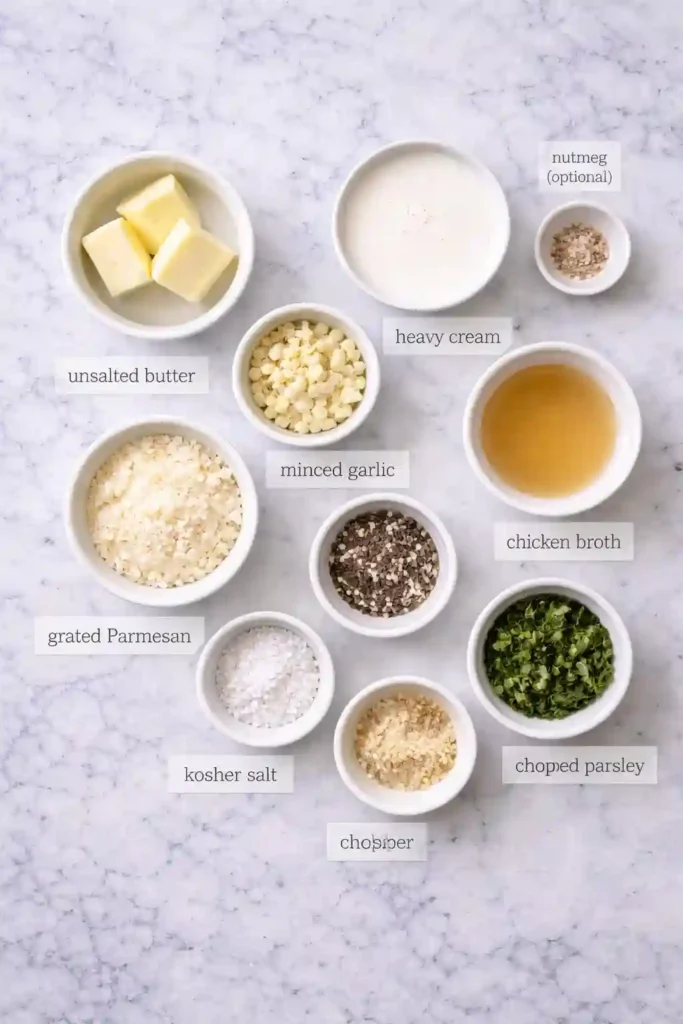
This sauce is short on ingredients, which means every one of them matters. There’s nowhere to hide here, so I use the good butter, fresh garlic, and real Parmesan.
Butter gives the sauce its savory base and helps soften the garlic without scorching it. You want that buttery aroma to smell warm and nutty, not toasted brown.
Fresh garlic is the backbone. Minced garlic melts into the sauce and gives it that unmistakable steakhouse smell. Jarred garlic can work in a pinch, but the flavor lands flatter and a little dull.
Heavy cream is what gives this garlic cream sauce its velvety body. Use heavy cream, not half-and-half, if you want a sauce that reduces smoothly and stays stable.
Chicken broth adds savory depth and keeps the sauce from tasting one-note. It also helps the cream feel less blunt and more balanced.
Parmesan cheese brings salt, nuttiness, and a little natural thickening power. Grate it finely so it disappears into the sauce instead of clumping.
Black pepper and parsley finish the sauce. The pepper sharpens the richness, and the parsley keeps the final spoonful from feeling too heavy.
Ingredient Notes & Substitutions
You can swap the chicken broth for vegetable broth if you want the sauce for vegetables or pasta. For steak, I sometimes use a light beef stock when I want a darker, slightly deeper finish.
You can use finely grated Pecorino Romano instead of Parmesan, but go lighter on the salt because Pecorino hits harder. If you skip the cheese entirely, the sauce will still work, just with a looser body and a cleaner cream finish.
Need a gluten-free version? Good news: this sauce is naturally gluten-free as long as your broth and cheese are checked for additives.
You can use dried parsley, but the finish won’t be as fresh. Cut the amount by at least half. For an unexpected swap that actually works, try a tiny spoonful of Dijon mustard in place of part of the cheese when serving the sauce with steak. It won’t taste mustardy. It just gives the cream more backbone.
Equipment You’ll Need
- Small skillet or sauté pan: A light-colored pan helps you see the garlic before it turns too dark.
- Whisk: Important for keeping the cream smooth as the cheese melts in.
- Microplane or fine grater: Finely grated Parmesan melts faster and more evenly than pre-shredded cheese.
- Garlic press or chef’s knife: The smaller the garlic pieces, the more evenly they soften into the sauce.
How to Make Garlic Cream Sauce
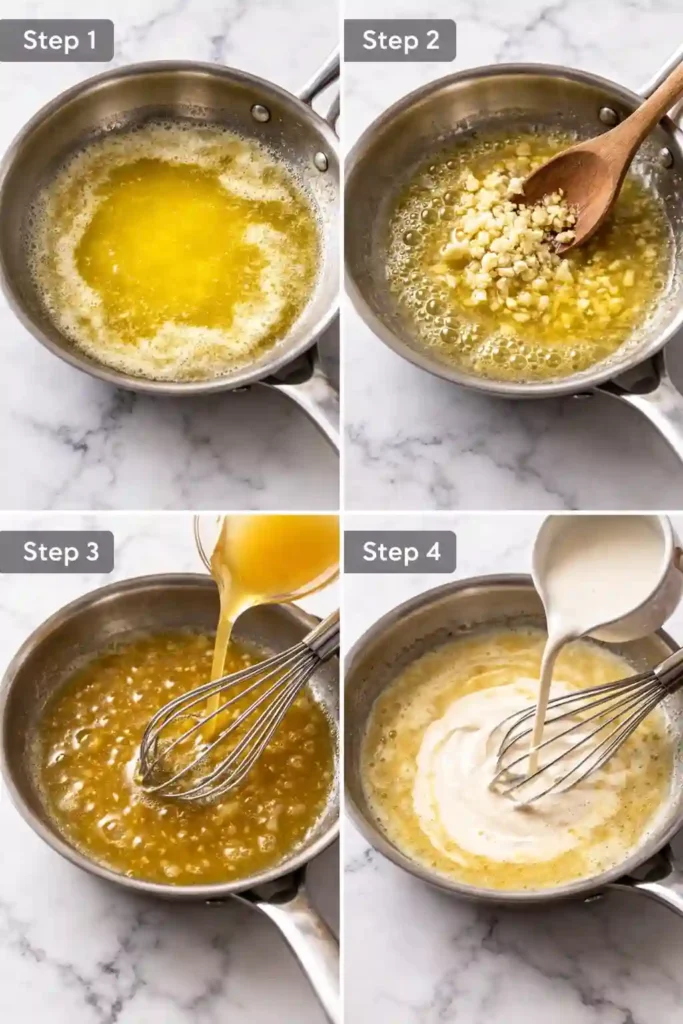
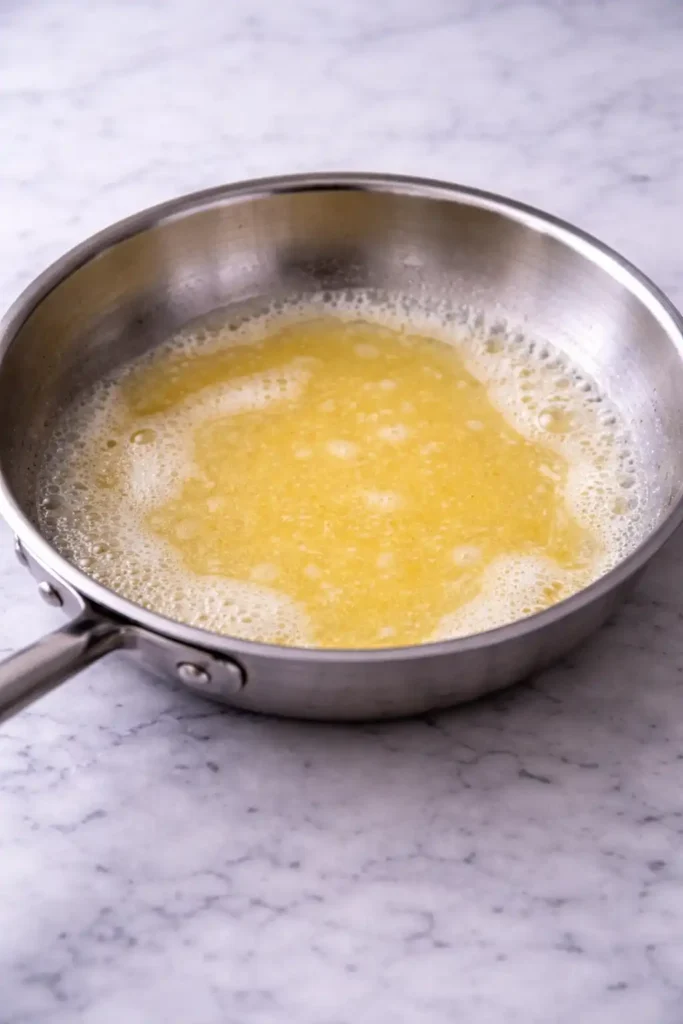
- Melt the butter. Place a small skillet over medium-low heat and add 2 tablespoons unsalted butter. Once melted, the butter should look glossy and fluid with a soft foam around the edges, not browned or sputtering. This takes about 1 minute.
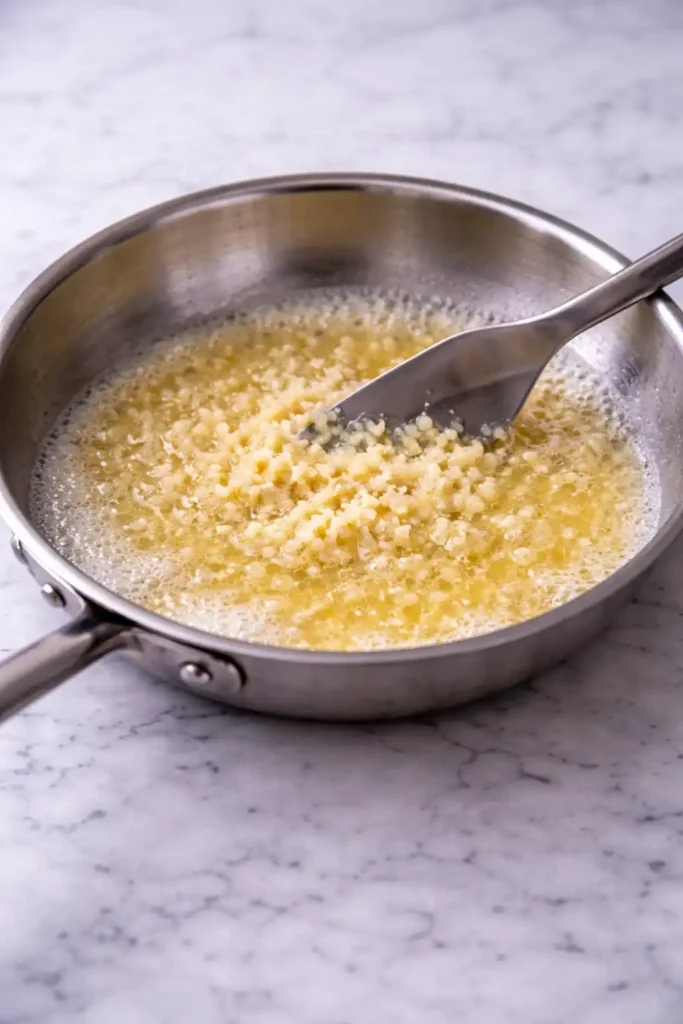
- Soften the garlic. Add 4 minced garlic cloves and cook for 30 to 45 seconds, stirring constantly. You’re looking for a fragrant, mellow smell and tiny bubbles around the garlic. If it starts browning, pull the pan off the heat for a few seconds. Bitter garlic will haunt the whole sauce.
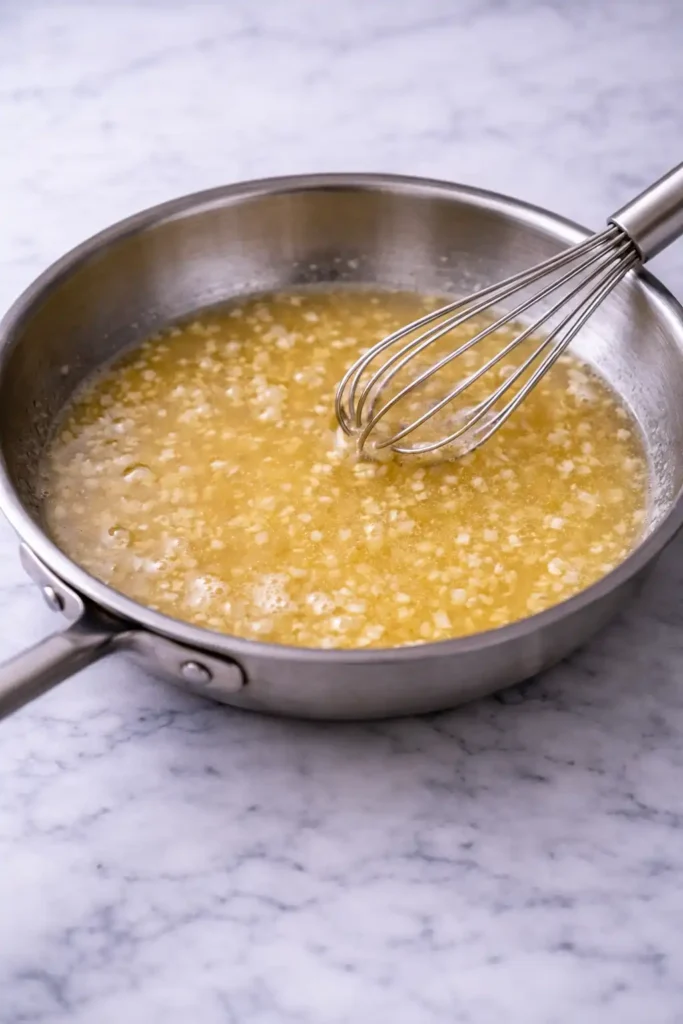
- Add the broth. Pour in 1/2 cup chicken broth (120 ml) and whisk. Let it simmer for 1 to 2 minutes until it smells savory and reduces slightly. The liquid should look a little less watery and leave a thin film on the pan as you stir.
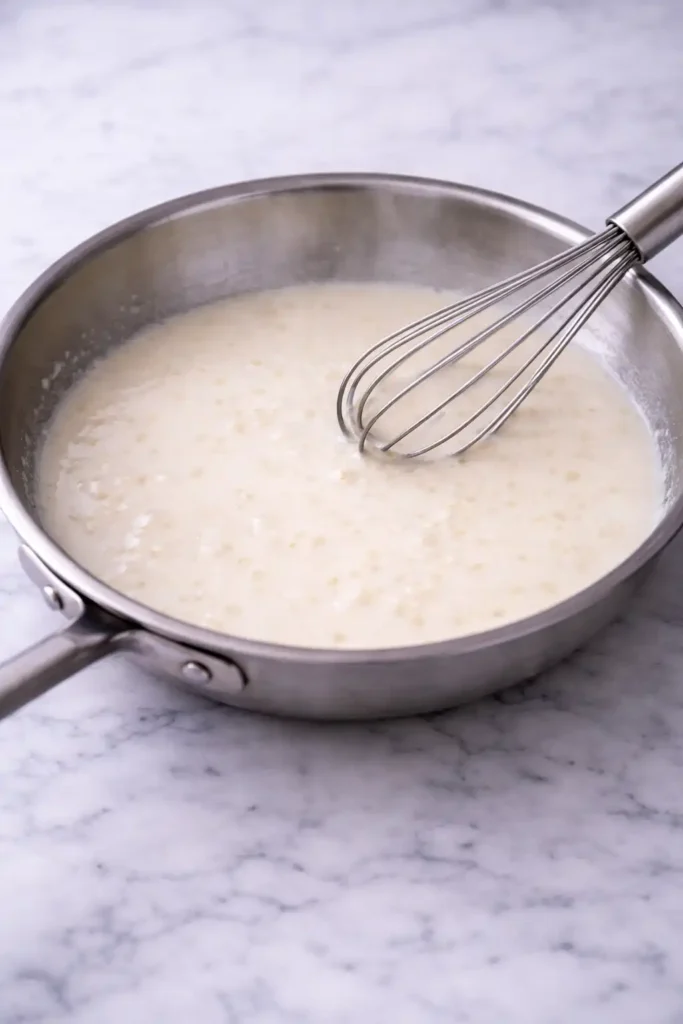
- Pour in the cream. Lower the heat and add 1 cup heavy cream (240 ml), whisking as you pour. This is the moment most people ruin the sauce by cranking the heat. Keep it gentle. The cream should steam lightly, never boil hard. Simmer for 3 to 4 minutes until it looks silky and just starts to thicken.
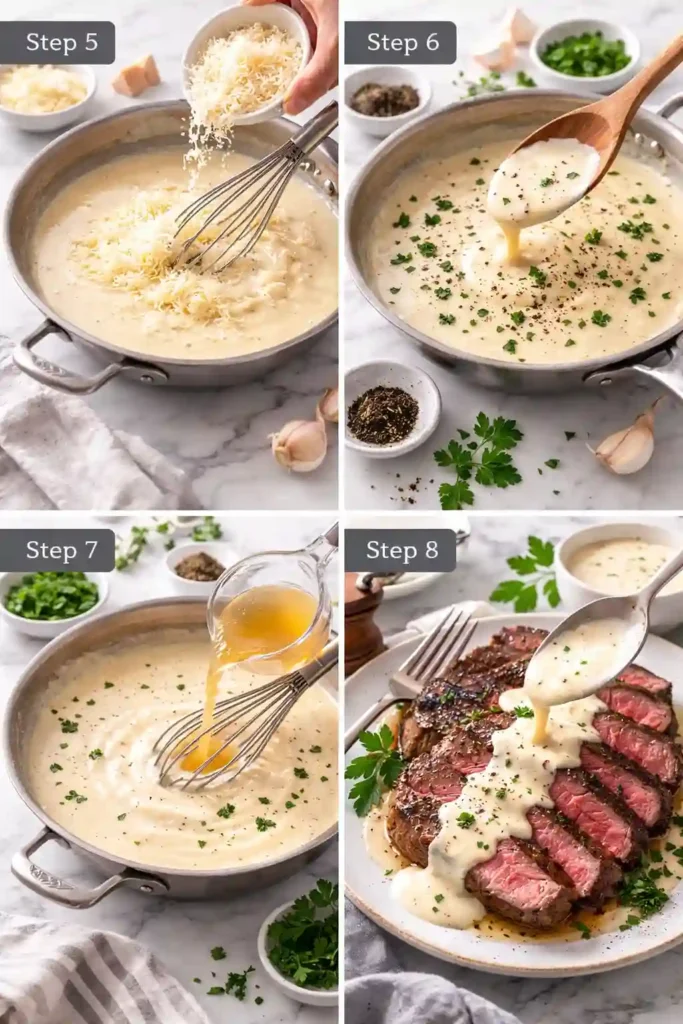
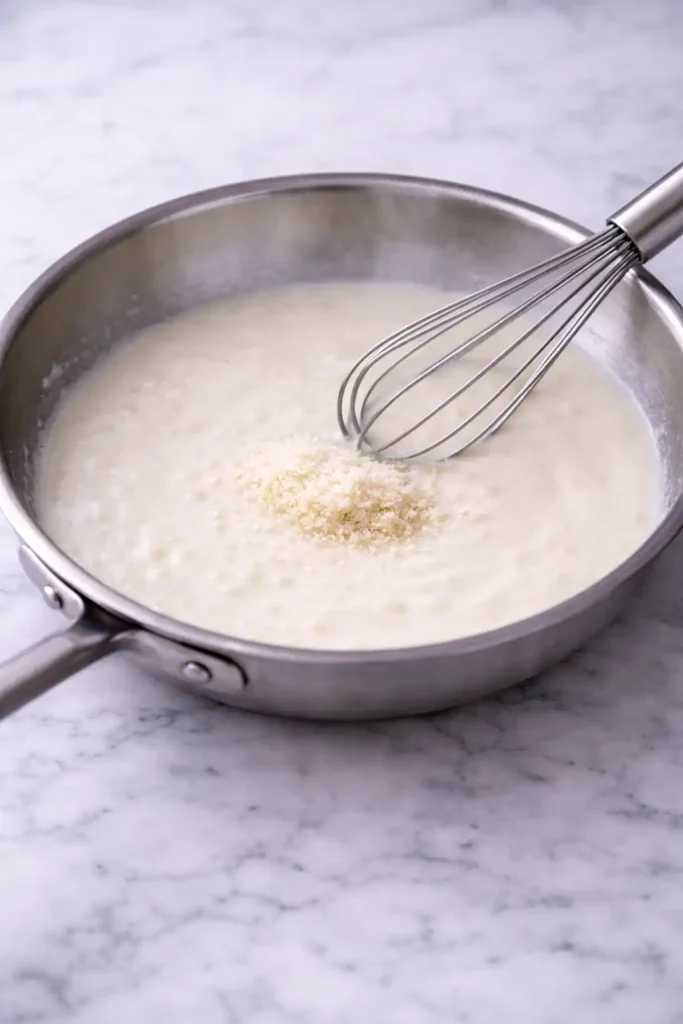
- Add the Parmesan. Sprinkle in 1/3 cup finely grated Parmesan (about 30 g) a little at a time, whisking between additions. The sauce should turn smoother and slightly thicker with no visible cheese threads or clumps.
- Season and finish. Add 1/4 teaspoon kosher salt, 1/4 teaspoon black pepper, and 1 tablespoon chopped parsley. Simmer for another 1 to 2 minutes until the sauce coats the back of a spoon. Drag your finger through the spoon. If the line holds, you’re there.
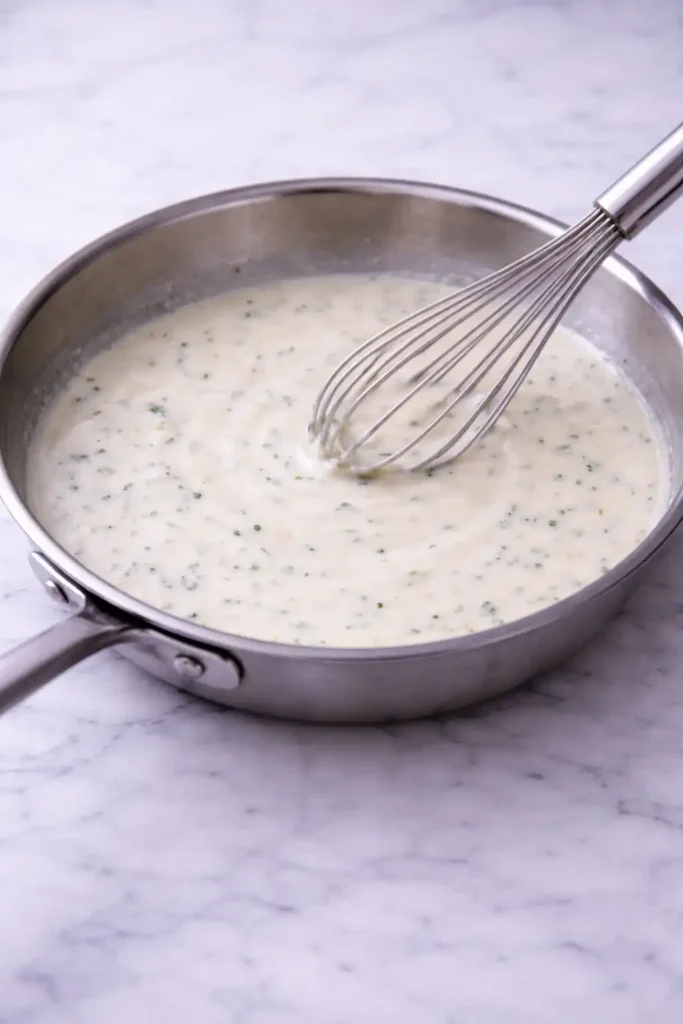
- Adjust the texture. For steak, leave it as is for a thicker, draping finish. For chicken or salmon, whisk in 1 to 2 tablespoons broth to loosen it slightly. For pasta, add a splash of pasta water until the sauce turns glossy and flowing but still rich.
- Serve right away. Spoon the warm garlic cream sauce over rested steak, grilled chicken, seared salmon, pasta, or roasted vegetables. The best texture is in the first few minutes, when it’s still shiny and fluid.
Expert Tips for the Best Garlic Cream Sauce
- Keep the garlic pale. You want softened garlic, not toasted garlic. Once it turns deep gold, the sweetness disappears and the bitterness starts creeping in.
- Use heavy cream, not milk. Milk is too thin and more likely to split under heat. Heavy cream gives you the silky reduction this sauce needs.
- Add the cheese off the boil. If the sauce is bubbling hard when the Parmesan goes in, it can clump or turn grainy. A calm simmer is the sweet spot.
- Thin it based on what you’re serving. This is my favorite trick. Steak wants a slightly thicker sauce that sits on top. Pasta wants a looser, shinier finish so it wraps around every strand.
- Use a splash of broth to rescue an over-thick sauce. Don’t dump in more cream first. Broth loosens the texture without making the flavor flat.
- If the sauce looks grainy, don’t panic. Lower the heat, add 1 tablespoon cream, and whisk for 20 to 30 seconds. Most of the time it comes right back together.
- A pinch of nutmeg is the secret weapon. Not enough to taste sweet, just enough to make the cream taste deeper and more finished.
Delicious Variations
- Steakhouse version: Add 1 teaspoon Dijon mustard and an extra few cracks of black pepper for a sharper, more savory finish with steak.
- Lemon salmon version: Stir in 1 teaspoon lemon zest at the end and loosen the sauce slightly with broth so it doesn’t weigh down the fish.
- Chicken and mushroom version: Sauté 1/2 cup sliced mushrooms before the garlic and let them brown at the edges for a deeper, earthier sauce.
- Spicy version: Add 1/4 teaspoon red pepper flakes with the garlic for a quiet heat that cuts through the richness.
- Vegetarian version: Use vegetable broth and serve over roasted cauliflower steaks, mashed potatoes, or sautéed green beans.
- Herb-forward spring version: Finish with chives and a little tarragon instead of parsley for a brighter, more aromatic edge.
What to Serve With Garlic Cream Sauce
This sauce is at its best with foods that give it something to cling to or run across. A well-rested steak is the obvious favorite because the sauce catches in the browned edges and sliced seams, but that’s just the start.
With steak: Ribeye, sirloin, filet, or steak bites all work beautifully. I especially love it with sliced medium-rare steak and crisp roasted potatoes on the side.
With chicken: Spoon it over pan-seared chicken breasts or boneless thighs. If you like creamy savory dinners, the flavor direction also pairs nicely with the richness in Creamy Coconut Shrimp Recipe, even though that one takes a more tropical path.
With seafood: Seared salmon, shrimp, or even scallops can handle this sauce as long as you keep the texture a touch looser. For another creamy seafood dinner idea, take a look at Creamy Shrimp and Pasta with Pico de Gallo.
With pasta: Fettuccine, linguine, and penne all play nicely here. Add pasta water and toss until every piece looks glossy instead of buried.
With vegetables: Roasted asparagus, broccoli, mushrooms, or baby potatoes are all excellent. One of my favorite less-obvious pairings is spooning a little over crispy smashed potatoes with black pepper. It’s simple, but it eats like something you’d order twice.
How to Store, Reheat & Make Ahead
Storage
Store leftover sauce in a tightly sealed container or jar in the refrigerator for up to 3 days. It will thicken noticeably once cold, which is normal. The garlic flavor also gets a little stronger overnight.
Freezing
I don’t love freezing this one. Cream sauces can separate after thawing, especially when they’re reheated. If you must freeze it, cool completely, freeze in a small airtight container for up to 1 month, then thaw overnight in the fridge and reheat gently with extra cream or broth.
Reheating
Warm it in a small saucepan over low heat with a splash of broth or cream, whisking until smooth. Avoid the microwave if you can. It tends to heat unevenly and can push the sauce into a grainy texture.
Make-Ahead
You can mince the garlic, grate the Parmesan, and chop the parsley up to 1 day ahead. I’d rather prep the ingredients in advance than make the full sauce early, because this sauce is best when fresh and glossy.
Safe Leftover Handling
Because this garlic cream sauce contains dairy, leftovers should be cooled and refrigerated promptly rather than left sitting out. If you want official food safety guidance for storing and reheating leftovers, the USDA’s leftovers and food safety guide is a strong reference. It’s especially useful if you’re serving this sauce with steak, chicken, or salmon and want to handle the full meal safely.
Garlic Cream Sauce Recipe for Steak and More

Equipment
- Small skillet A light-colored skillet helps you monitor the garlic and sauce.
- Whisk Use for smoothing the cream and cheese into the sauce.
- Microplane or fine grater For finely grating Parmesan so it melts evenly.
Ingredients
For the Garlic Cream Sauce
- 2 tbsp unsalted butter
- 4 garlic cloves minced
- 1/2 cup chicken broth
- 1 cup heavy cream
- 1/3 cup Parmesan cheese finely grated
- 1/4 tsp kosher salt
- 1/4 tsp black pepper
- 1 tbsp fresh parsley chopped
- 1 pinch nutmeg optional
Instructions
Make the Sauce
- Melt the butter in a small skillet over medium-low heat until glossy and fluid but not browned.

- Add the minced garlic and cook for 30 to 45 seconds, stirring constantly, until fragrant and pale.
- Pour in the chicken broth, whisk, and simmer for 1 to 2 minutes until slightly reduced.
- Lower the heat, add the heavy cream while whisking, and simmer gently for 3 to 4 minutes until silky and just beginning to thicken.
- Sprinkle in the Parmesan a little at a time, whisking between additions until smooth.
- Add the kosher salt, black pepper, parsley, and optional pinch of nutmeg, then simmer 1 to 2 minutes until the sauce coats the back of a spoon.
- Adjust the texture as needed: keep it thicker for steak, or whisk in 1 to 2 tablespoons broth for chicken, salmon, or pasta.
- Serve warm right away over steak, chicken, salmon, pasta, or roasted vegetables.
Notes
For pasta, loosen with pasta water until glossy.
If the sauce gets too thick, whisk in broth instead of more cream.
Best served fresh.
Nutrition
Frequently Asked Questions
How do you keep garlic cream sauce from separating?
Keep the heat low once the cream goes in, and never let the sauce boil hard after adding the cheese. Add Parmesan gradually and whisk often. If it starts looking grainy, whisk in a spoonful of cream over low heat.
Can I make garlic cream sauce without Parmesan?
Yes. The sauce will be a little looser and less savory, but it still works. For extra depth, add a tiny spoonful of Dijon mustard or a little more black pepper.
Is garlic cream sauce good for steak?
Yes, especially with ribeye, sirloin, filet, or steak bites. Keep the sauce slightly thicker so it drapes over the meat instead of running onto the plate.
Can I use this garlic cream sauce for pasta?
Absolutely. For pasta, loosen the sauce with a splash of pasta water until it turns glossy and coats the noodles evenly.
Can I make garlic cream sauce ahead of time?
Yes, but it’s best fresh. If making it ahead, reheat it gently on the stove with a little broth or cream to bring back the silky texture.
What protein goes best with garlic cream sauce?
Steak is the richest pairing, but chicken and salmon are excellent too.
- Steak for a thicker finish
- Chicken for a balanced, cozy dinner
- Salmon for a lighter but still rich plate
Can I double this creamy garlic sauce recipe?
Yes. Double every ingredient and use a slightly wider skillet so the sauce still reduces properly. You may need an extra 1 to 2 minutes of simmering time.
Final Thoughts
This is the kind of sauce that makes dinner feel more finished without turning the kitchen into a project. A few pantry and fridge staples, one pan, and suddenly you’ve got something silky enough for steak night but flexible enough for salmon, chicken, or pasta on a Wednesday.
What makes this version worth keeping is the control. You’re not just making a rich sauce. You’re making one that can stay thick and glossy for steak or loosen into a smoother, flowing finish for noodles and seafood. That little bit of range is what keeps it useful.
If you make it, I’d love to hear what you served it with. And if you’re building out a fuller meal plan, you might also like this lighter contrast recipe: Chicken Salad Recipe No Celery.