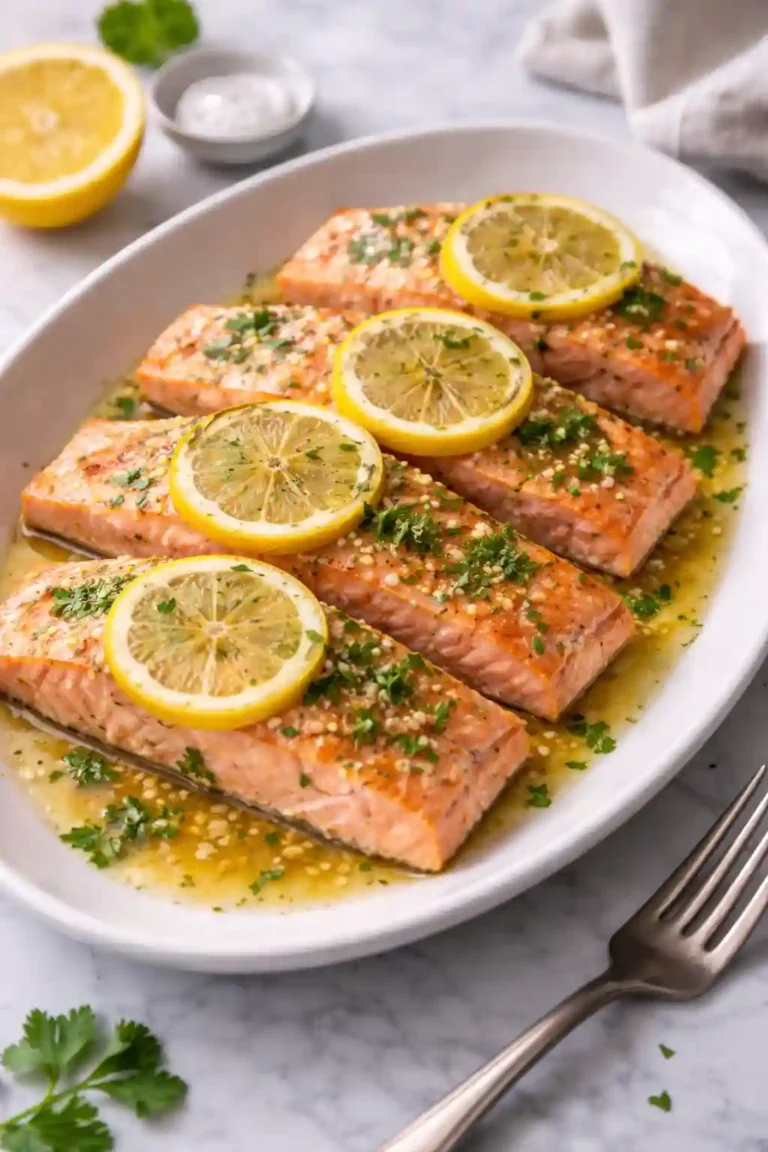
Dry baked salmon usually comes down to timing, thickness, and checking too late. This baked salmon recipe keeps the method simple: lemon-garlic oil protects the surface, a 400°F (200°C) oven cooks the fillets quickly, and clear doneness cues help you stop before the fish dries out. The result is glossy salmon with lightly roasted edges and large, tender flakes.
The method is intentionally direct: mix the seasoning, brush the fillets, bake for 10 to 14 minutes depending on thickness, then confirm doneness at the thickest part. The visual cues and thermometer guidance below make the timing easier to judge.
Why This Baked Salmon Stays Juicy
This easy baked salmon recipe works because it respects what salmon needs and what it does not. It needs a little fat on the surface, enough heat to cook cleanly, and a short ingredient list that supports the fish instead of burying it. It does not need a heavy glaze, a long marinade, or vague timing.
Olive oil protects the surface so the flesh stays supple as it bakes. Garlic perfumes the oil and softens in the oven instead of scorching in a pan. Lemon keeps the richness from feeling heavy, and the slices on top release some juice while they roast, which gives the fish a bright, almost steamy aroma as it finishes. The result is oven baked salmon that tastes fresh and focused, with a top that glistens and a center that still feels tender on the fork.
I also prefer baking salmon at 400°F (200°C) for this style. It is hot enough to roast the edges lightly, but not so aggressive that the outer layers race ahead of the middle. That matters most on weeknights, when you want a fast dinner without babysitting a skillet.
The Ingredients That Keep the Fish Bright, Rich, and Balanced
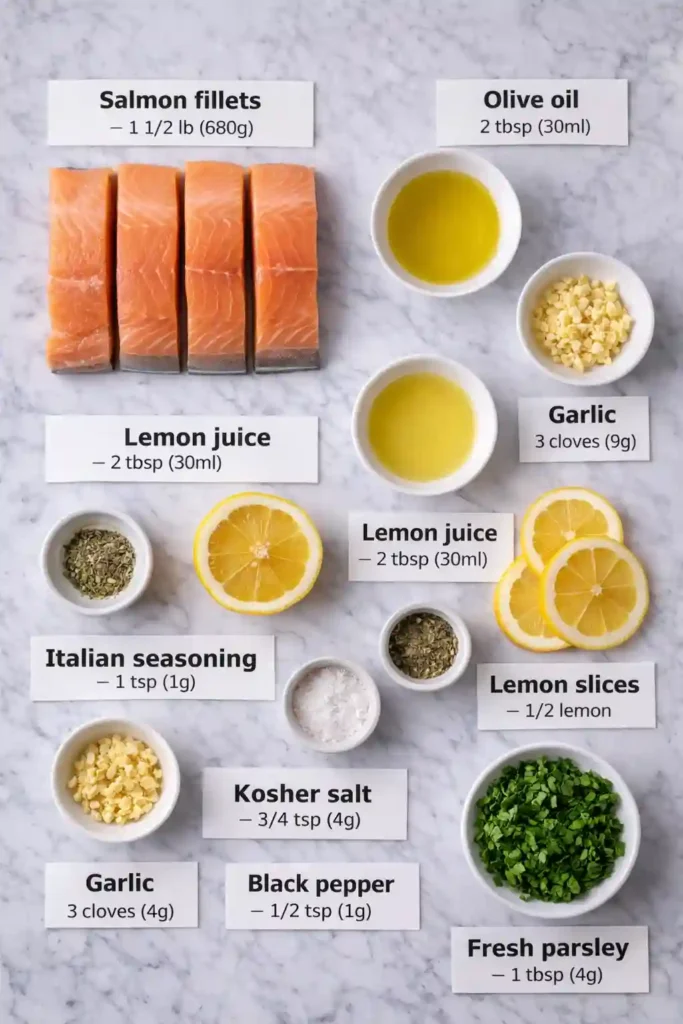
You only need a handful of ingredients for this baked salmon recipe, which means each one needs to pull its weight.
Star ingredients
- Salmon fillets — 1 1/2 pounds (680g): This is the whole structure of the dish, so buy fillets that look vibrant and moist, not dull or dried at the edges. Center-cut portions bake more evenly than thin tail pieces.
- Olive oil — 2 tablespoons (30ml): The oil helps the seasoning cling and slows surface drying. It also gives the finished fish that polished sheen that makes it look as good as it tastes.
- Garlic — 3 cloves (9g), minced: Fresh garlic gives the oil real aroma and depth. Jarred garlic can work in a pinch, but it often tastes flatter and sharper.
- Lemon — 1 medium, divided: Half is juiced into the oil and half is sliced for roasting on top. You get brightness in two forms: sharp from the juice, softer and sweeter from the slices.
- Italian seasoning — 1 teaspoon (1g): It adds an herb backbone without making the recipe fussy. This is one of those quiet ingredients that makes everything smell more finished.
- Fresh parsley — 1 tablespoon (4g), chopped: Add it at the end only. It brings a fresh green note and keeps the final dish from looking flat.
Supporting ingredients
- Kosher salt — 3/4 teaspoon (4g): Enough to season the fish properly without making the lemon feel harsh.
- Black pepper — 1/2 teaspoon (1g): A little warmth, not a pepper crust.
For food safety and temperature guidance, the USDA FSIS safe minimum internal temperature chart is the reference worth bookmarking, especially if you want a concrete number to check against with a thermometer.
safe minimum internal temperature
Smart Swaps Before You Turn On the Oven
If you do not have Italian seasoning, use 1/2 teaspoon dried oregano plus 1/2 teaspoon dried parsley. Fresh dill also works beautifully here, but it shifts the flavor in a cooler, sharper direction than parsley. Avocado oil can replace olive oil if that is what you keep on hand, though I miss the fruitier roundness olive oil gives the fish.
You can use skin-on or skinless salmon fillets. I prefer skin-on when baking because the skin acts like a small buffer against the hot pan. If you are serving people who do not want the skin, it slips off easily after baking. I would not swap bottled lemon juice for fresh here. In a short ingredient list, that shortcut shows.
The Few Tools That Actually Matter
You do not need a crowded counter for this. A rimmed sheet pan gives the fish enough space to roast instead of steam. Parchment keeps cleanup easy and prevents sticking, which matters when you want to lift the fillets cleanly. A small bowl for mixing the lemon-garlic oil and a pastry brush or spoon for spreading it are helpful, but hardly fancy.
The one tool that genuinely changes outcomes is an instant-read thermometer. It removes almost all the stress from cooking salmon. Visual cues matter, and I will give you those below, but temperature is what lets you stop on purpose instead of hoping for the best.
How to Bake Salmon Without Drying It Out
This baked salmon recipe is straightforward, but the details matter. Read through once before you start so you know what the fish should look like at each stage.
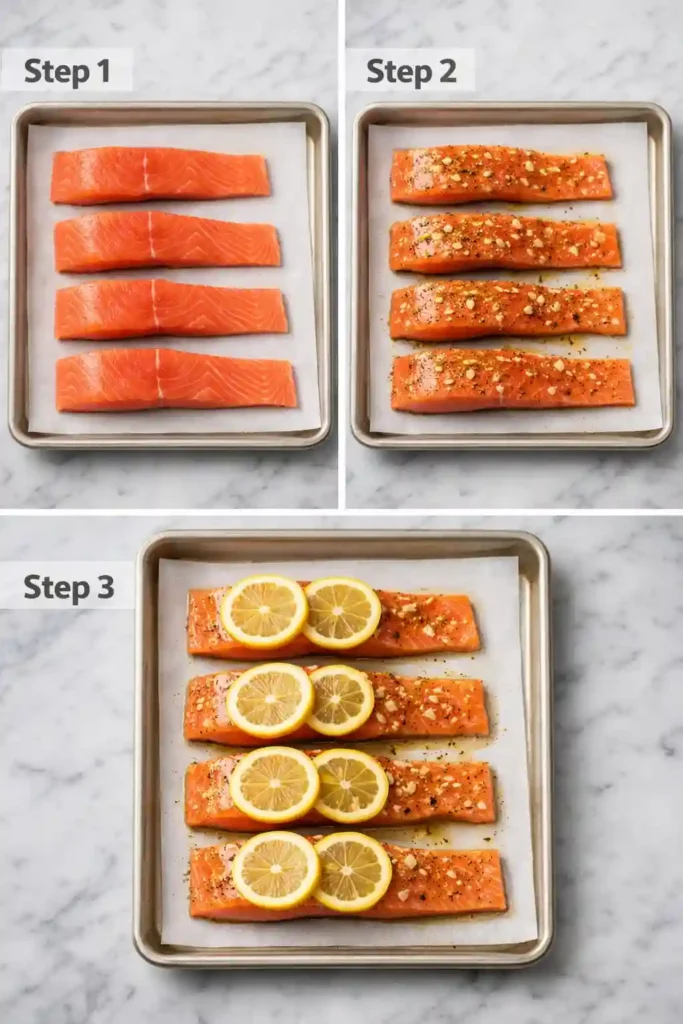
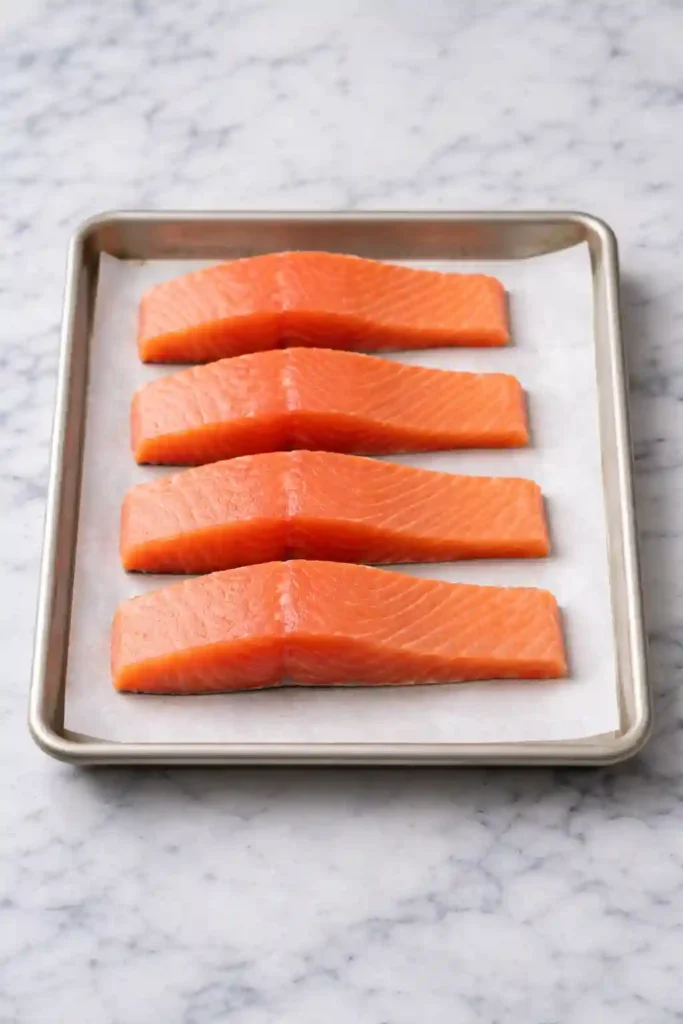
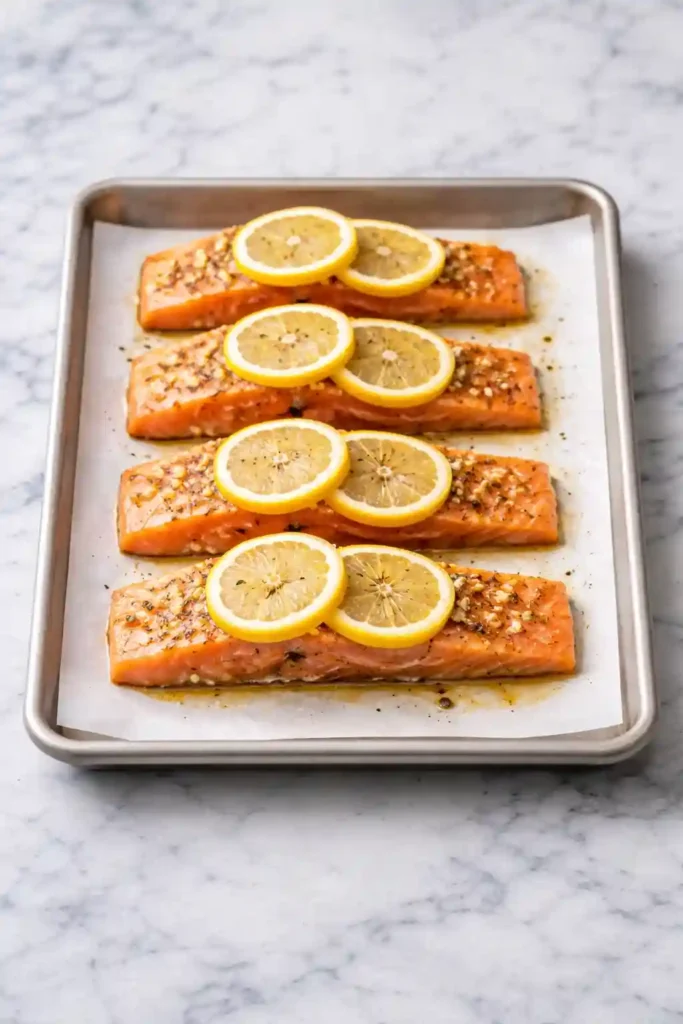
- Heat the oven to 400°F (200°C) and line a rimmed sheet pan with parchment paper. Pat the 1 1/2 pounds (680g) salmon fillets dry with paper towels, then place them skin-side down on the prepared pan.
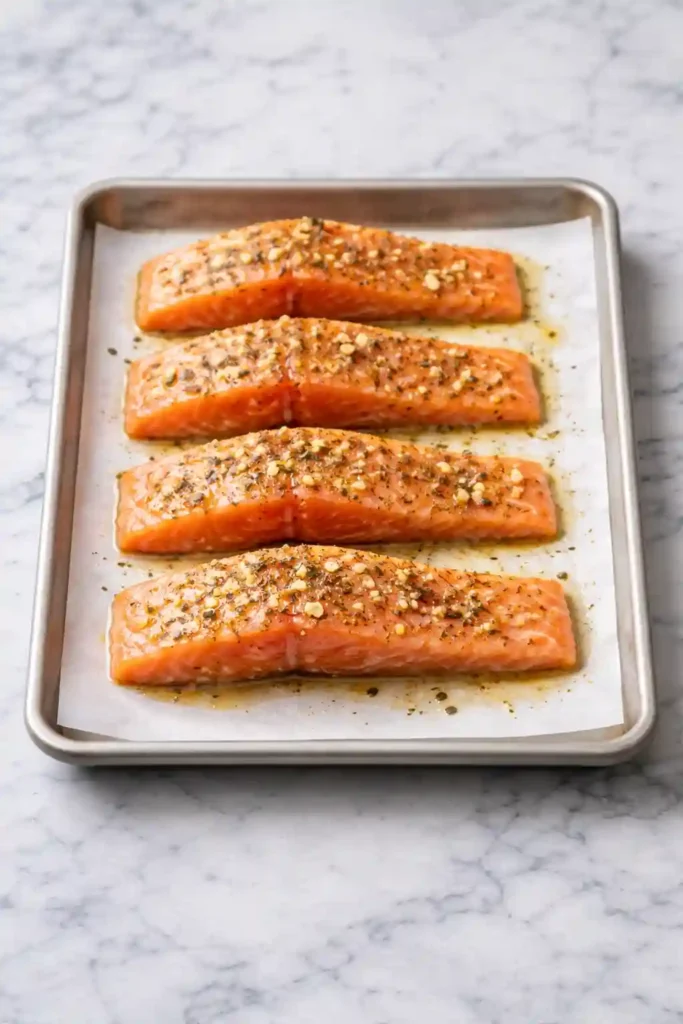
- In a small bowl, stir together 2 tablespoons (30ml) olive oil, 3 minced garlic cloves (9g), 2 tablespoons (30ml) fresh lemon juice, 1 teaspoon (1g) Italian seasoning, 3/4 teaspoon (4g) kosher salt, and 1/2 teaspoon (1g) black pepper. Brush or spoon the mixture evenly over the salmon.
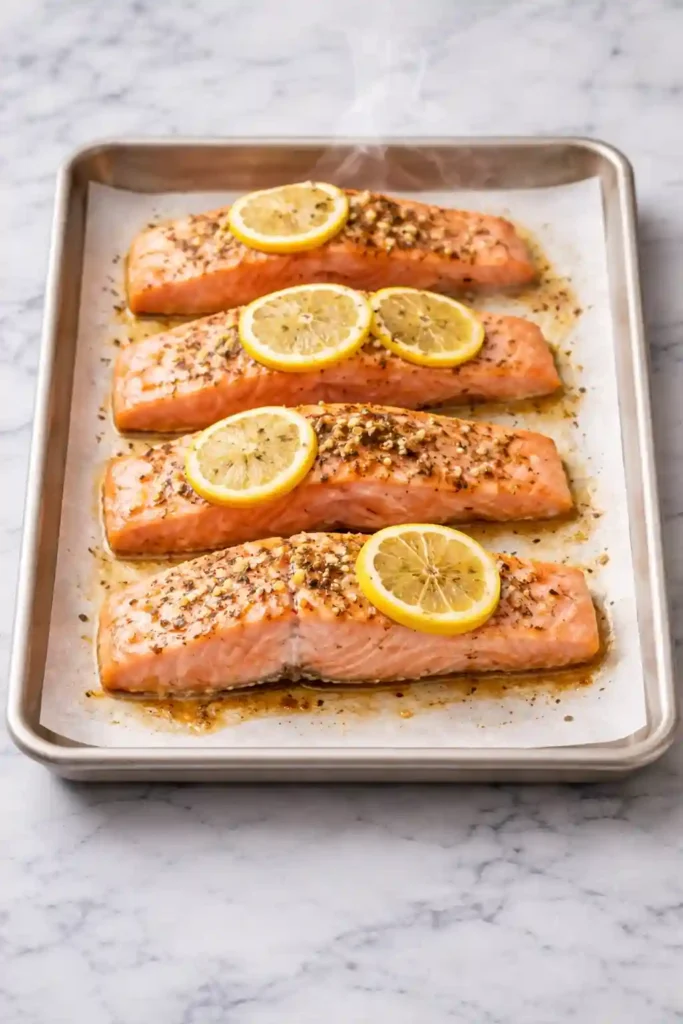
- Cut the remaining half lemon into thin slices and lay them over the fillets. Let the salmon sit for 5 minutes while the oven finishes heating so the surface seasoning has time to cling.
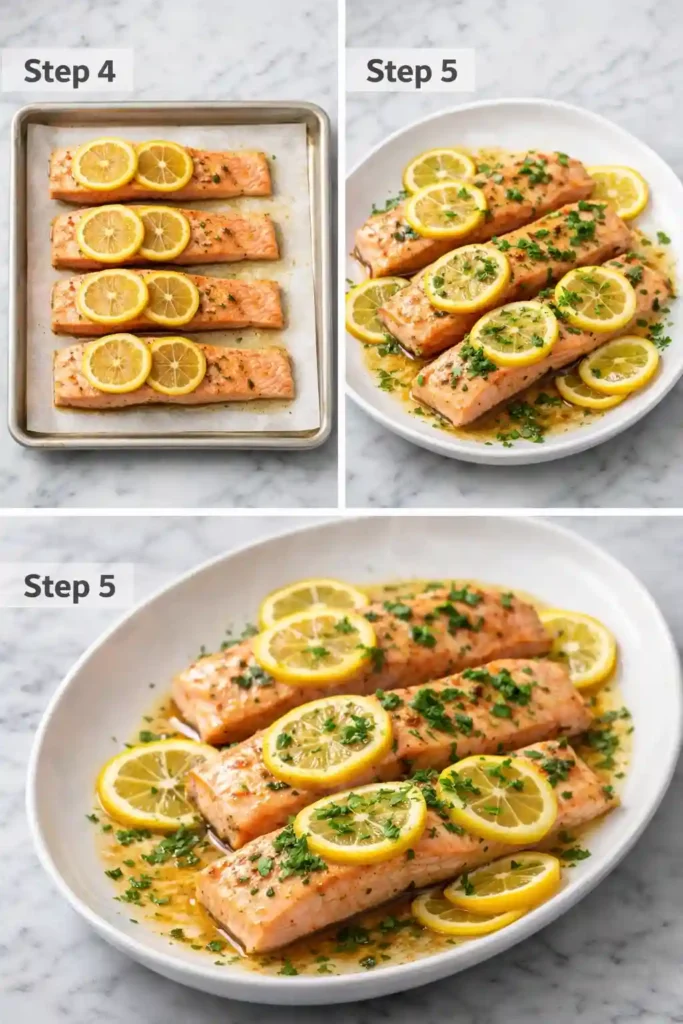
- Bake for 10 to 14 minutes, depending on thickness, until the salmon looks lightly opaque on top and begins to flake at the edges. Check the thickest part with an instant-read thermometer and make sure it reaches 145°F (63°C) before serving.
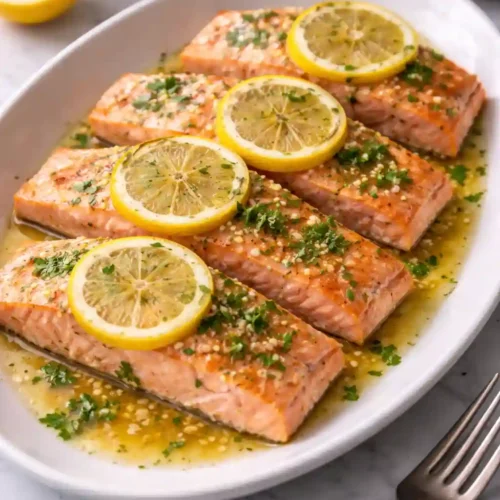
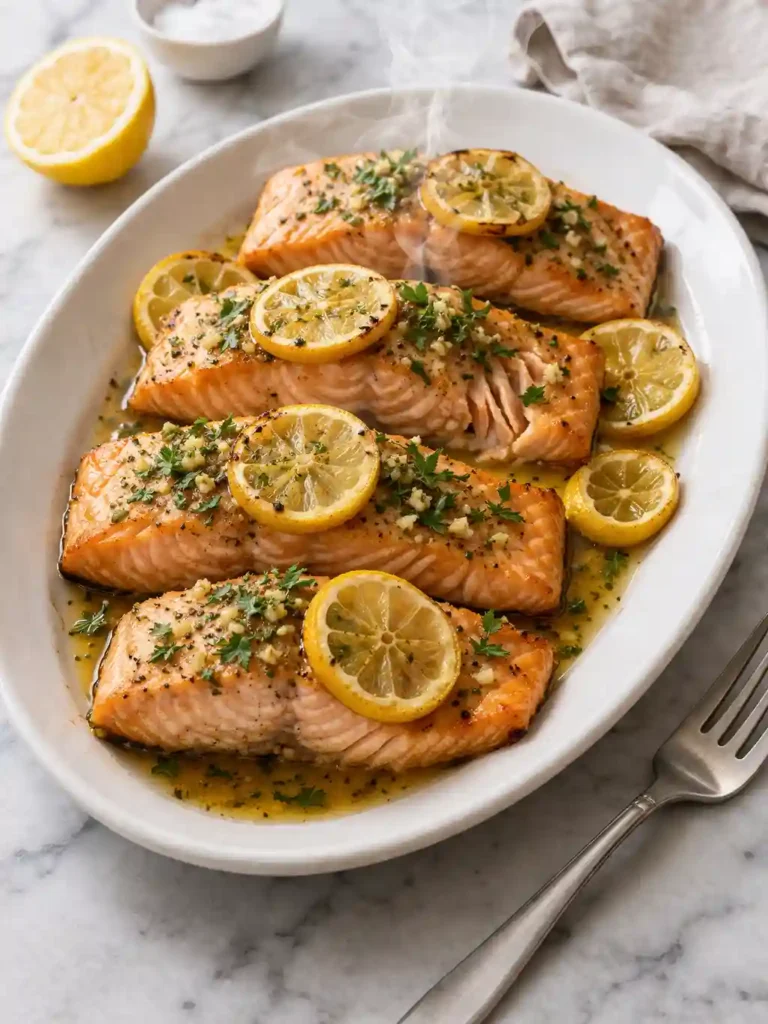
- Rest the salmon for 2 minutes, then transfer it to an oval platter and spoon any pan juices over the top. Finish with 1 tablespoon (4g) chopped fresh parsley and serve right away.
There are two doneness cues I rely on most. First, the flesh shifts from glossy translucent coral to a more opaque blush. Second, the layers begin to separate into thick flakes without collapsing into crumbs. If you see a lot of white albumin pushed out on top, the fish is still fine to eat, but that is usually a sign it went a little too far.
The Little Fixes That Make a Big Difference
If your salmon has one thin tail section and one thick center section, fold the thin end slightly under itself before baking. That small move helps the pan cook more evenly. If the fillets are very cold from the fridge, give them 10 to 15 minutes on the counter while you prep the ingredients. Not long enough to worry food safety, just enough to take the edge off the chill so the middle and outer layers cook more evenly.
Another fix is restraint. Do not drown the fish. This lemon garlic baked salmon only needs a thin coat of oil and seasoning. Too much liquid encourages steaming, and steaming is not what gives you that gently roasted top. If you want a more vivid citrus finish, squeeze fresh lemon over the plated fish instead of adding more juice to the pan before baking.
For more reassurance on safe cooking temperature, check the USDA guidance linked above. It is also a good reminder that a thermometer is not overkill for fish; it is one of the easiest ways to make dinner more consistent.
Flavor Twists for Different Nights and Diets
This oven baked salmon is naturally gluten-free, and it is easy to shift the mood without losing the core method.
- Herb-forward: Swap the Italian seasoning for chopped dill and parsley for a greener, cooler finish.
- A little sweeter: Add 1 teaspoon (7g) honey to the lemon-garlic oil. You will get a shinier surface and slightly deeper color at the edges.
- Warmer and bolder: Add 1/2 teaspoon smoked paprika for a deeper color and gentle smokiness.
- Richer finish: Dot the hot salmon with a little garlic herb butter just before serving so it melts into the creases of the fish.
- Saucier plate: Serve with a spoonful of garlic cream sauce on the side if you want the dinner to feel more indulgent.
I would not add grated Parmesan, soy sauce, or a heavy breadcrumb topping to this particular recipe. They can work in other salmon dinners, but they push this version away from its best quality, which is clean lemon-garlic brightness.
What to Serve With Baked Salmon
Because the salmon is rich and the seasoning is bright, the side dishes can stay simple. Roasted asparagus, green beans, rice, couscous, mashed potatoes, or a crisp salad all fit naturally. If I want the plate to feel especially balanced, I go with a starchy base plus a green vegetable, then let the pan juices and lemon do the rest.
For another fast seafood dinner built around garlic and quick cooking, try this garlic butter shrimp recipe. It uses a different protein while keeping the same practical weeknight approach.
How to Store and Reheat It Without Ruining the Texture
In the fridge
Let the salmon cool, then refrigerate it in an airtight container for up to 3 days. Store the lemon slices with it if you like, but the parsley is best fresh.
In the freezer
You can freeze cooked salmon for up to 2 months, though the texture will be a little softer after thawing. Wrap portions well, then place them in a freezer bag or airtight container.
Best way to reheat
Reheat gently in a 275°F (135°C) oven until warmed through, usually about 10 to 15 minutes depending on the portion size. A splash of water or a light brush of olive oil helps protect the surface. I avoid the microwave when I can, because salmon can go from cool to chalky in a hurry.
Baked Salmon Recipe

Equipment
- Rimmed sheet pan Light-colored preferred
- Parchment Paper
- small bowl For mixing the lemon-garlic oil
- Pastry brush or spoon
- Instant-read thermometer Best for checking doneness
Ingredients
Salmon
- 1 1/2 lb salmon fillets center-cut if possible
- 2 tbsp olive oil
- 3 cloves garlic minced
- 1 medium lemon divided
- 1 tsp Italian seasoning
- 3/4 tsp kosher salt
- 1/2 tsp black pepper
- 1 tbsp fresh parsley chopped
Instructions
Bake the salmon
- Heat the oven to 400°F (200°C) and line a rimmed sheet pan with parchment paper. Pat the 1 1/2 pounds (680g) salmon fillets dry with paper towels, then place them skin-side down on the prepared pan.

- In a small bowl, stir together 2 tablespoons (30ml) olive oil, 3 minced garlic cloves (9g), 2 tablespoons (30ml) fresh lemon juice, 1 teaspoon (1g) Italian seasoning, 3/4 teaspoon (4g) kosher salt, and 1/2 teaspoon (1g) black pepper. Brush or spoon the mixture evenly over the salmon.
- Cut the remaining half lemon into thin slices and lay them over the fillets. Let the salmon sit for 5 minutes while the oven finishes heating so the surface seasoning has time to cling.
- Bake for 10 to 14 minutes, depending on thickness, until the salmon looks lightly opaque on top and begins to flake at the edges. Check the thickest part with an instant-read thermometer and make sure it reaches 145°F (63°C) before serving.
- Rest the salmon for 2 minutes, then transfer it to an oval platter and spoon any pan juices over the top. Finish with 1 tablespoon (4g) chopped fresh parsley and serve right away.

Notes
A thermometer makes baked salmon far more consistent.
Add the parsley after baking so it stays bright and fresh.
Nutrition
Baked Salmon Questions People Actually Ask
How long should I bake salmon at 400°F (200°C)?
Most salmon fillets need 10 to 14 minutes at 400°F (200°C), depending on thickness. Thin pieces can be done closer to 10 minutes, while thicker center-cut fillets may need the full 14. Start checking early and confirm doneness at the thickest part.
What internal temperature should baked salmon reach?
For food safety, cook salmon to 145°F (63°C) at the thickest part before serving. An instant-read thermometer gives a more reliable result than timing or appearance alone.
How do I know when salmon is done without cutting it apart?
Press gently near the thickest part and look for the layers to begin separating into clean flakes. The surface should look opaque rather than raw and translucent. A thermometer is still the most reliable final check.
Can I use frozen salmon for this baked salmon recipe?
Yes, but thaw it completely in the refrigerator first, then pat it dry. Thawed fillets cook more evenly and hold the lemon-garlic seasoning better than salmon baked directly from frozen.
Is it better to bake salmon covered or uncovered?
Bake these fillets uncovered so the surface can roast lightly instead of steaming. Covering is more useful for some large sides of salmon, but it is not needed for this recipe.
Why did white stuff come out of my salmon?
The white substance is albumin, a protein that firms and rises to the surface as salmon cooks. A little is normal. A large amount can appear when the fish cooks too aggressively or for too long.
When You Want Salmon Dinner to Feel Easy Again
This baked salmon recipe earns a place in weeknight rotation because it gives you something better than speed alone. It gives you control. You get bright lemon, soft garlic, tender flakes, and enough structure that the fish feels cooked with intention instead of rushed through the oven.
If this is the kind of dinner you come back to often, keep a batch of garlic herb butter in the fridge for easy finishing, or move next to another quick seafood meal from the same family of flavors. Once you know how to handle salmon this way, the whole category starts feeling friendlier.