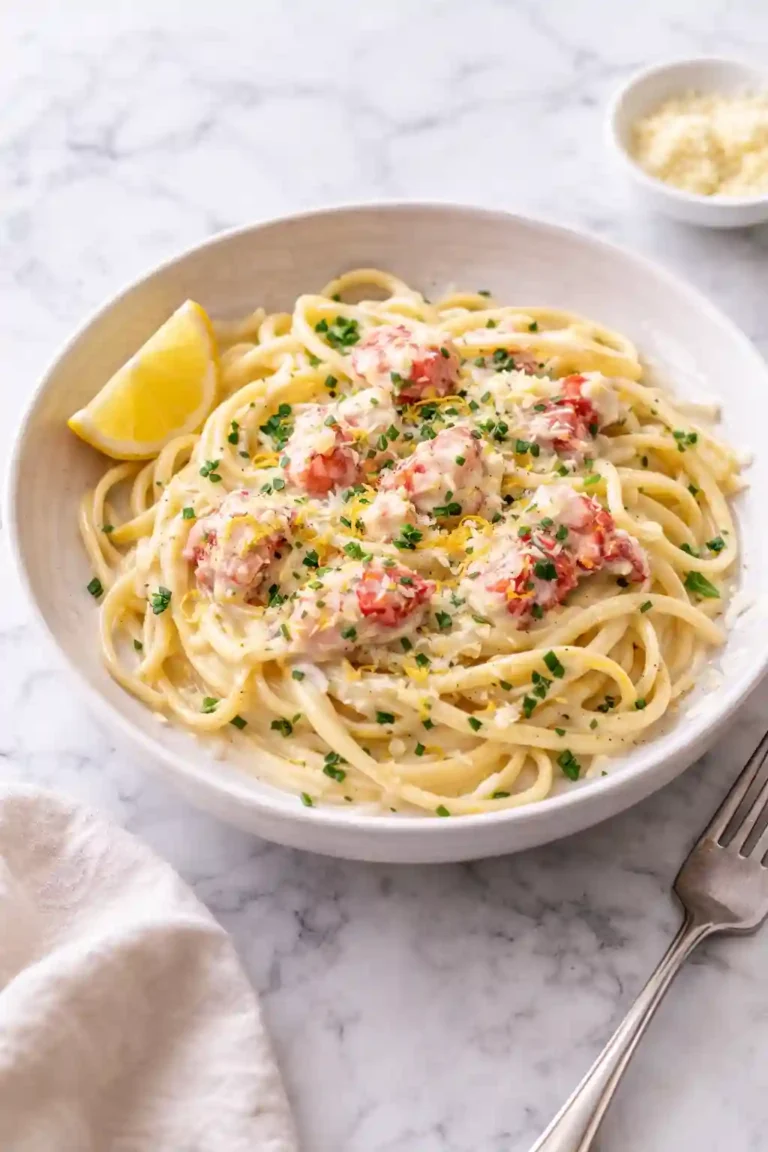
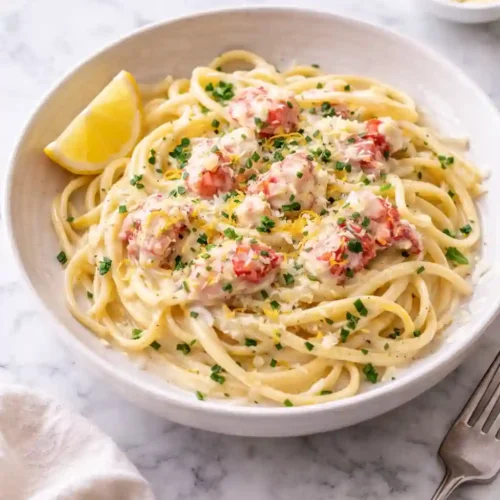
The best part of creamy lobster pasta is that split second when the sauce turns glossy, the lobster stays tender, and the whole pan smells like butter, garlic, white wine, and the ocean in the best possible way.
If you’ve been craving a dinner that feels a little extravagant without turning your kitchen into a fine-dining stress test, this creamy lobster pasta is the one to make. It has the elegance people want from a lobster pasta recipe, but the method is built for real life.
The sauce is silky instead of heavy, the lemon keeps everything bright, and the lobster is warmed through gently so it stays sweet and delicate. That matters. Lobster is too expensive to bully with aggressive heat.
This is an ideal Dinner recipe for date night, birthdays at home, or any evening when plain old pasta just will not cut it.
Why You’ll Love This Creamy Lobster Pasta
- It gives you that glossy, restaurant-style finish without requiring a dozen specialty ingredients.
- The sauce is rich enough to feel luxurious, but not so thick that it buries the natural sweetness of the lobster.
- The method is built around the biggest risk in lobster pasta: overcooking the meat. We avoid that completely by adding it late.
- Lemon zest and white wine cut through the cream so every bite stays lively instead of sleepy.
- It works beautifully for anniversaries, holidays, and date night, but it is still manageable in a normal home kitchen.
- You can use cooked lobster meat from tails, claws, or even good frozen lobster if that is what you can find.
Key Ingredients
Lobster Meat
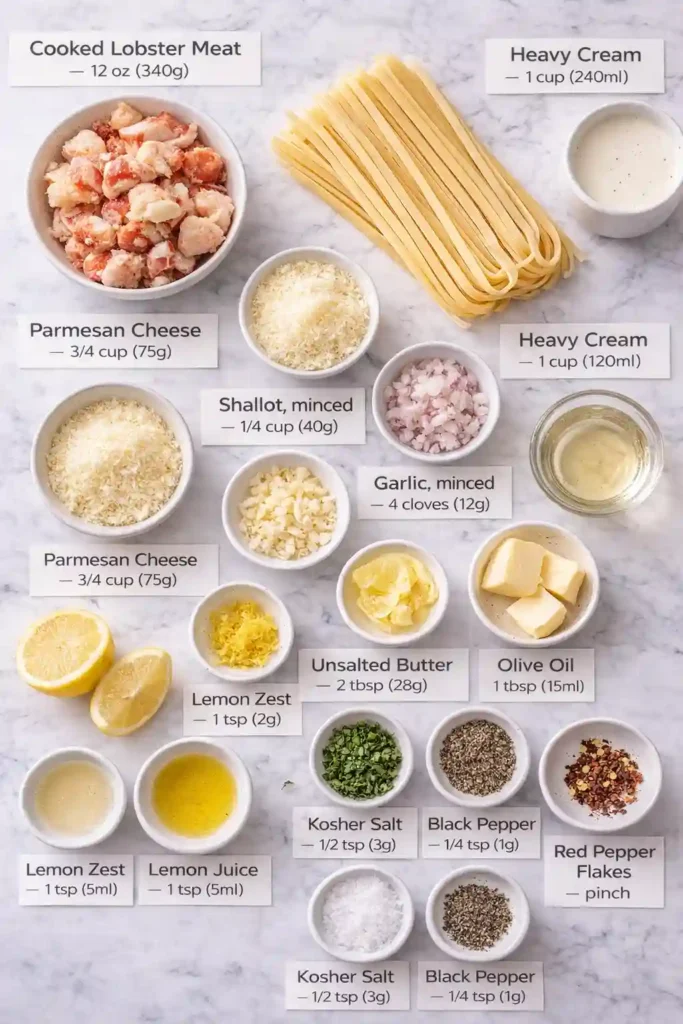
Amount: 12 ounces (340g) cooked lobster meat, cut into large bite-size pieces
Why it matters here: This is the entire point of the dish, so it needs to stay front and center. Lobster brings a sweet, delicate, slightly briny flavor and a tender bite that feels luxurious against the soft pasta and silky sauce. I like larger chunks here because tiny shreds disappear into the cream and feel like an afterthought.
Nutrition per 3 ounces (84g): Approximately 80 calories, 17g protein, and a notable amount of vitamin B12 and selenium. Lobster is surprisingly lean, which is one reason it pairs so well with butter and cream without the dish feeling greasy.
What to look for: If you are buying cooked lobster meat, look for plump pieces that smell clean and lightly sweet, never fishy. Frozen lobster is fine, but thaw it in the refrigerator and pat it dry so excess water does not thin the sauce.
Linguine
Amount: 12 ounces (340g) dried linguine
Why it matters here: Linguine has enough surface area to grab the sauce, but it still feels elegant rather than bulky. I prefer it over spaghetti for this creamy lobster pasta because the slightly flatter strands catch the Parmesan and cream in a way that feels more complete in every forkful.
Nutrition per 2-ounce (56g) dry serving: Approximately 200 calories, about 42g carbohydrates, and a small amount of iron. Its job here is structure and sauce delivery, and that is not a small job.
What to look for: Choose a bronze-cut pasta if you can find it. The rougher surface holds onto sauce better than slick, shiny noodles.
Heavy Cream
Amount: 1 cup (240ml)
Why it matters here: Heavy cream gives the sauce body and that soft, velvety finish you expect from an elegant seafood pasta. It also helps buffer the sharpness of the wine and lemon so the final flavor stays rounded instead of edgy.
Nutrition per 2 tablespoons (30ml): Approximately 100 calories, 10g fat, and small amounts of vitamin A and calcium. It is rich, yes, but that richness is exactly what lets a small amount of lobster feel complete and luxurious.
What to look for: Use full-fat heavy cream, not half-and-half. Lower-fat dairy is much more likely to split once it meets wine, Parmesan, and heat.
Dry White Wine
Amount: 1/2 cup (120ml)
Why it matters here: White wine brings acidity and complexity that keep the sauce from tasting flat. It gives the cream a little backbone and makes the lobster taste even sweeter by contrast.
Nutrition per 2 tablespoons (30ml): About 25 calories with trace minerals. Nutritionally it is not the star, but flavor-wise it absolutely earns its place.
What to look for: Pick a dry white wine such as Sauvignon Blanc or Pinot Grigio. Do not use anything oaky or sweet. If you would not sip it, do not pour it into the pan.
Parmesan Cheese
Amount: 3/4 cup (75g) finely grated Parmesan cheese
Why it matters here: Parmesan adds saltiness, nuttiness, and that subtle savory depth that makes cream sauces taste finished instead of one-note. Finely grated cheese melts more smoothly and helps the sauce cling rather than clump.
Nutrition per 1 ounce (28g): Approximately 110 calories, 10g protein, and a strong dose of calcium. A little goes a long way here, which is good, because lobster does not want a blizzard of cheese.
What to look for: Buy a wedge and grate it yourself if possible. Pre-shredded cheese often contains anti-caking agents that can make the sauce look grainy.
Garlic
Amount: 4 cloves, minced (about 4 teaspoons / 12g)
Why it matters here: Garlic gives the entire sauce its savory backbone. It should smell sweet and fragrant, never dark or bitter. In this dish, garlic is there to frame the lobster, not wrestle with it.
Nutrition per 3 cloves: About 13 calories, small amounts of vitamin C, manganese, and sulfur compounds associated with garlic’s distinctive aroma. That aroma is half the seduction of this pasta.
What to look for: Choose firm heads with tight, papery skin. Skip any cloves that feel rubbery or show green sprouts in the center.
Supporting Ingredients
Unsalted butter and olive oil build the base, while shallot adds a softer sweetness than onion. Lemon zest and a small squeeze of juice cut through the cream at exactly the right moment, and chopped parsley or chives bring a fresh green finish. Kosher salt, black pepper, and a pinch of red pepper flakes round everything out without stealing attention from the lobster.
If you want a reliable nutrition reference for seafood ingredients, the USDA FoodData Central database is a strong place to start.
Ingredient Notes & Substitutions
You can use fettuccine instead of linguine in the exact same amount, 12 ounces (340g), though the final dish will feel slightly heavier. If you need to skip the wine, replace the 1/2 cup (120ml) with 1/2 cup (120ml) seafood stock or chicken stock plus 1 teaspoon lemon juice.
You can swap the heavy cream for 3/4 cup (180ml) crème fraîche plus 1/4 cup (60ml) milk for a slightly tangier sauce. It works surprisingly well and gives the dish a polished, almost French edge.
Fresh grated Pecorino Romano can stand in for Parmesan, but use a little less, about 1/2 cup (50g), because it is saltier and sharper. And yes, you can use dried parsley if that is all you have, but keep it to 2 teaspoons (about 2g). The flavor will not be as bright.
Equipment You’ll Need
- A large pot for boiling the pasta — you need enough room for the noodles to move so they cook evenly.
- A large skillet or sauté pan — broad surface area matters because the sauce reduces more evenly and the pasta can be tossed without breaking the lobster.
- Tongs — the easiest way to lift and turn the pasta directly in the sauce.
- A microplane or fine grater for the lemon zest and Parmesan. Tiny shreds melt and disperse better.
How to Make Creamy Lobster Pasta
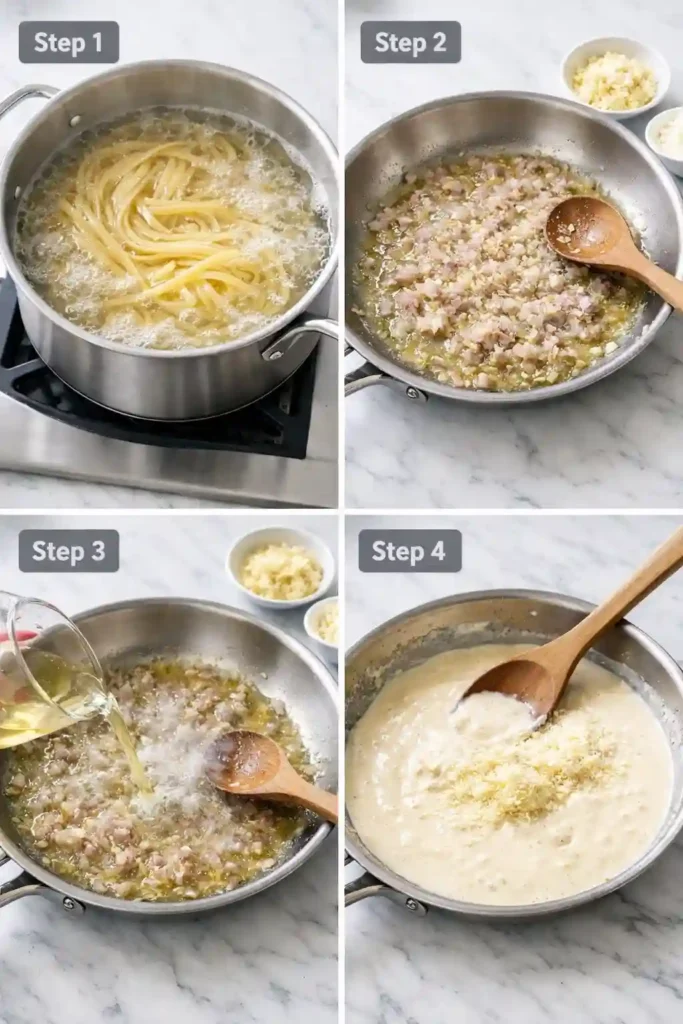
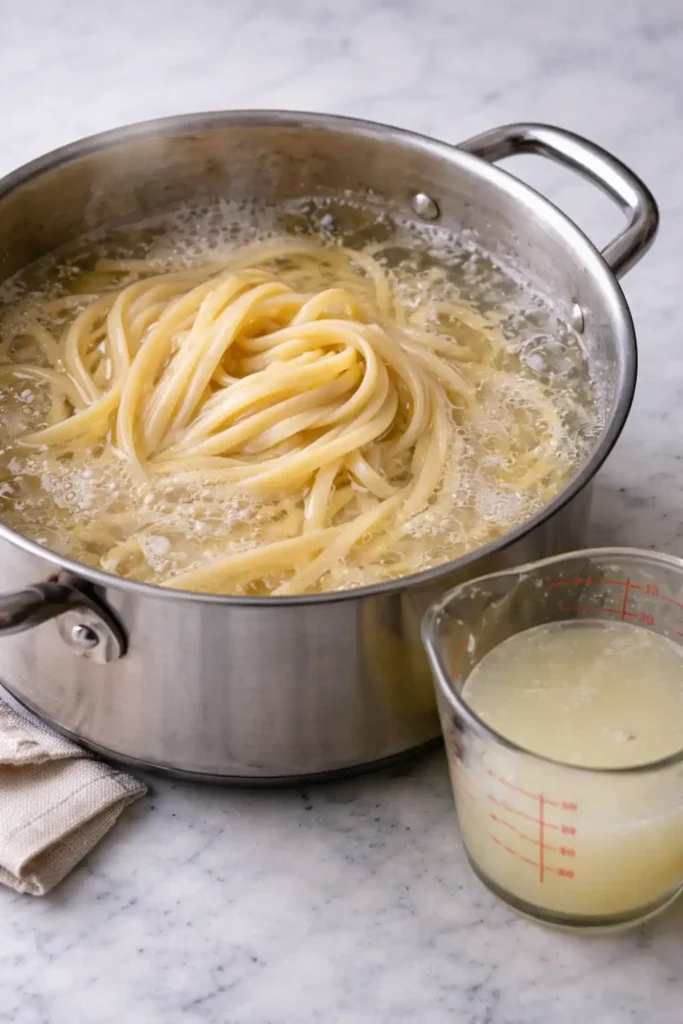
- Boil the pasta. Bring a large pot of well-salted water to a boil. Add 12 ounces (340g) linguine and cook until just shy of al dente according to the package directions, usually 8 to 10 minutes. Before draining, reserve 1 1/4 cups (300ml) pasta water. The pasta should be flexible but still have a little white core when you bite it.
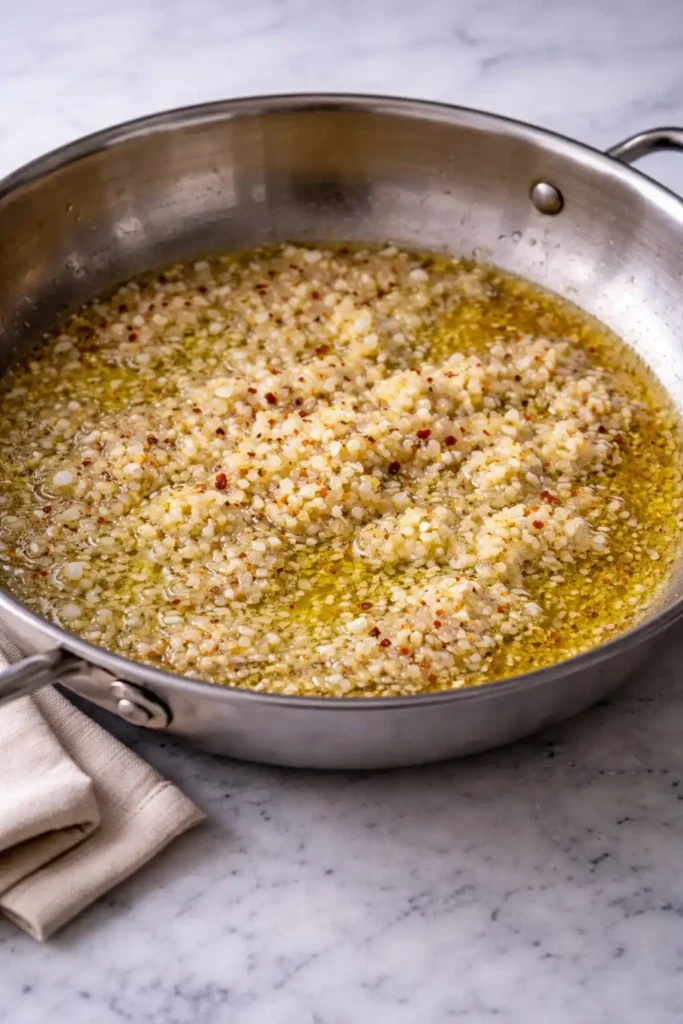
- Start the flavor base. In a large skillet over medium heat, melt 2 tablespoons (28g) unsalted butter with 1 tablespoon (15ml) olive oil. Add 1 finely minced shallot (about 1/4 cup / 40g) and cook for 2 to 3 minutes until softened and glossy, not browned. Stir in 4 minced garlic cloves and a pinch of red pepper flakes, then cook for 30 seconds, just until fragrant.
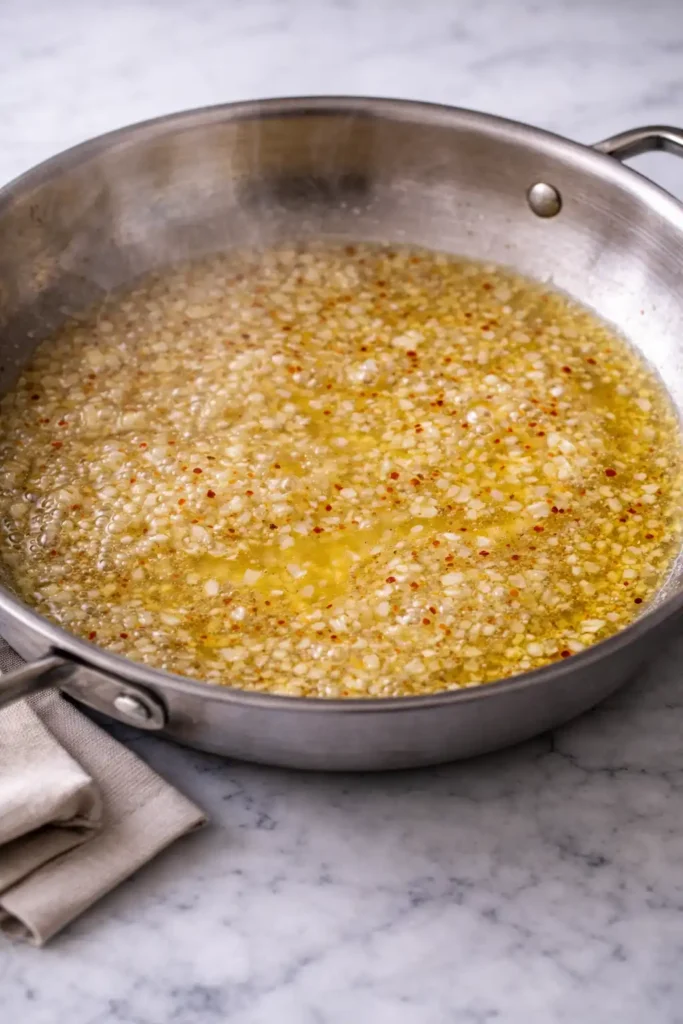
- Deglaze with wine. Pour in 1/2 cup (120ml) dry white wine and let it simmer for 2 to 3 minutes until reduced by about half. The pan should smell bright and slightly fruity, with no harsh alcohol edge left.
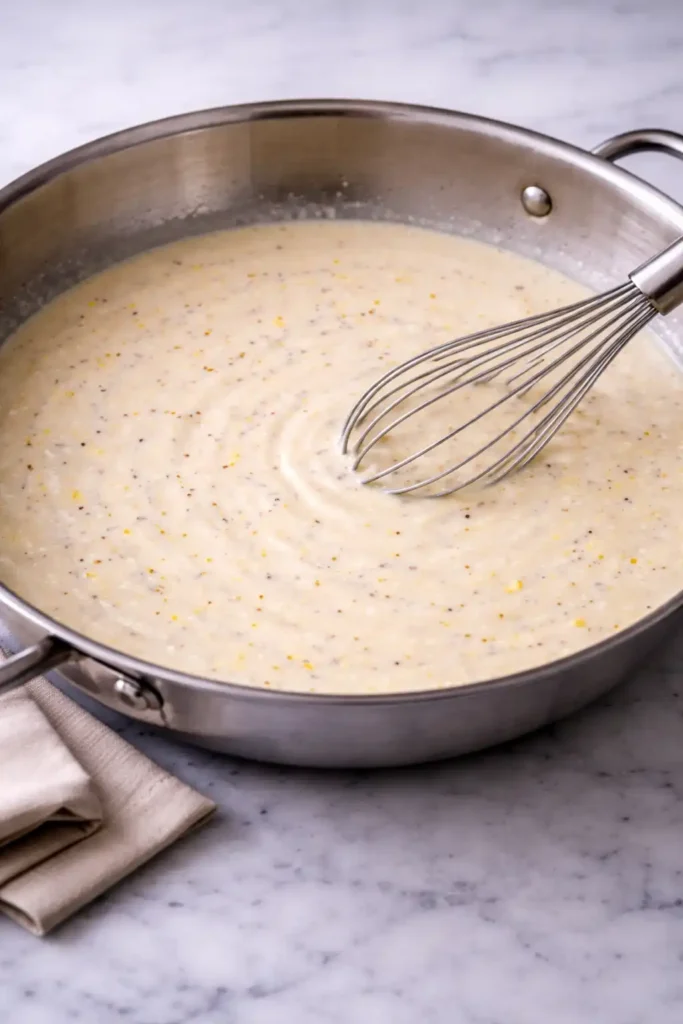
- Build the sauce. Lower the heat to medium-low and stir in 1 cup (240ml) heavy cream, 1 teaspoon lemon zest, 1/2 teaspoon kosher salt, and 1/4 teaspoon black pepper. Simmer gently for 2 minutes. Then add 3/4 cup (75g) finely grated Parmesan a handful at a time, whisking between additions until the sauce looks smooth and softly glossy.
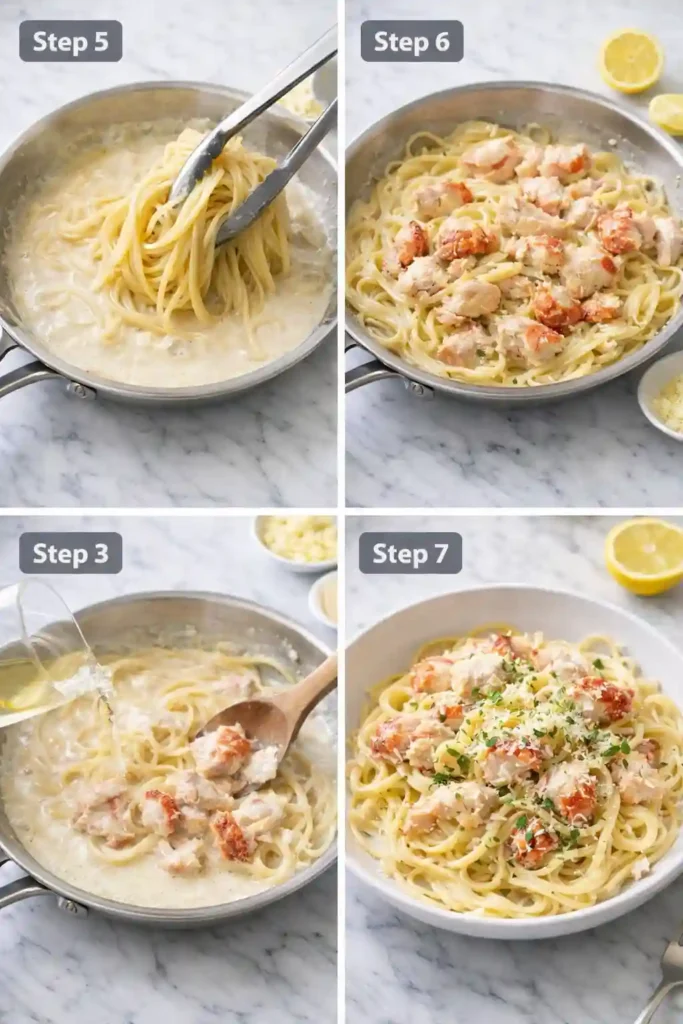
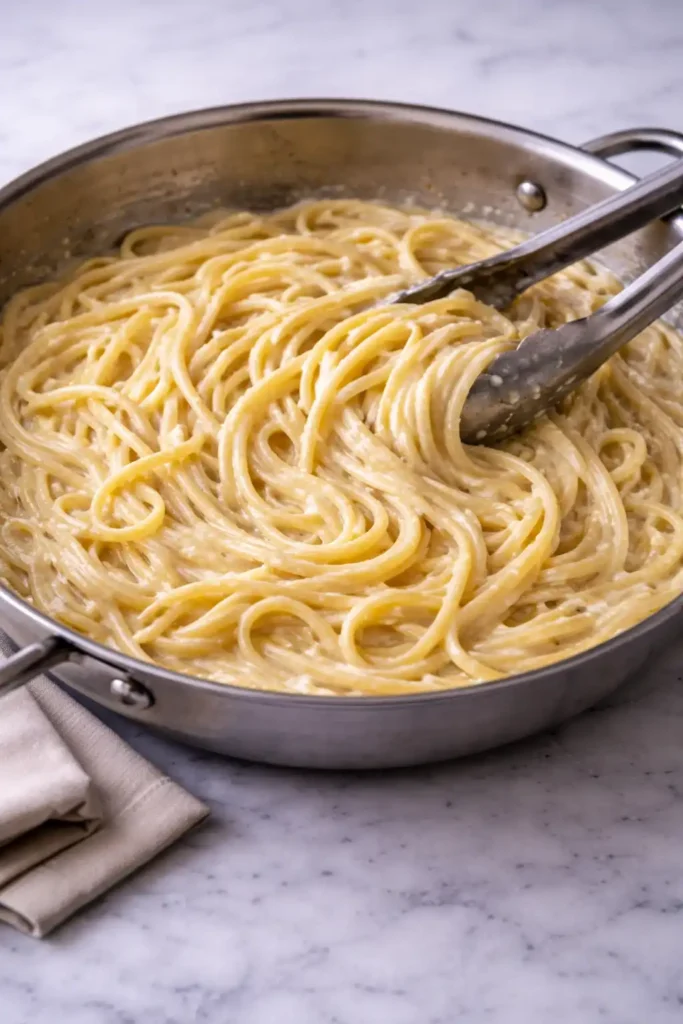
- Add the pasta and loosen as needed. Transfer the drained pasta to the skillet and toss for 1 to 2 minutes. Add reserved pasta water a splash at a time until the sauce clings to the strands in a silky layer. If it looks thick and sticky, it needs more pasta water. If it looks soupy, keep tossing for another minute.
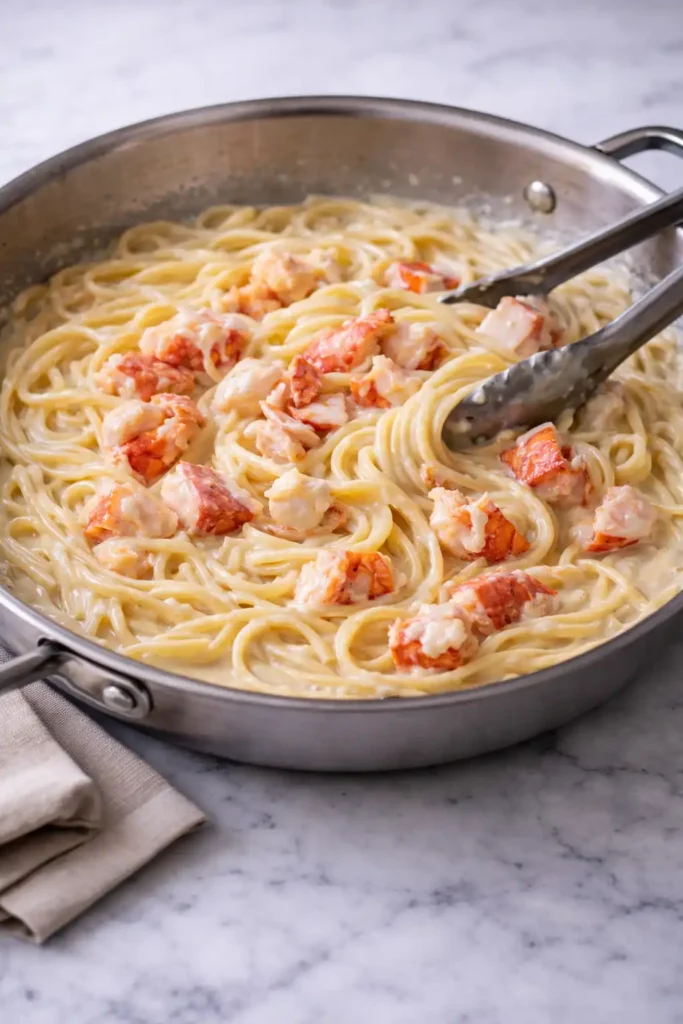
- Warm the lobster gently. Reduce the heat to low. Add 12 ounces (340g) cooked lobster meat and 1 teaspoon lemon juice, then fold everything together for 1 minute, just until the lobster is warmed through. Do not simmer hard here. This is the step that keeps the lobster tender instead of turning it firm and chewy.
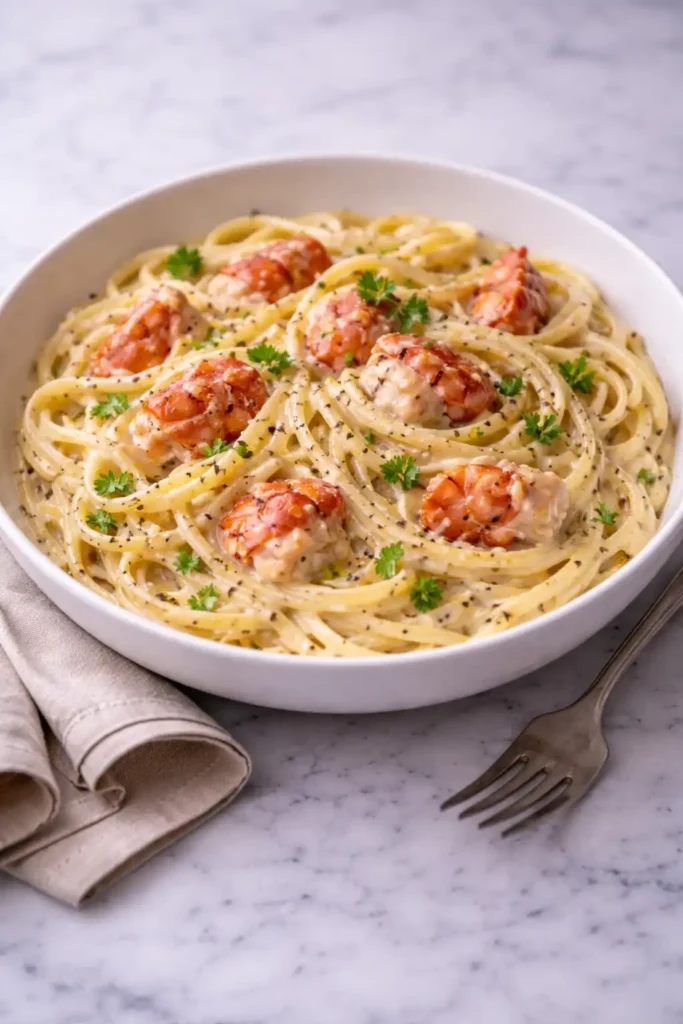
- Finish and serve. Taste and adjust with more salt, pepper, or lemon juice if needed. Turn off the heat, then add 2 tablespoons (8g) chopped parsley or chives. Twirl into warm bowls and finish with extra Parmesan, black pepper, and a little more lemon zest if you like. The final pasta should look glossy, loose, and luxurious, never dry or cement-like.
Expert Tips for the Best Creamy Lobster Pasta
- Add the lobster last: This is the most important tip in the whole recipe. Lobster meat is already delicate, and if you simmer it in the sauce for several minutes, it tightens up fast.
- Use pasta water like an ingredient: The starch in that water helps the cream, cheese, and butter come together into a sauce that coats instead of sits in the bowl.
- Grate your cheese finely: Thick shreds melt slower and can leave the sauce grainy. A fine grate gives you a much silkier finish.
- Keep the heat gentle after the cream goes in: A rolling boil is not your friend here. Gentle heat keeps the sauce smooth and the dairy stable.
- If the sauce looks grainy, do not panic: Add a splash of warm pasta water and whisk for 20 to 30 seconds off the heat. Most of the time, it comes right back together.
- Use lemon with restraint: You want brightness, not a lemon cream pasta that happens to contain lobster. Start small and taste.
- My secret weapon: A tiny pinch of red pepper flakes. Not enough to make it spicy, just enough to wake up the richness and make the lobster taste sweeter.
Delicious Variations
- Tomato-Cream Lobster Pasta: Add 1/3 cup (80g) tomato paste after the garlic and cook it for 2 minutes before adding the wine. The sauce turns deeper, rosier, and a little more dramatic.
- Spicy Lobster Linguine: Increase the red pepper flakes to 1/2 teaspoon and finish with 1 teaspoon Calabrian chili paste for a warmer, bolder version.
- Lighter Creamy Seafood Pasta: Use 8 ounces (225g) lobster and add 8 ounces (225g) shrimp. Cook the shrimp separately until just pink, then fold both into the sauce at the end.
- Spring Herb Version: Stir in 1/2 cup (70g) thawed peas and 2 tablespoons (8g) chopped tarragon or dill right before serving.
- Gluten-Free Option: Use 12 ounces (340g) gluten-free linguine. Reserve extra pasta water because gluten-free pasta usually needs more help creating a silky sauce.
What to Serve With Creamy Lobster Pasta
This pasta is rich, so I like pairing it with sides that feel crisp, fresh, or quietly buttery rather than competing for attention.
- Simple green salad: Something with a sharp vinaigrette is excellent beside this.
- Roasted asparagus: The grassy bitterness works beautifully with cream and shellfish.
- Garlic bread: For the people who refuse to leave sauce behind. I respect that.
- Lemony green beans: They keep the plate bright and balanced.
- Another elegant seafood option: Try Lobster Bites in Aromatic Garlic Butter Sauce if you want a smaller seafood dish for the same dinner mood.
- Cluster pairing: If you’re building out your own seafood dinner rotation, the site’s shrimp pasta recipes make a nice contrast in both budget and flavor direction.
How to Store, Reheat & Make Ahead
Storage
Store leftovers in an airtight container in the refrigerator for up to 2 days. Cream sauces tighten as they sit, so expect it to be thicker the next day.
Freezing
I do not love freezing this one. The lobster can go a bit cottony, and cream sauces can separate after thawing. If you must freeze it, freeze for up to 1 month and thaw overnight in the refrigerator, but know the texture will not be quite the same.
Reheating
Reheat gently in a skillet over low heat with a splash of cream, milk, or water for 3 to 5 minutes. Stir often. The microwave works in a pinch, but use 50% power and stop often so the lobster does not tighten up.
Make-Ahead
You can prep the shallot, garlic, parsley, lemon zest, and Parmesan earlier in the day. You can also cook or thaw the lobster ahead. I do not recommend fully making the sauce in advance, because this dish is at its absolute best the minute it comes together.
Creamy Lobster Pasta

Equipment
- Large Pot For boiling the linguine in well-salted water.
- Large skillet or saute pan Wide enough to toss the pasta and sauce gently with the lobster.
- Tongs Useful for tossing the pasta in the sauce.
- Microplane or fine grater For lemon zest and finely grating Parmesan.
Ingredients
For the Pasta
- 12 oz dried linguine
- 12 oz cooked lobster meat cut into large bite-size pieces
For the Sauce
- 2 tbsp unsalted butter
- 1 tbsp olive oil
- 1/4 cup shallot finely minced
- 4 garlic cloves minced
- 1 pinch red pepper flakes
- 1/2 cup dry white wine
- 1 cup heavy cream
- 1 tsp lemon zest
- 1/2 tsp kosher salt plus more for pasta water and to taste
- 1/4 tsp black pepper plus more for serving
- 3/4 cup Parmesan cheese finely grated, plus more for serving
- 1 tsp lemon juice
- 2 tbsp parsley or chives chopped
Instructions
Cook the Pasta
- Bring a large pot of well-salted water to a boil. Add the linguine and cook until just shy of al dente, about 8 to 10 minutes. Reserve 1 1/4 cups of pasta water before draining.

Build the Sauce
- In a large skillet over medium heat, melt the butter with the olive oil. Add the minced shallot and cook for 2 to 3 minutes until softened and glossy. Stir in the garlic and red pepper flakes and cook for 30 seconds.
- Pour in the white wine and simmer for 2 to 3 minutes until reduced by about half.
- Lower the heat to medium-low and stir in the heavy cream, lemon zest, kosher salt, and black pepper. Simmer gently for 2 minutes. Add the Parmesan a handful at a time, whisking between additions until smooth.
Finish the Pasta
- Add the drained pasta to the skillet and toss for 1 to 2 minutes. Add reserved pasta water a splash at a time until the sauce clings to the pasta in a silky layer.
- Reduce the heat to low. Add the cooked lobster meat and lemon juice, then fold gently for about 1 minute, just until the lobster is warmed through.
- Taste and adjust seasoning. Turn off the heat and add the chopped parsley or chives. Serve with extra Parmesan, black pepper, and more lemon zest if desired.
Notes
Nutrition
Frequently Asked Questions
How do you keep lobster tender in pasta?
Add the cooked lobster at the very end over low heat and warm it for about 1 minute. Do not boil it in the sauce.
Can I use frozen lobster for creamy lobster pasta?
Yes. Thaw it overnight in the refrigerator, pat it dry well, and fold it into the sauce only at the end. Too much surface moisture can thin the sauce.
What pasta shape is best for lobster pasta?
Linguine is my favorite because it catches the cream sauce without feeling too heavy. Fettuccine works too, but the dish will feel a little richer.
Can I make lobster pasta without wine?
Yes. Replace the wine with 1/2 cup (120ml) seafood or chicken stock plus 1 teaspoon lemon juice. It will still be good, just slightly less layered.
Why did my creamy lobster pasta sauce get grainy?
Usually one of two things happened: the heat was too high, or the cheese was added too quickly. A splash of warm pasta water and some whisking off the heat usually smooths it out.
Is creamy lobster pasta very heavy?
It can be, but this version is intentionally balanced. The lemon, wine, and pasta water keep the sauce silky instead of thick and stodgy.
Can I double this lobster pasta recipe?
Yes, but use a very large pan. Overcrowding makes it harder to emulsify the sauce and toss the pasta without breaking up the lobster.
Final Thoughts
This is the kind of creamy lobster pasta that feels like it belongs in a low-lit restaurant, but the method is calm, clear, and completely doable at home. That is exactly why I love it.
The real magic is not just the cream or the Parmesan. It is the restraint. You build a sauce that supports the lobster, then you let the lobster stay tender enough to deserve its price tag.
If you make it, leave a comment and tell me how it turned out. And if you want another creamy seafood dinner with a friendlier budget, try this Creamy Shrimp Pasta Recipe next.