
You run a knife through that thin, pale lemon shell, lift out the first slice, and there it is: a tight, buttery crumb with a clean citrus perfume and just enough richness to make it feel like a real pound cake instead of a lemon loaf pretending to be one. This is the kind of cake that belongs on a kitchen counter beside a pot of coffee, ready to be cut into thick, generous slices whenever the afternoon starts dragging.
I have made enough lemon cakes to know exactly what can go wrong. Some are too sweet and barely taste like lemon. Some smell great in the oven, then go flat and dull once cooled. Some are so dense they feel like a brick in disguise. This one gets the balance right. It is rich, bright, deeply buttery, and finished with a lemon glaze that sharpens every bite.
Why This Loaf Tastes Like Real Lemon Instead of Lemon Candy
This loaf stays true to the spirit of a classic pound cake: rich, buttery, and close-crumbed, with just enough modern tweaking to keep it tender and bright with fresh lemon.
The secret is that the lemon flavor comes from where the good stuff actually lives: the zest.
Lemon juice brings tartness, but lemon zest brings aroma. That is the part that gives the cake its clean, floral citrus smell before you even take a bite. In this lemon pound cake, the zest does the heavy lifting, while the juice keeps the glaze vivid and sharp instead of flatly sweet.
The second thing that makes this recipe work is the texture. A proper pound cake should feel substantial, but it should never be dry or leaden. Sour cream keeps the crumb tender, and careful creaming gives the loaf lift without taking away that close, velvety structure that makes pound cake so satisfying.
Then there is the glaze.
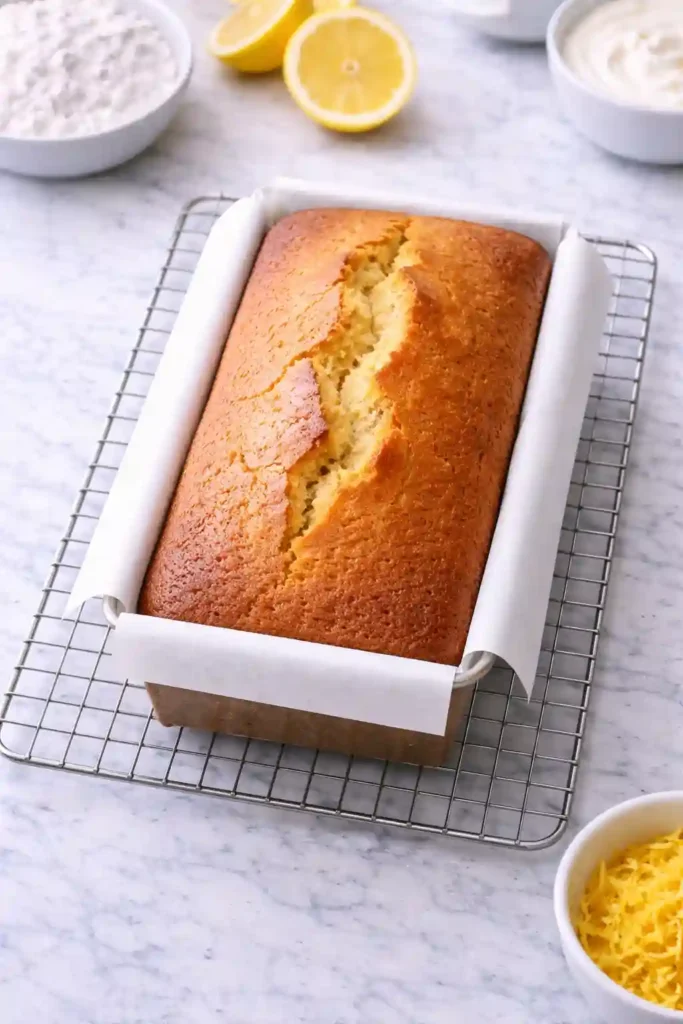
Do not skip it. I know the cake looks beautiful plain, especially with that golden ridge on top, but the glaze is what turns the flavor from good to memorable. It settles into the surface, catches in the cracks, and adds that bright finish that makes the butter and lemon snap into focus.
The Short Ingredient List That Does All the Heavy Lifting
This lemon pound cake does not need anything fancy. It just needs the right ingredients in the right condition, especially room-temperature butter, eggs, and sour cream.
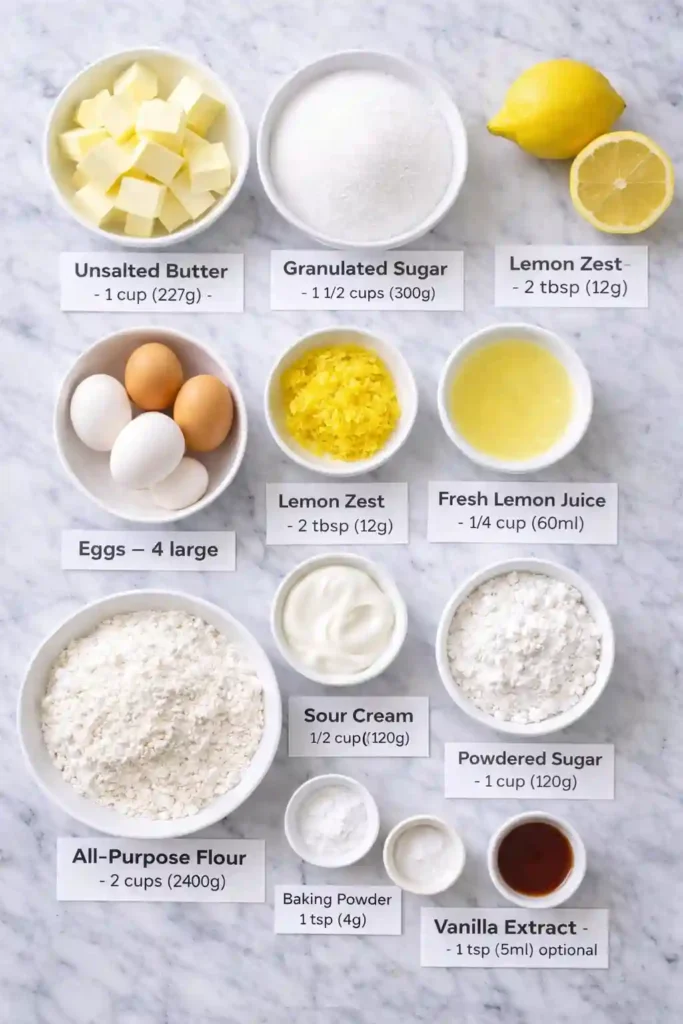
Unsalted butter — 1 cup (227g)
Butter is the backbone of the loaf. It gives the cake its rich flavor and that plush, tight crumb that makes pound cake different from a lighter sponge. A tablespoon of unsalted butter has roughly 102 calories and about 12g fat, so it is doing plenty of structural and flavor work here. Buy a good-quality block butter, not spreadable tub butter, and let it soften until your finger leaves a slight dent without sinking straight through.
Granulated sugar — 1 1/2 cups (300g)
Sugar does more than sweeten. When it is creamed with butter, it helps create tiny air pockets that give the loaf lift. It also helps the crust color evenly. A teaspoon of granulated sugar contains about 16 calories and 4g carbohydrates. Choose plain white granulated sugar, not superfine, so the creaming step has enough texture to work properly.
Fresh lemons — 2 large lemons for 2 tablespoons zest plus 1/4 cup (60ml) juice
This is where the cake gets its identity. The zest perfumes the batter, while the juice gives the glaze its tart edge. Lemon juice is low in calories, and the zest contributes aromatic oils rather than bulk, which is exactly why it tastes so intense. Pick heavy lemons with bright, smooth skin. If they feel light or look dry, they usually are.
Eggs — 4 large eggs
Eggs hold the batter together, add richness, and help the crumb bake up smooth instead of crumbly. One large egg has around 70 calories and about 6g protein. Use large eggs at room temperature so they blend into the creamed butter without making the batter look curdled.
Sour cream — 1/2 cup (120g)
Sour cream is what keeps this lemon pound cake tender on day two instead of just day one. It adds moisture and a subtle tang that supports the lemon without shouting over it. Two tablespoons of sour cream usually contain around 60 calories and 5g fat, depending on brand. Buy full-fat sour cream for the best texture.
All-purpose flour — 2 cups (240g)
Flour gives the loaf its shape, but too much will make it heavy fast. That is why I always recommend spooning and leveling, or better yet, using a scale. A quarter cup of all-purpose flour typically has around 110 calories and about 23g carbohydrates. Use standard all-purpose flour, not bread flour, which would make the crumb too firm.
The rest of the lineup is small but important: 1 teaspoon (4g) baking powder for a little lift, 1/2 teaspoon (3g) kosher salt to sharpen the flavor, 1 cup (120g) powdered sugar for the glaze, and 2 to 3 tablespoons (30 to 45ml) fresh lemon juice to bring the finish together. If you like, add 1 teaspoon (5ml) vanilla for a softer, rounder background note.
For ingredient nutrition references and standardized food data, USDA FoodData Central is the most useful place to verify basics before publishing nutrition details.
What You Can Swap — and What I Wouldn’t Mess With
You have a little flexibility here, but not on everything.
Greek yogurt can replace the sour cream in an equal amount, though the crumb will be slightly less rich. Plain yogurt works in a pinch, but it is looser, so the batter may bake a touch differently.
Bottled lemon juice is technically usable for the glaze, but I would not use it in the batter unless I had no choice. It usually tastes flatter and harsher than fresh juice. The zest is even less negotiable. That is the soul of the cake.
If you need a slightly softer citrus profile, orange zest and juice can replace part of the lemon, but then it becomes a different cake with a rounder, sweeter finish.
I would not swap the butter for oil if your goal is a true lemon pound cake. Oil makes a fine loaf cake. Butter makes a pound cake.
The Few Tools That Keep a Pound Cake Honest
You do not need a professional setup, but a few tools make this recipe much easier to nail.
- 9×5-inch loaf pan
- Hand mixer or stand mixer
- Microplane or fine zester
- Mixing bowls
- Rubber spatula
- Cooling rack
- Parchment paper
The loaf pan matters more than people think. A pan that is too small will push the batter upward too aggressively and can leave the center underbaked. A pan that is too wide gives you a squat loaf with less dramatic rise.
From Soft Butter to That Crackly Glaze
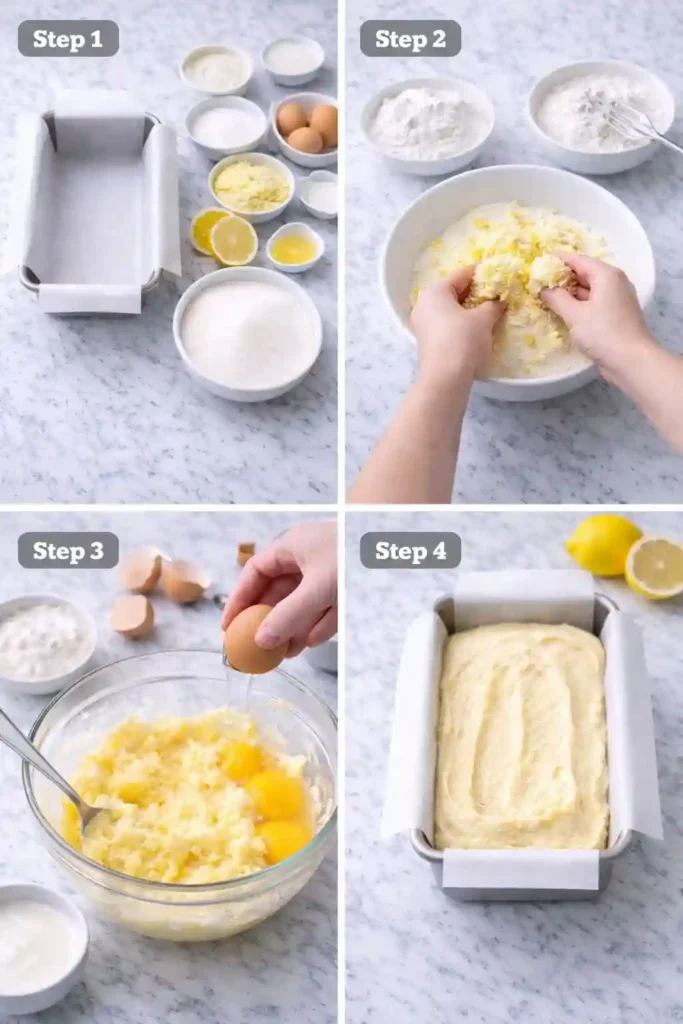
- Preheat the oven to 350°F (175°C). Grease a 9×5-inch loaf pan and line it with parchment, leaving a little overhang on the long sides so the cake lifts out cleanly later.
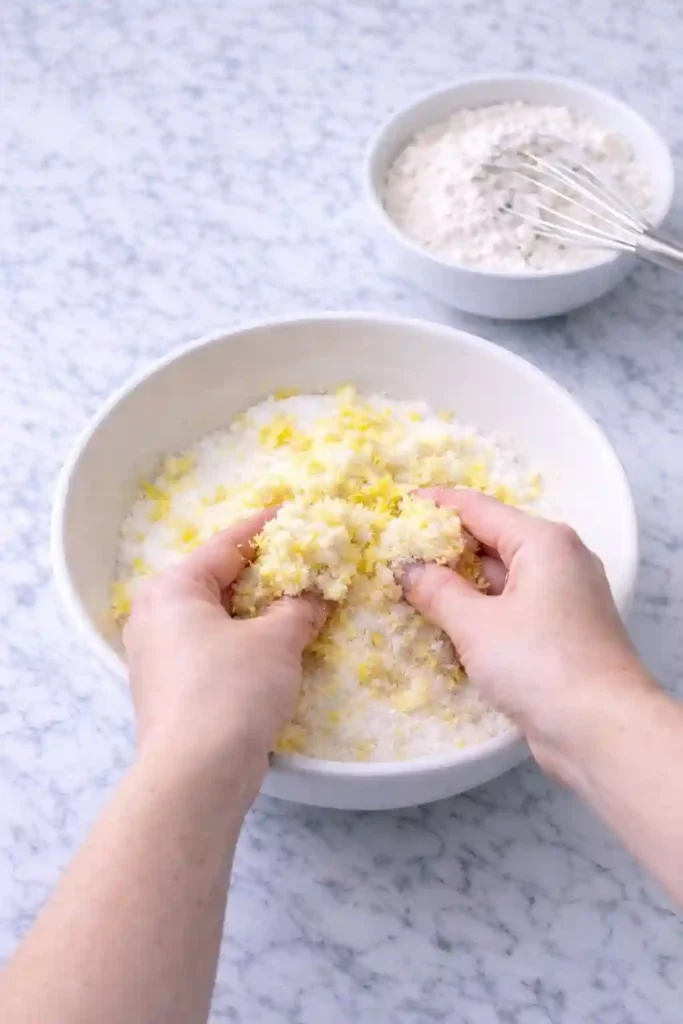
- In a medium bowl, whisk together 2 cups (240g) all-purpose flour, 1 teaspoon (4g) baking powder, and 1/2 teaspoon (3g) kosher salt. In a small bowl, rub 2 tablespoons lemon zest into 1 1/2 cups (300g) granulated sugar with your fingertips until the sugar feels damp and smells intensely lemony.
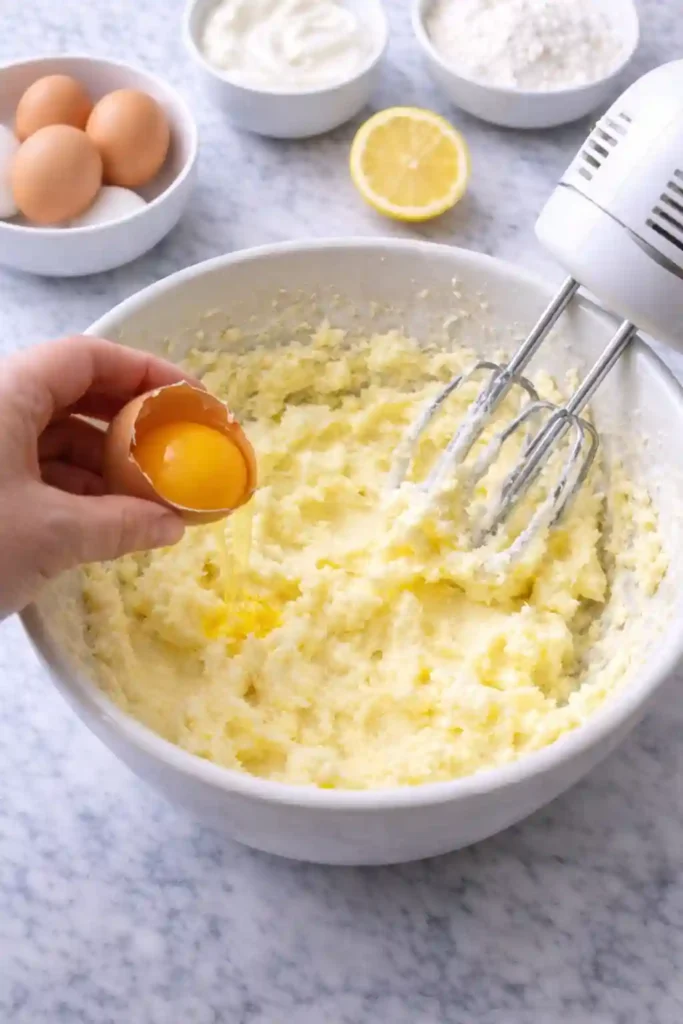
- In a large bowl, beat 1 cup (227g) softened unsalted butter with the lemon sugar on medium speed for 3 to 4 minutes, until the mixture looks pale, fluffy, and lighter in texture. Add 4 large eggs one at a time, beating well after each addition. If the batter looks slightly curdled, that is fine.
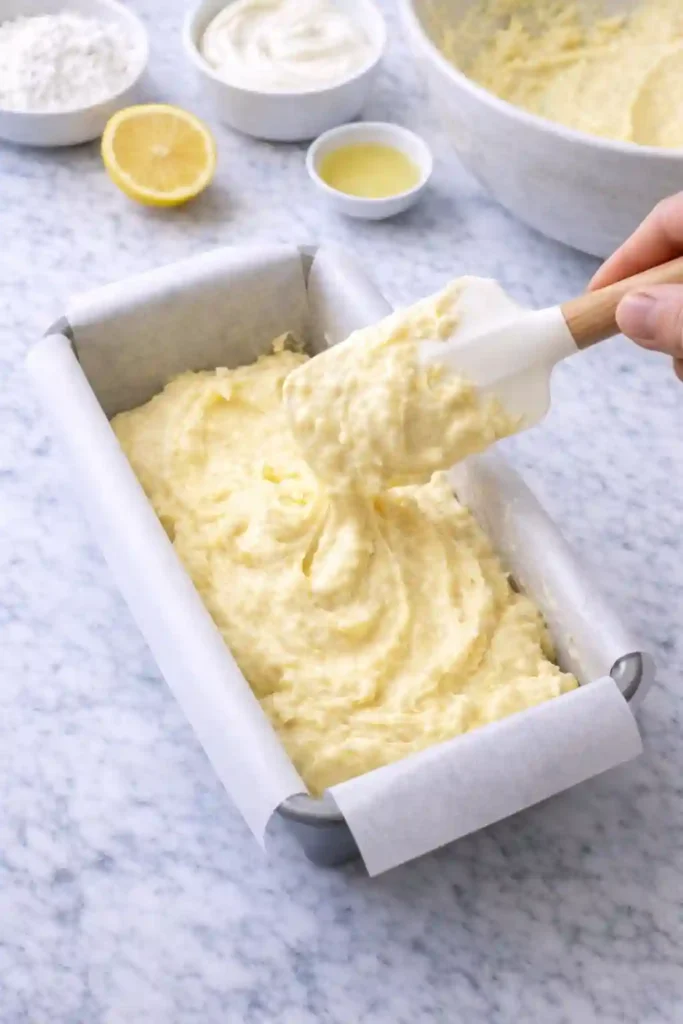
- Mix in 1/2 cup (120g) sour cream, 2 tablespoons (30ml) fresh lemon juice, and 1 teaspoon (5ml) vanilla, if using. Add the dry ingredients and mix on low just until no flour streaks remain. Scrape the batter into the prepared pan and smooth the top.
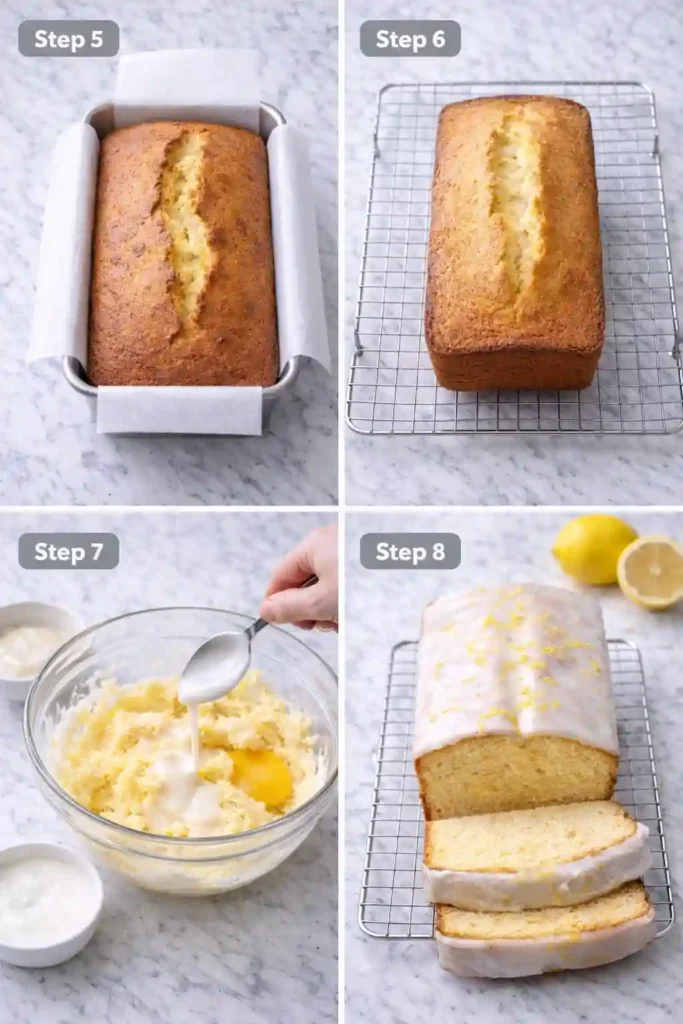
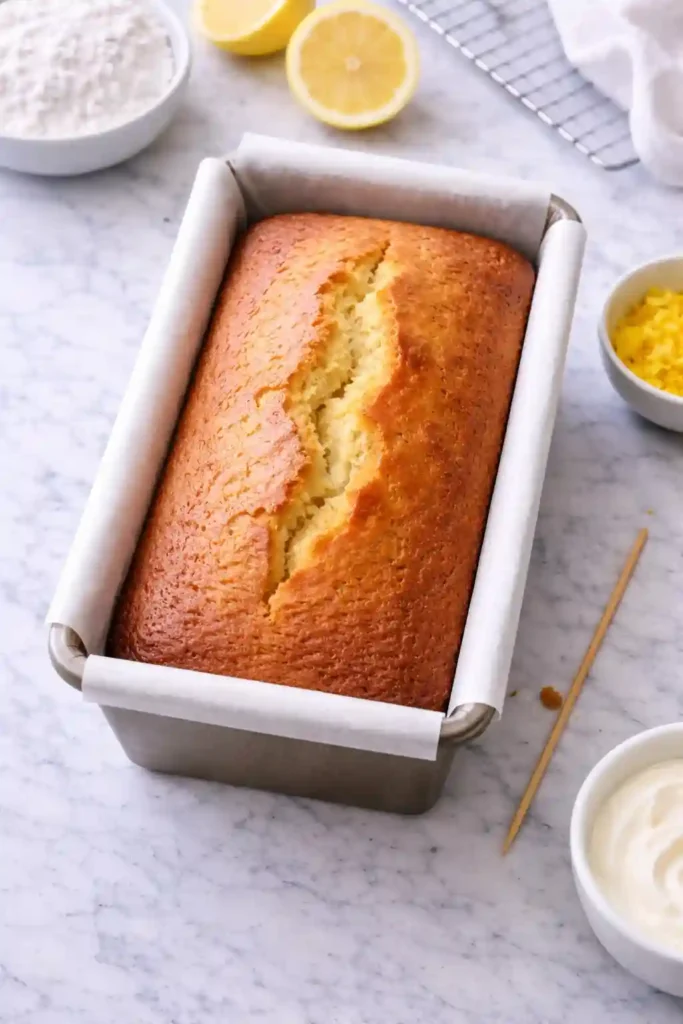
- Bake for 50 to 60 minutes, until the top is deeply golden, the center springs back lightly, and a tester inserted into the middle comes out with a few moist crumbs but no wet batter. If the top is browning too fast near the end, tent it loosely with foil.
- Cool the cake in the pan for 15 minutes, then use the parchment to lift it onto a rack. Let it cool completely before glazing. This part matters. A warm cake will drink the glaze instead of wearing it.
- For the glaze, whisk 1 cup (120g) powdered sugar with 2 tablespoons (30ml) fresh lemon juice. Add up to 1 tablespoon (15ml) more juice, a little at a time, until it flows slowly off the whisk in a thick ribbon. Spoon it over the cooled cake and let it set for 15 to 20 minutes.
- Slice with a sharp serrated knife and serve once the glaze has turned glossy and lightly firm. You should see a fine, buttery crumb and smell lemon before the slice even reaches the plate.
The Small Baking Decisions That Change Everything
Room-temperature ingredients are not bakery folklore. They help the batter emulsify smoothly, which is what gives you an even crumb instead of dense streaks.
Do not rush the butter and sugar. The full 3 to 4 minutes matters. This is where the loaf gets much of its structure. If you stop too early, the cake can come out squat and heavy.
Use the zest aggressively. I like rubbing it into the sugar because it bruises the zest and pulls the oils right into the sweet base of the batter. That gives the lemon pound cake a deeper aroma than just tossing zest into the bowl and hoping for the best.
If your glaze looks too thin, add more powdered sugar. If it looks chalky or stiff, add a few drops of lemon juice. If it goes on unevenly, do not panic. Let the first layer settle for a minute, then spoon a little more over the bare spots.
The biggest doneness mistake is pulling the loaf when the top looks finished but the center still needs time. Pound cakes color early because of the butter and sugar. Always check the middle, not just the crust.
Three Directions to Take It Once You Know the Base Recipe
Berry version: Fold in 3/4 cup (105g) fresh blueberries tossed with 1 tablespoon (8g) flour. The crumb will be a little softer, and the bake time may run 5 minutes longer.
Extra-bright version: Add 1/4 teaspoon lemon extract along with the vanilla if you want a more assertive citrus finish. Keep it restrained. Too much makes the cake taste artificial fast.
Bundt-style version: Bake the batter in a well-greased small Bundt pan if volume allows, watching the bake time closely. The edges brown faster, and the glaze drapes beautifully over the curves.
For a richer brunch spread, this cake sits naturally beside other bakery-style bakes with distinct textures and flavors rather than frosted celebration cakes.
How I Like to Serve It When I Want the Lemon to Stand Out
This lemon pound cake is best served in thick slices, not skinny ones. The crumb needs a little presence on the plate.
I love it with hot coffee, black tea, or a spoonful of barely sweetened whipped cream. If you are building out a spring table, fresh raspberries or strawberries on the side make the citrus feel even brighter without covering it up.
If classic bakes are your thing, this is a nice one to pair in a weekend baking rotation with Carrot Cake Recipe: Step-by-Step To The Perfect Dessert.
How to Keep the Last Slice as Good as the First
Storage
Wrap the cake well and keep it at room temperature for up to 3 days. Once the glaze is set, I like storing it under a cake dome or in an airtight container so the crumb stays tender.
Freezing
You can freeze the whole loaf or individual slices for up to 2 months. Wrap tightly in plastic, then foil, and thaw at room temperature. If freezing the whole cake, glaze it after thawing for the freshest finish.
Reheating
You usually do not need to reheat pound cake, but a 10-second warm-up in the microwave softens a day-old slice nicely. Just know the glaze will lose some of its crisp edge.
Make-Ahead
This is an excellent make-ahead loaf. Bake it the day before, let it cool completely, and glaze it the next morning if you want the surface to look especially clean and bright.

Lemon Pound Cake with Bright Lemon Glaze
Equipment
- 9×5-inch loaf pan lined with parchment
- Hand mixer or stand mixer
- Mixing bowls
- Microplane for lemon zest
- cooling rack
Ingredients
For the cake
- 1 cup unsalted butter softened
- 1 1/2 cups granulated sugar
- 2 tbsp lemon zest from about 2 large lemons
- 4 eggs room temperature
- 1/2 cup sour cream full-fat, room temperature
- 2 tbsp fresh lemon juice for the batter
- 1 tsp vanilla extract optional
- 2 cups all-purpose flour
- 1 tsp baking powder
- 1/2 tsp kosher salt
For the glaze
- 1 cup powdered sugar
- 2 to 3 tbsp fresh lemon juice for the glaze
Instructions
Make the lemon pound cake
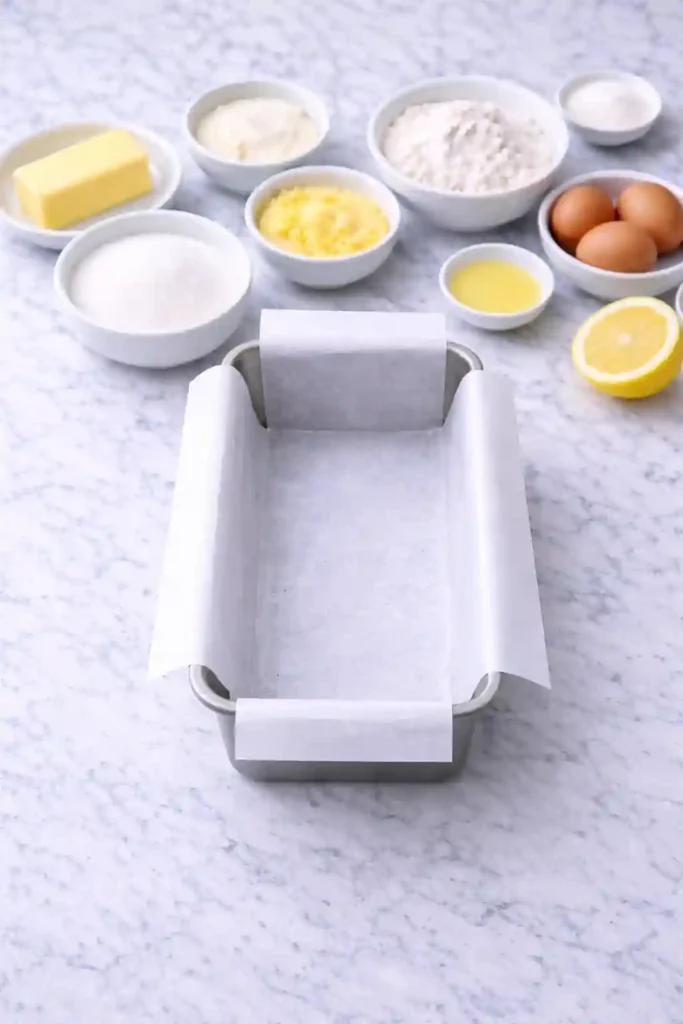
- Preheat the oven to 350°F (175°C). Grease a 9×5-inch loaf pan and line it with parchment, leaving a little overhang on the long sides so the cake lifts out cleanly later.

- In a medium bowl, whisk together 2 cups (240g) all-purpose flour, 1 teaspoon (4g) baking powder, and 1/2 teaspoon (3g) kosher salt. In a small bowl, rub 2 tablespoons lemon zest into 1 1/2 cups (300g) granulated sugar with your fingertips until the sugar feels damp and smells intensely lemony.
- In a large bowl, beat 1 cup (227g) softened unsalted butter with the lemon sugar on medium speed for 3 to 4 minutes, until the mixture looks pale, fluffy, and lighter in texture. Add 4 large eggs one at a time, beating well after each addition. If the batter looks slightly curdled, that is fine.
- Mix in 1/2 cup (120g) sour cream, 2 tablespoons (30ml) fresh lemon juice, and 1 teaspoon (5ml) vanilla, if using. Add the dry ingredients and mix on low just until no flour streaks remain. Scrape the batter into the prepared pan and smooth the top.
- Bake for 50 to 60 minutes, until the top is deeply golden, the center springs back lightly, and a tester inserted into the middle comes out with a few moist crumbs but no wet batter. If the top is browning too fast near the end, tent it loosely with foil.
- Cool the cake in the pan for 15 minutes, then use the parchment to lift it onto a rack. Let it cool completely before glazing. This part matters. A warm cake will drink the glaze instead of wearing it.
- For the glaze, whisk 1 cup (120g) powdered sugar with 2 tablespoons (30ml) fresh lemon juice. Add up to 1 tablespoon (15ml) more juice, a little at a time, until it flows slowly off the whisk in a thick ribbon. Spoon it over the cooled cake and let it set for 15 to 20 minutes.
- Slice with a sharp serrated knife and serve once the glaze has turned glossy and lightly firm. You should see a fine, buttery crumb and smell lemon before the slice even reaches the plate.


Notes
Nutrition
Frequently Asked Questions
What makes a lemon pound cake different from a lemon loaf cake?
A lemon pound cake usually has a richer, denser, more buttery crumb than a standard lemon loaf cake. It should feel substantial without being heavy, and the texture is tighter and smoother.
How do I keep lemon pound cake moist?
Use room-temperature butter and eggs, measure the flour accurately, do not overmix after adding the flour, and do not overbake. Sour cream also helps the crumb stay tender for longer.
Can I make lemon pound cake ahead of time?
Yes. In fact, lemon pound cake often tastes even better the next day because the citrus and butter settle into the crumb. Store it well wrapped and glaze before serving if you want the neatest finish.
Why did my lemon pound cake turn out dry?
Dry lemon pound cake usually comes from too much flour, overbaking, or not enough fat and dairy balance in the batter. Even 5 extra minutes in the oven can make a difference with a loaf this size.
Can I freeze lemon pound cake?
Yes. Freeze the loaf whole or in slices, wrapped tightly, for up to 2 months. For the best texture, thaw at room temperature and glaze after thawing if possible.
Can I use bottled lemon juice in lemon pound cake?
You can use it in the glaze if needed, but fresh lemon juice and zest give the cake a cleaner, brighter flavor. The zest matters even more than the juice in the batter.
The Kind of Cake You Bake Once and Start Craving on Purpose
This is one of those recipes that earns a permanent place in your kitchen without making a big speech about itself. It is steady, bright, rich in all the right places, and exactly the sort of thing you start making for brunch, for guests, or just because the week needs improving.
And once you have that first glossy slice on a plate, it is very hard to go back to lemon cakes that only smell the part.
For another bakery-style cake with a completely different personality, try Pistachio Cake: Secrets for a Nutty Twist next, then bookmark Raspberry and Pistachio Cake :The Ultimate Guide for a fruit-forward follow-up.