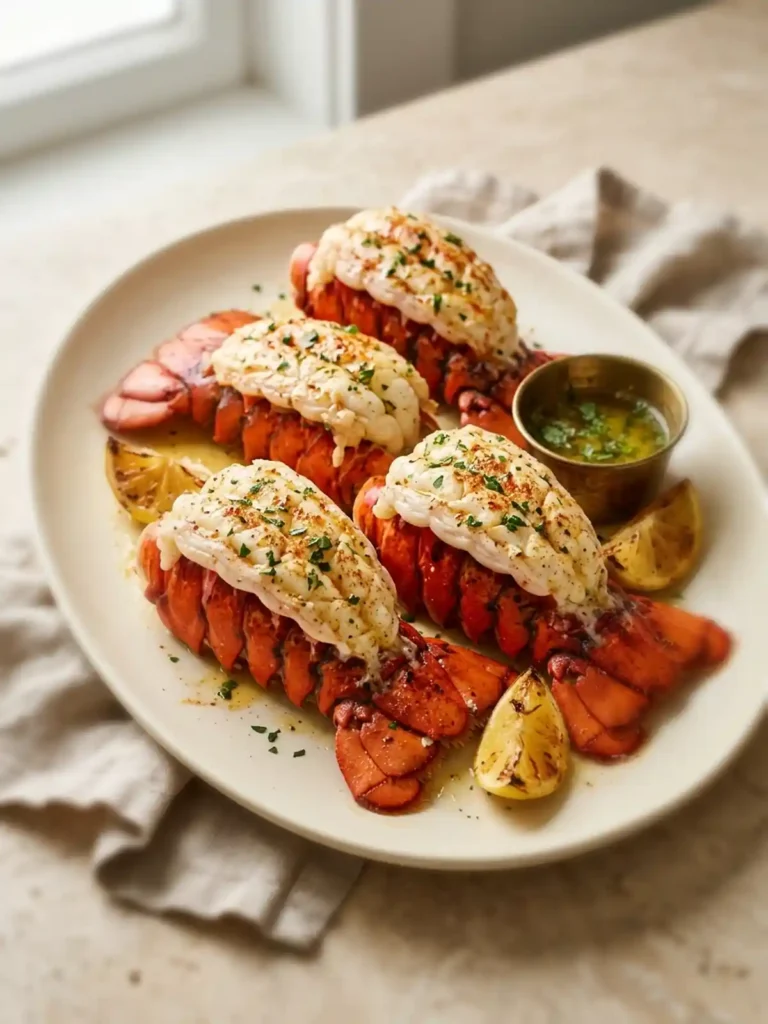
Nothing makes a home cook sweat quite like sliding $45 worth of shellfish under a roaring broiler, knowing sixty extra seconds can turn sweet meat rubbery. This garlic butter lobster tail recipe takes the guesswork out of steakhouse seafood in just 18 minutes total (10 minutes of prep and 8 minutes under the broiler).
You will get 4 butterflied lobster tails (240 calories and 22g protein per serving) glazed in a warm lemon-Dijon butter emulsion that clings to every ridge instead of pooling in the pan. Serve them alongside creamy lobster pasta for an unforgettable celebration dinner, using a sharp chef’s knife if you do not own kitchen shears or the 425°F bake option below if your broiler heats unevenly.
Ingredients & Tested Swaps for Garlic Butter Lobster Tails
Every ingredient in this garlic butter lobster tail recipe is measured to balance sweet cold-water shellfish with a glossy, stay-put basting glaze that will not scorch under high top heat.
- 4 cold-water lobster tails (5 to 6 oz / 140 to 170g each): Thawed completely if frozen and patted bone-dry with paper towels so the glaze adheres cleanly.
- 4 tbsp unsalted butter (57g): Cut into 4 pieces for gentle melting and precise salt control.
- 1 tbsp extra-virgin olive oil (15ml): Raises the smoke threshold of the dairy solids under a 500°F broiler.
- 4 garlic cloves (12g): Finely grated on a microplane so the garlic melts into the butter rather than sitting in burn-prone chunks.
- 1 tbsp fresh lemon juice (15ml): Brightens the rich butter glaze, plus extra lemon wedges for the platter.
- 1 tsp Dijon mustard (5g): Whisked in off the heat to bind the melted butter and lemon juice into a thick glaze.
- 1/2 tsp sweet smoked paprika (1g): Gives the top ridges a warm, golden steakhouse blush without hiding the shellfish flavor.
- 1/2 tsp fine sea salt (3g) & 1/4 tsp freshly cracked black pepper (0.5g): Seasons the exposed meat evenly inside the diamond cuts.
- 2 tbsp fresh flat-leaf parsley (8g): Finely chopped and divided between the warm baste and the final garnish.
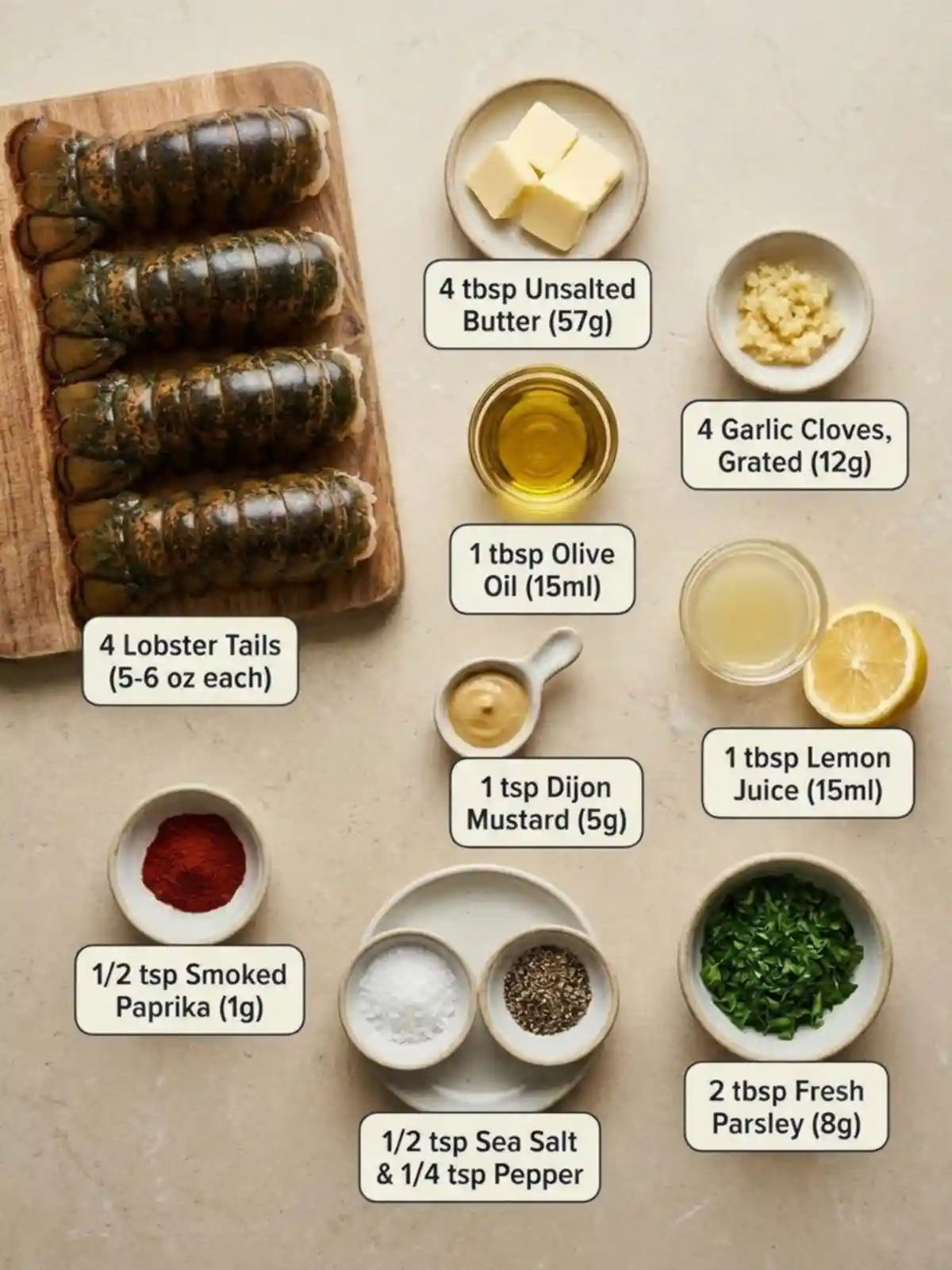
Tested Kitchen Swaps: In my kitchen tests, cold-water Maine or Canadian tails (which have reddish-brown speckles and sweeter, firmer meat) stayed noticeably juicier than warm-water spiny tails. If you only have salted butter, cut the added fine sea salt down to a scant 1/4 teaspoon. You can also swap fresh parsley for finely snipped chives or French tarragon, or keep a batch of whipped garlic herb butter on hand to melt over the hot tails right as they leave the oven.
How to Butterfly Lobster Tails & The 2-Stage Dijon Glaze
When you check most recipes for broiled garlic butter lobster tails, they tell you to stir raw minced garlic into melted butter and brush it straight onto the meat. Under a 500°F broiler element, two things go wrong fast: raw garlic bits char and turn bitter in four minutes, and thin melted butter slides right off the curved tail into the sheet pan.
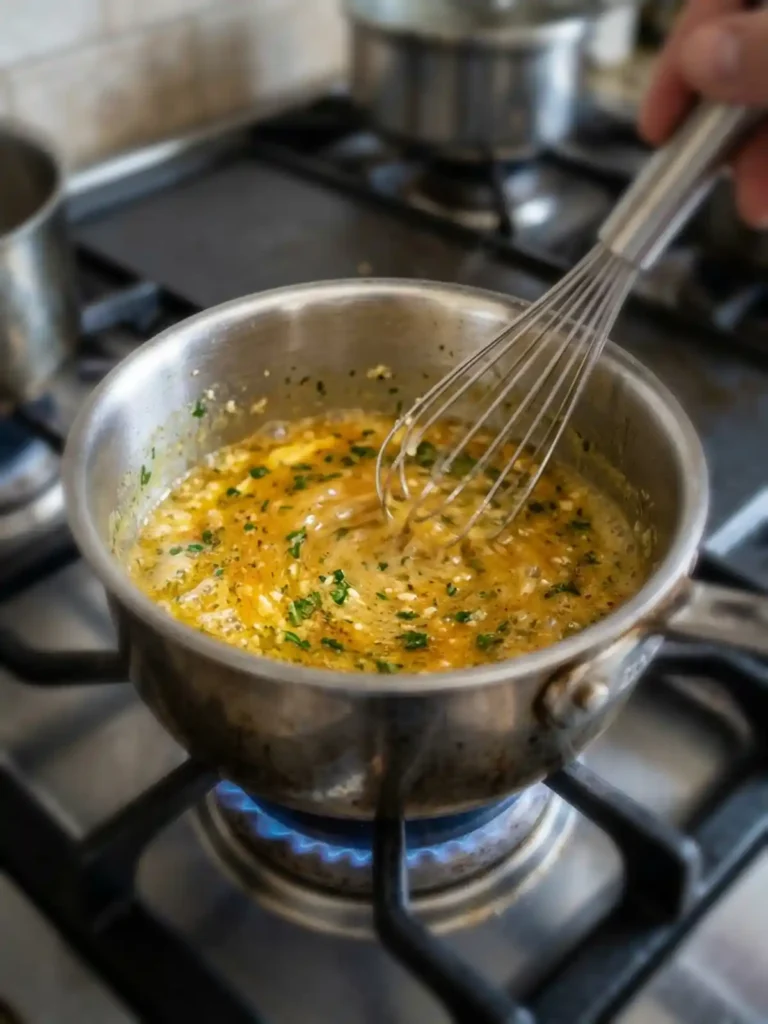
In my side-by-side tests, Batch 1 brushed with plain melted butter and chopped garlic lost nearly all its coating to the foil and developed burnt garlic flecks by minute five. Batch 2 used a 60-second warm-infused grated garlic butter whisked off-heat with 1 teaspoon of Dijon mustard and fresh lemon juice. The Dijon binds the fat and citrus into a velvety glaze that clings inside shallow 1/4-inch diamond scores cut across the top of the meat.
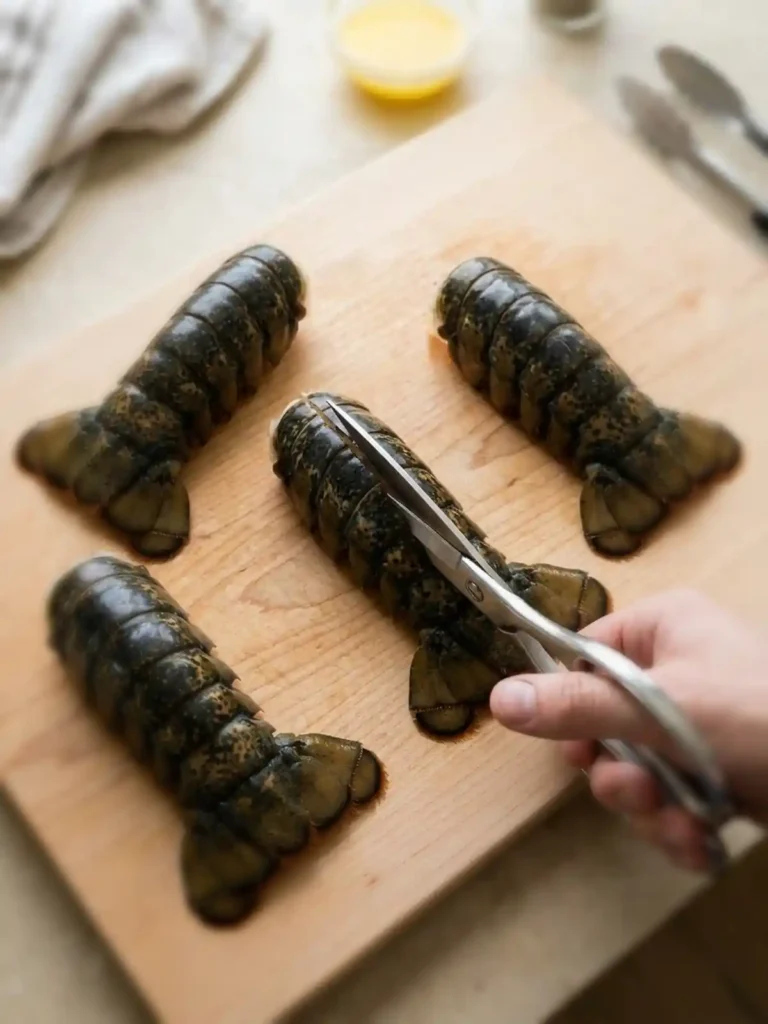
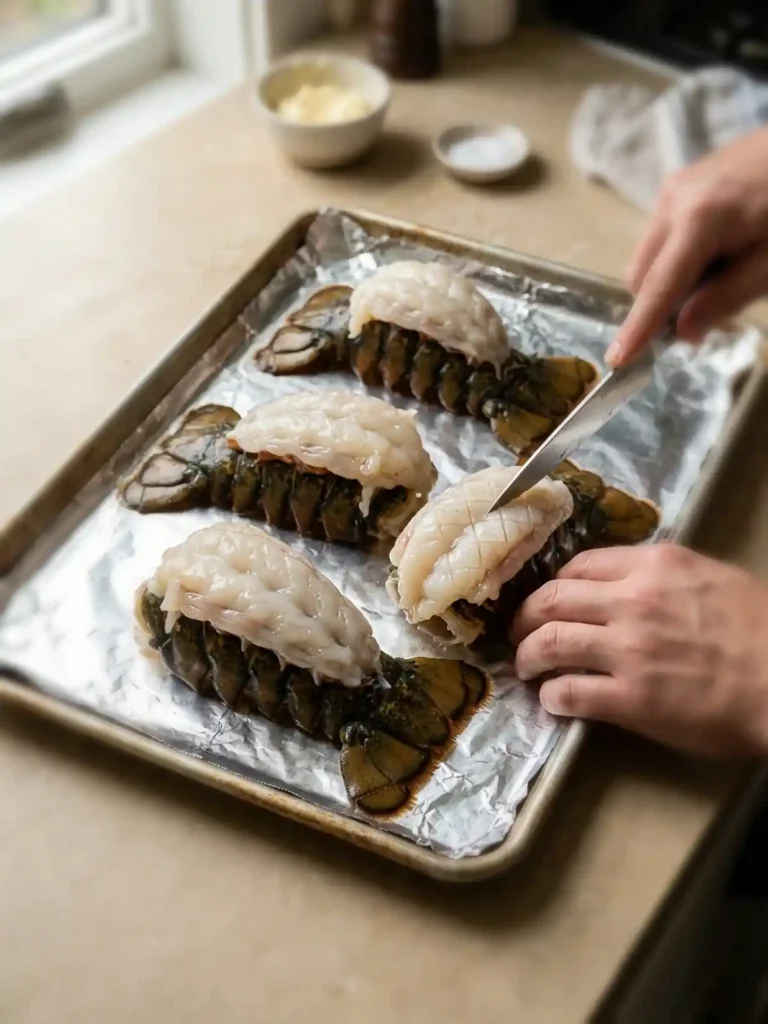
Learning how to butterfly lobster tails piggyback-style is the second half of the secret. Snip straight down the center of the hard top shell to the base of the tail fan with kitchen shears, pry the shell halves slightly apart with your thumbs, and slide a spoon underneath to free the meat while keeping the base anchored. Lift the meat cleanly through the split so it rests perched on top of the closed shell ribs, where radiant heat can reach all sides evenly.
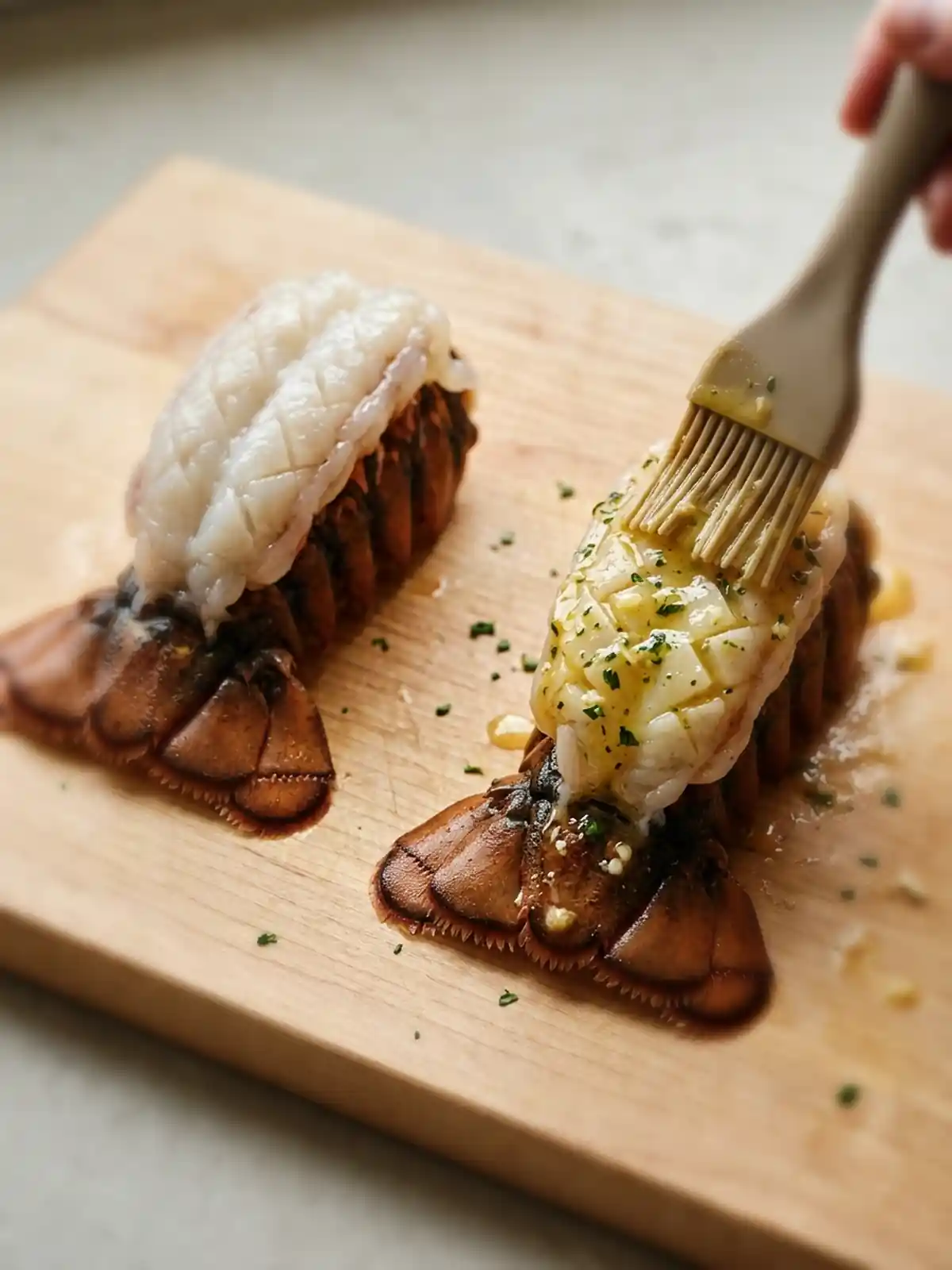
We brush half of the lemon-Dijon garlic butter over the scored meat before broiling and reserve the other half warm in the saucepan for an immediate post-oven baste. According to FoodSafety.gov safe minimum temperature guidelines, shellfish reaches full food-safe doneness at 145°F (63°C), while nutrient profiles from USDA FoodData Central confirm lobster tail is naturally lean (under 1g fat per 100g raw meat), making that emulsified butter baste essential for moisture protection.
Lobster Tail Weight & Broil vs. Bake Time Chart
Whether you prefer high-heat broiling or baked lobster tails with garlic butter at 425°F, tail weight dictates exact cooking minutes. Use this tested timing chart alongside an instant-read thermometer positioned in the thickest middle section of the tail:
| Tail Weight (In Shell) | High Broil (500°F, 6″ Below Element) | Oven Baked (425°F, Center Rack) | Target Pull Temp (Before 3-Min Rest) |
|---|---|---|---|
| 4 oz (115g) Small Tail | 5 to 6 minutes | 10 to 11 minutes | 135°F (57°C) → rests to 142°F |
| 5 to 6 oz (140–170g) Standard Tail | 7 to 8 minutes | 12 to 14 minutes | 135°F (57°C) → rests to 145°F |
| 7 to 8 oz (200–225g) Large Tail | 9 to 10 minutes | 15 to 17 minutes | 135°F (57°C) → rests to 145°F |
| 9 to 10 oz (255–285g) Jumbo Tail | 11 to 12 minutes (drop rack to 7″) | 18 to 20 minutes | 136°F (58°C) → rests to 145°F |
The 135°F Pull Rule, Troubleshooting, Storage & Next-Day Remix
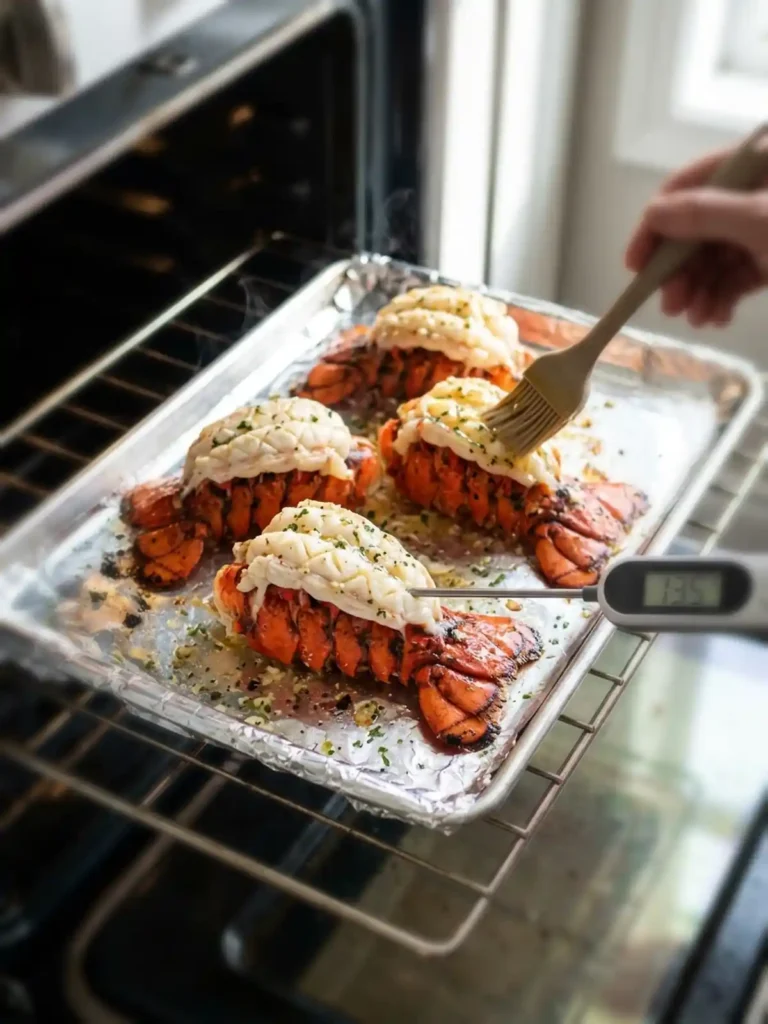
Carryover Thermal Precision: Never wait until your thermometer reads 145°F while the tray is still under the broiler. Pull every easy broiled lobster tail out of the oven the moment the thickest center hits 135°F (57°C) and the flesh turns opaque pearl-white. Brush immediately with the reserved warm garlic butter and let the tails rest on the hot baking sheet for 3 minutes—residual heat from the shell and pan carries the center smoothly to 140°F–145°F (60°C–63°C) without squeezing out moisture.
Quick Kitchen Troubleshooting: If your tail meat curls sideways into a tight hook, the bottom membrane was still attached to the shell; run a spoon all the way down both sides before lifting the meat up. If your frozen tails are still icy in the center, seal them in a zip-top bag submerged in cold tap water for 30 minutes (changing the water at 15 minutes) rather than microwaving.
Safe Storage & Gentle Reheating: Store cooled leftover lobster meat and pan juices in an airtight container in the refrigerator at 40°F (4°C) or below for up to 2 days. To freeze, remove the cooked meat from the shells, coat it in leftover melted garlic butter, wrap tightly, and freeze at 0°F (-18°C) for up to 2 months. Reheat covered in a 300°F (150°C) oven with 1 tablespoon of butter for 6 to 8 minutes until warmed to 165°F (74°C).
Next-Day Lobster Roll Remix: Dice chilled leftover tail meat into 3/4-inch chunks and warm them gently for 90 seconds in a skillet with 1 tablespoon of salted butter and a pinch of lemon zest. Pile the warm, glossy chunks into a toasted split-top brioche bun and scatter with minced chives for a Connecticut-style warm buttered lobster roll. For a surf-and-turf spread, pair this dish with French onion mashed potatoes with Gruyère, start with skillet garlic butter lobster bites, or make our 20-minute garlic butter shrimp on busy weeknights.
Quick Summary
This garlic butter lobster tail recipe delivers tender, restaurant-style broiled garlic butter lobster tails at home in 18 minutes total (10 minutes prep, 8 minutes cook). Four 5 to 6 oz cold-water lobster tails are butterflied piggyback-style on their shells, scored in a shallow 1/4-inch diamond pattern, and brushed with a 60-second warm-infused garlic butter whisked with fresh lemon juice, Dijon mustard, smoked paprika, and parsley. Broiled 6 inches from high heat for 7 to 8 minutes and pulled at exactly 135°F (57°C), the tails finish with a second warm baste during a 3-minute carryover rest to reach 140°F–145°F without turning rubbery, yielding 4 servings at 240 calories and 22g protein per tail.
Did you broil your lobster tails on high or use the 425°F oven bake—and did you keep the smoky paprika or go classic lemon-parsley? Tap the stars in the recipe card below and leave a quick comment to let me know how yours turned out!
Garlic Butter Lobster Tail Recipe

Equipment
- Kitchen Shears
- Rimmed Baking Sheet
- Small Saucepan
- Silicone Basting Brush
- Instant-read thermometer
Ingredients
- 4 whole cold-water lobster tails 5 to 6 oz / 140 to 170g each, thawed if frozen and patted dry
- 4 tbsp unsalted butter 57g, cut into 4 pieces
- 1 tbsp extra-virgin olive oil 15ml
- 4 cloves garlic cloves 12g, finely grated on a microplane
- 1 tbsp fresh lemon juice 15ml, plus lemon wedges for serving
- 1 tsp Dijon mustard 5g, emulsifies the butter glaze
- 0.5 tsp sweet smoked paprika 1g, for warm golden color
- 0.5 tsp fine sea salt 3g
- 0.25 tsp freshly cracked black pepper 0.5g
- 2 tbsp fresh flat-leaf parsley 8g, finely chopped, divided
Instructions
- Position an oven rack 6 inches (15cm) below the upper broiler element and preheat the broiler to HIGH (500°F/260°C). Line a rimmed aluminum baking sheet with foil. Place the thawed, paper-towel-dried lobster tails shell-side up on a cutting board. Using sharp kitchen shears, cut straight down the center of the top hard shell to the base of the tail fin without slicing through the bottom shell.

- Run your thumbs along the cut edges to crack the shell ribs slightly open. Slide a spoon underneath the meat to loosen it from the bottom membrane, keeping the base attached near the tail fan. Lift the meat up through the split and rest it piggyback-style on top of the closed shell halves. Lightly score the top of the meat 1/4-inch deep in a diamond pattern so the glaze can pool inside.
- In a small saucepan over low heat, melt the unsalted butter with the extra-virgin olive oil and finely grated garlic for 60 seconds until fragrant and pale golden without browning. Remove from the heat and whisk in the fresh lemon juice, Dijon mustard, sweet smoked paprika, fine sea salt, black pepper, and half of the chopped parsley until thickened into a glossy emulsion.
- Arrange the butterflied lobster tails on the prepared baking sheet and brush half of the warm garlic butter emulsion generously over the scored meat (reserving the remaining half in the pan). Broil 6 inches from the heat source for 7 to 8 minutes for 5 to 6 oz tails until the shells turn bright crimson, the meat is opaque white, and an instant-read thermometer inserted into the thickest center reads 135°F (57°C). Remove from the oven, brush immediately with the reserved warm garlic butter, and let rest on the hot tray for 3 minutes so carryover heat brings the center to a juicy 140°F to 145°F (60°C to 63°C). Scatter with the remaining parsley and serve warm with lemon wedges.
Notes
Nutrition
Frequently Asked Questions
How long do you broil lobster tails with garlic butter?
Broil 5 to 6 oz lobster tails for 7 to 8 minutes on a rack set 6 inches below high heat (500°F). Pull the tray when an instant-read thermometer in the thickest center hits 135°F (57°C), then let carryover heat bring the meat to 140°F–145°F during a 3-minute rest.
Why did my garlic butter lobster tail turn rubbery?
Lobster turns rubbery from overcooking past 145°F under direct heat or cooking partially frozen tails. Always thaw cold-water tails completely in the refrigerator, pat them dry, and remove them from the broiler at 135°F so residual shell heat finishes cooking the center gently without squeezing out moisture.
Is it better to bake or broil lobster tails?
Broiling is best for caramelizing the top ridges quickly, while baked lobster tails with garlic butter at 425°F (220°C) for 12 to 14 minutes offer gentler, more forgiving heat. Both methods produce tender, juicy meat as long as you butterfly the shells and pull at 135°F.
How do you butterfly a lobster tail without breaking the shell?
Cut straight down the center of the top shell to the tail fan using sharp kitchen shears, then gently pry the shell halves apart with your thumbs. Slide a spoon underneath to loosen the meat, lift it through the split, and rest it piggyback-style on top of the closed shell.
Can I cook frozen lobster tails for this garlic butter lobster tail recipe?
Never broil frozen lobster tails directly from the freezer, or the outside will toughen before the center warms through. Thaw frozen tails overnight in the refrigerator for 18 to 24 hours, or submerge them in a sealed zip-top bag in cold tap water for 30 minutes before prepping.