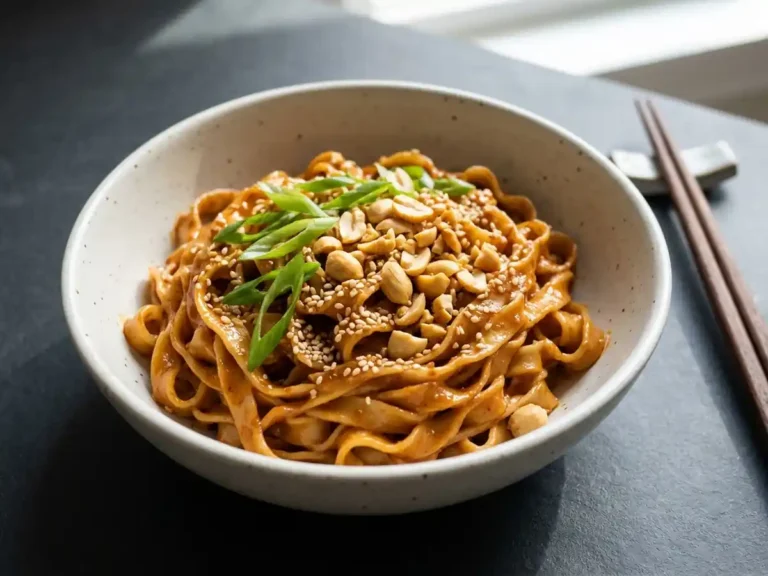
Most homemade gochujang peanut noodles turn pasty and clumpy because whisking cold peanut butter, raw garlic, and plain tap water in a bowl causes the sauce to seize and slide right off the pasta. Ready in 15 minutes flat, this skillet-emulsified version yields 4 hearty servings with 440 calories, 16g protein, and 4.5g fiber per 225g bowl.
If you love the bold, nutty crunch of our Crispy Rice Salad with Spicy Peanut Dressing, you will appreciate how these 15-minute gochujang peanut noodles turn pantry staples into a silky weeknight lunch or dinner. Don’t have a 12-inch skillet handy? You can bloom the aromatics and whisk the sauce right inside the warm pot you used to boil the noodles.
How Each Ingredient Builds Glossy Spicy Peanut Gochujang Noodles
- 2-to-1 Smooth Peanut Butter and Gochujang Ratio: Pairing 1/3 cup (85 g) conventional smooth peanut butter with 2.5 tablespoons (45 g) Korean fermented chili paste delivers rich nuttiness and balanced sweet-savory heat without turning heavy.
- Hot Starchy Noodle Water: Scooping 1/2 cup (120 ml) cloudy cooking water before draining gives you dissolved wheat starch that binds the peanut butter and soy sauce into a shiny glaze.
- Toasted Sesame Oil, Garlic, Ginger, and Scallion Whites: Warming minced garlic, grated ginger, and scallion whites in sesame oil for 30 seconds softens harsh raw-garlic heat and perfumes the pan.
- Rice Vinegar, Honey, and Crunchy Toppings: Unseasoned rice vinegar and honey brighten the rich base, while scallion greens, chopped roasted peanuts, and toasted sesame seeds add crisp contrast.
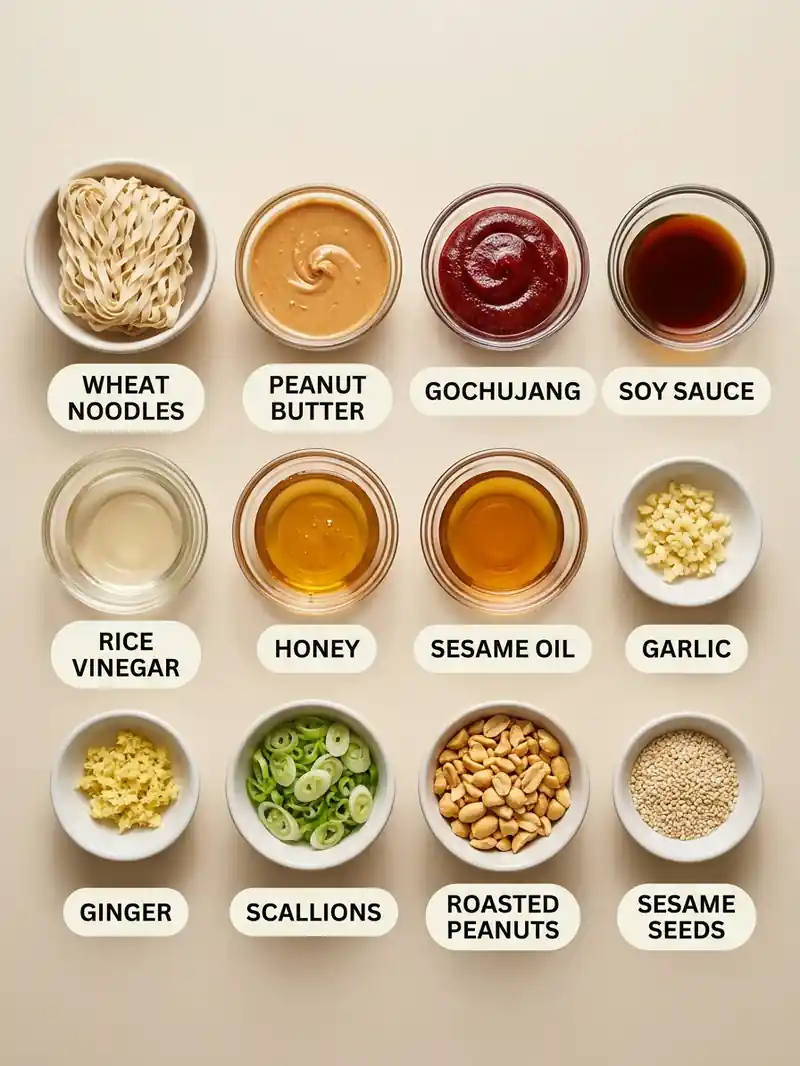
For tested 1-for-1 pantry swaps, use creamy almond butter or sunflower seed butter for a peanut-free bowl, tamari for gluten-free soy sauce, and pure maple syrup instead of honey for vegan spicy peanut gochujang noodles. Want a crisp handheld lunch alongside a half bowl? Pair it with our Chili Crisp Tuna Melt Wrap.
Why a 30-Second Garlic Bloom Makes Creamy Gochujang Peanut Butter Noodles Silky
When I cross-tested the top five online versions side by side, four of them mixed raw garlic and cold peanut butter in a bowl with plain water—leaving a sharp raw bite and a dull paste that thickened within two minutes. Blooming the garlic, ginger, and scallion whites in warm toasted sesame oil for 30 seconds melts away that harshness before the sauce ever hits the pan.
Sliding the skillet off the burner before whisking in the peanut-gochujang paste and 1/3 cup (80 ml) hot starchy noodle water keeps the peanut oils from splitting. Tossing the warm noodles over low heat for 45 seconds coats every strand to 165°F, aligning with USDA FoodData Central nutrition benchmarks and FoodSafety.gov safe serving temperatures.
Noodle Shape, Boil Time, and Starchy Water Guide
| Noodle Type (8 oz / 225 g) | Al Dente Boil Time | Starchy Water Needed | Sauce Cling and Texture Result |
|---|---|---|---|
| Dried Flat Wheat or Knife-Cut Noodles | 4 to 5 minutes | 1/3 cup (80 ml) | Ruffled edges trap the glossiest glaze on creamy gochujang peanut butter noodles. |
| Fresh or Vacuum-Packed Udon | 2 to 3 minutes | 1/4 cup (60 ml) | Plump, chewy strands release less starch and need slightly less water. |
| Dried Ramen Cakes (No Seasoning) | 3 minutes | 1/3 cup (80 ml) | Springy curls coat fast for quick 15-minute gochujang peanut noodles. |
| Medium Rice Stick Noodles (GF) | 4 to 5 minutes | 1/3 cup + 1 tbsp (95 ml) | Absorbs liquid rapidly as it cools; add an extra splash while tossing. |
Fixing Split Sauce, Fridge Storage, and Next-Day Cold Noodle Remix
- Sauce Looks Oily or Split: The skillet was too hot when the peanut paste went in; pull the pan off the heat and whisk in 1 tablespoon hot noodle water for 20 seconds until glossy again.
- Noodles Tighten After Sitting: Wheat strands keep absorbing moisture as they cool; toss with 1 to 2 tablespoons warm water right before serving to restore the silky sheen.
- Safe Storage and Reheating: Refrigerate cooled leftovers in an airtight container at or below 40°F for up to 4 days (avoid freezing at 0°F, which turns cooked wheat noodles soft); reheat covered in a skillet with 1.5 tablespoons water over low heat to 165°F.
For an effortless next-day lunch remix, turn chilled leftover gochujang peanut noodles into a crunchy cold sesame noodle salad with 1 tablespoon warm water, 1 teaspoon rice vinegar, julienned cucumber, and shredded purple cabbage. Planning a full takeout-style dinner spread? Serve these easy korean peanut noodles alongside our Dumpling Lasagna.
Quick 15-Minute Gochujang Peanut Noodles Summary
To make these 15-minute gochujang peanut noodles, start by mincing garlic, grating ginger, slicing scallions into whites and greens, and chopping roasted peanuts on your cutting board. Whisk smooth peanut butter, gochujang, low-sodium soy sauce, rice vinegar, and honey in a medium bowl while boiling 8 ounces of flat wheat noodles and saving 1/2 cup starchy water. Bloom the garlic, ginger, and scallion whites in toasted sesame oil for 30 seconds, pull the skillet off the heat, and whisk in the peanut paste with 1/3 cup hot noodle water until silky. Toss the warm noodles over low heat for 45 seconds and finish with scallion greens, chopped peanuts, and toasted sesame seeds.
Did you make these Gochujang Peanut Noodles with knife-cut wheat noodles or chewy udon? Leave a 5-star rating and comment below to share your favorite noodle pick!
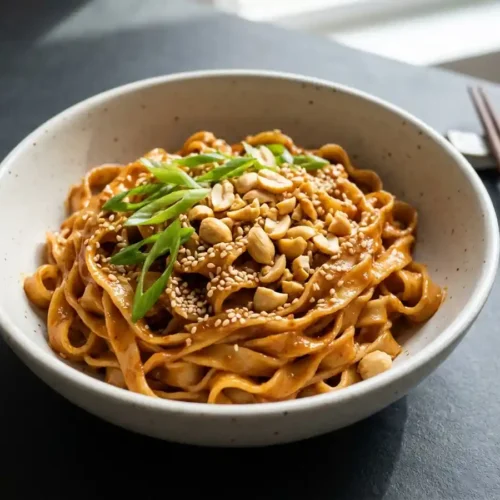
Gochujang Peanut Noodles (15-Minute Creamy Sauce)

Equipment
- Medium mixing bowl
- Fine-mesh strainer
- 12-Inch Cast-Iron or Nonstick Skillet
- Instant-read food thermometer
Ingredients
- 8 oz dried flat wheat noodles or udon noodles (225 g)
- 1/3 cup smooth creamy peanut butter (85 g)
- 2.5 tbsp gochujang Korean chili paste (45 g)
- 2 tbsp low-sodium soy sauce (30 ml), or tamari for gluten-free
- 1 tbsp unseasoned rice vinegar (15 ml)
- 1 tbsp pure honey (21 g), or maple syrup for vegan
- 1 tbsp toasted sesame oil (15 ml)
- 4 cloves garlic cloves (12 g), finely minced
- 1 tsp fresh ginger (5 g), finely grated
- 3 medium scallions (45 g), thinly sliced on a bias
- 1/4 cup roasted peanuts (35 g), roughly chopped
- 1 tbsp toasted white sesame seeds (9 g)
Instructions
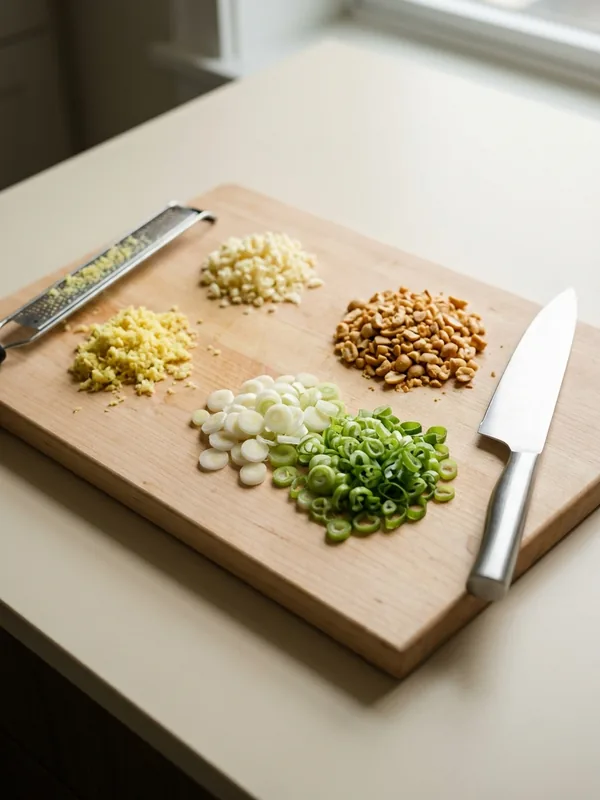
- Finely mince 4 garlic cloves, grate 1 teaspoon fresh ginger, thinly slice 3 scallions while separating the white and green parts, and roughly chop 2 tablespoons roasted salted peanuts on a cutting board.

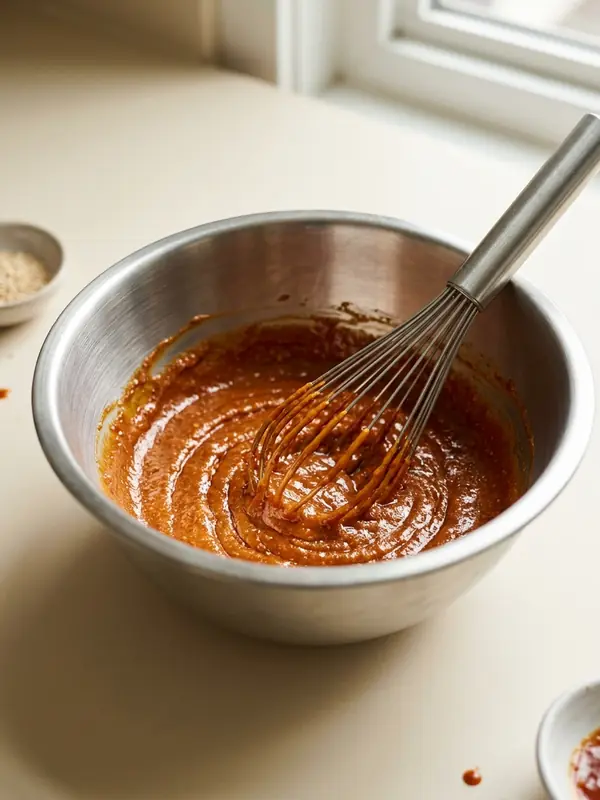
- Whisk 1/3 cup (85 g) smooth peanut butter, 2.5 tablespoons (45 g) gochujang, 2 tablespoons low-sodium soy sauce, 1 tablespoon rice vinegar, and 1 tablespoon honey in a medium bowl into a thick, uniform paste.
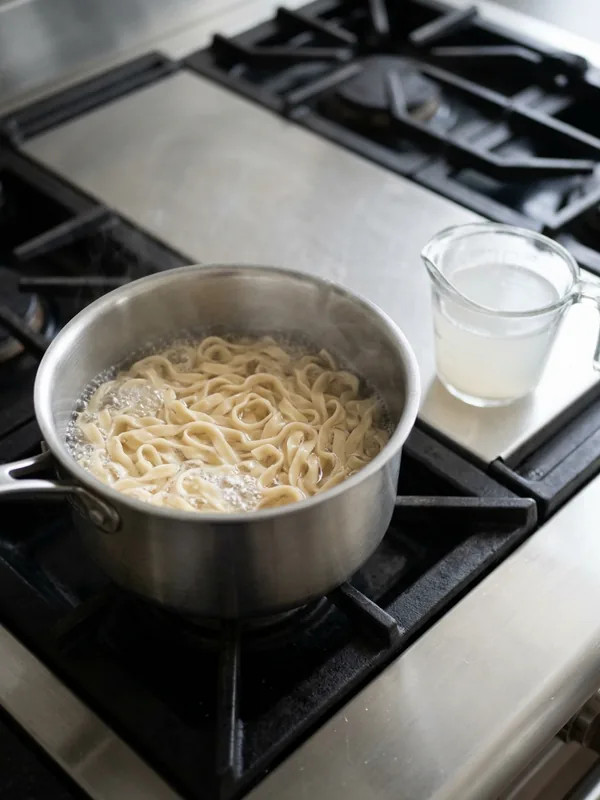
- Boil 8 ounces (225 g) dried flat wheat noodles in lightly salted water for 4 to 5 minutes until al dente, scoop out 1/2 cup (120 ml) cloudy starchy cooking water, and drain the noodles.
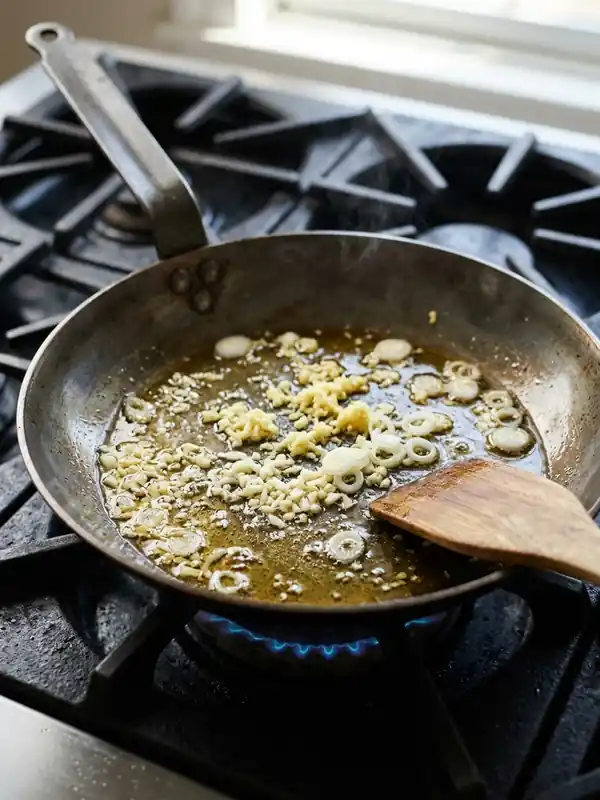
- Warm 1 tablespoon toasted sesame oil in a 12-inch skillet over medium-low heat, then stir in the minced garlic, grated ginger, and scallion whites for 30 seconds until fragrant without browning.
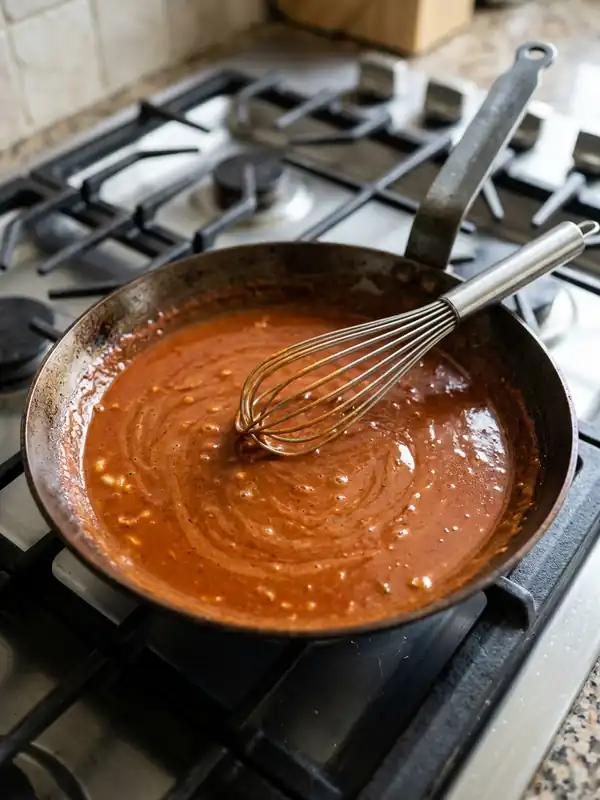
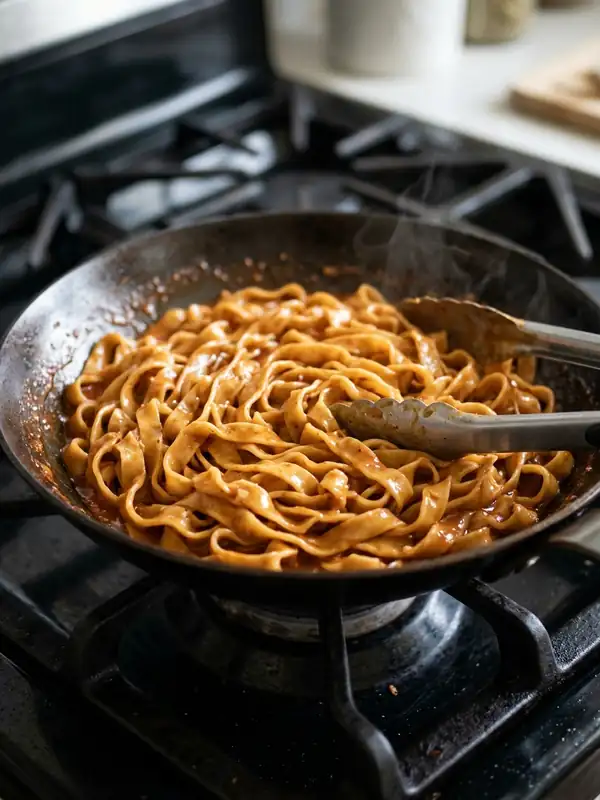
- Slide the skillet completely off the burner, add the peanut-gochujang paste and 1/3 cup (80 ml) hot starchy noodle water, and whisk briskly for 20 to 30 seconds until smooth, creamy, and glossy.
- Return the skillet to low heat, toss the warm noodles for 45 seconds until coated and hot at 165°F, then divide into bowls and top with scallion greens, chopped peanuts, and 1 teaspoon toasted sesame seeds.
Notes
Nutrition
Frequently Asked Questions
How do you keep gochujang peanut noodles from clumping?
Whisking hot starchy noodle water into the peanut-gochujang paste off the heat prevents clumping completely. Use 1/3 cup (80 ml) of cloudy cooking water for 8 ounces of noodles so the dissolved wheat starch binds the roasted peanut oils into a smooth, glossy sauce.
How spicy are spicy peanut gochujang noodles?
They deliver a balanced medium-warm heat because our 2-to-1 ratio pairs 1/3 cup creamy peanut butter with 2.5 tablespoons fermented gochujang and 1 tablespoon honey. For milder bowls, drop the gochujang to 1.5 tablespoons; for extra kick, add 1 teaspoon gochugaru chili flakes.
What noodles work best for 15-minute gochujang peanut noodles?
Dried flat wheat noodles, knife-cut noodles, and chewy udon work best for 15-minute gochujang peanut noodles because their wide surface holds the thick peanut-chili glaze. You can also use dried ramen cakes, spaghetti, or medium rice noodles—just save 1/2 cup starchy cooking water.
Can I make easy korean peanut noodles ahead of time for meal prep?
Yes, you can whisk the peanut-gochujang paste up to 5 days ahead and store it sealed at 40°F. Cooked easy korean peanut noodles keep for 4 days refrigerated and turn glossy again in 60 seconds when warmed with 1.5 tablespoons water over low heat.