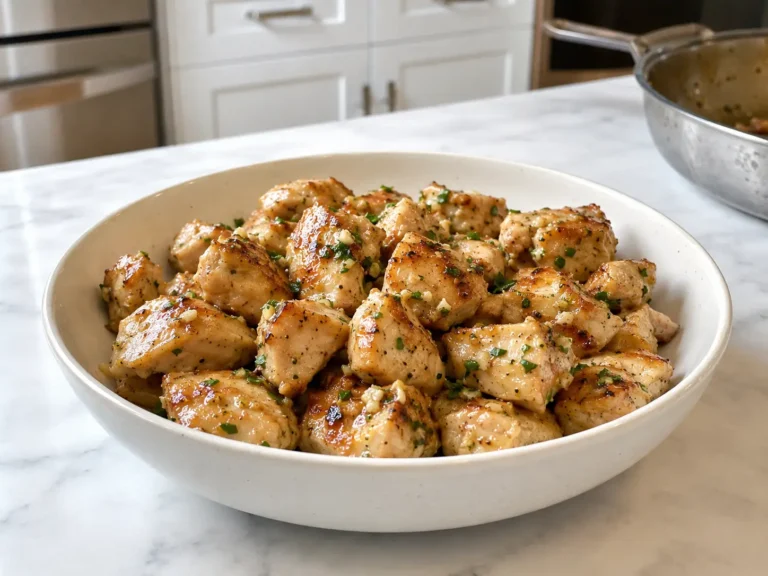
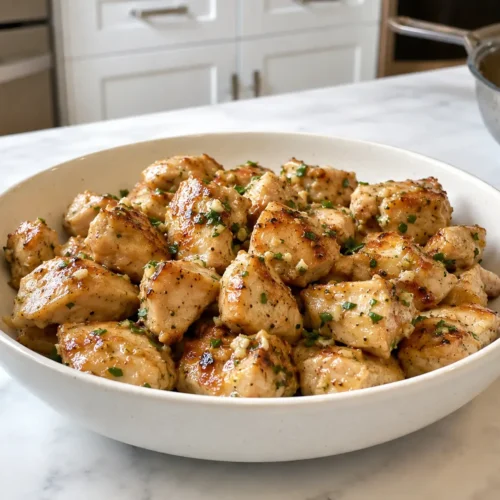
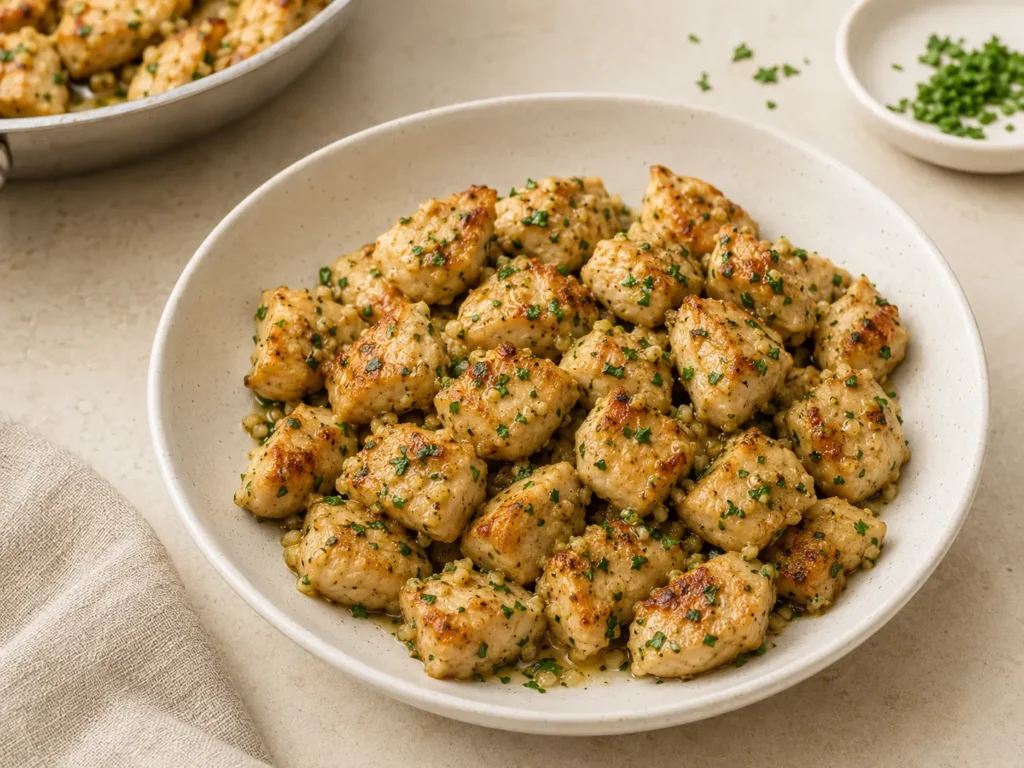
Garlic butter chicken bites deliver golden-brown, crusty edges and juicy centers in 20 minutes using one wide skillet and everyday pantry staples. Instead of steaming in crowded pan juices or scorching minced garlic over high heat, this method relies on three execution controls: patting 1-inch (2.5 cm) chicken pieces bone-dry before a light flour-and-spice dusting, searing in an uncrowded pan, and dropping the burner heat before the butter and garlic go in.
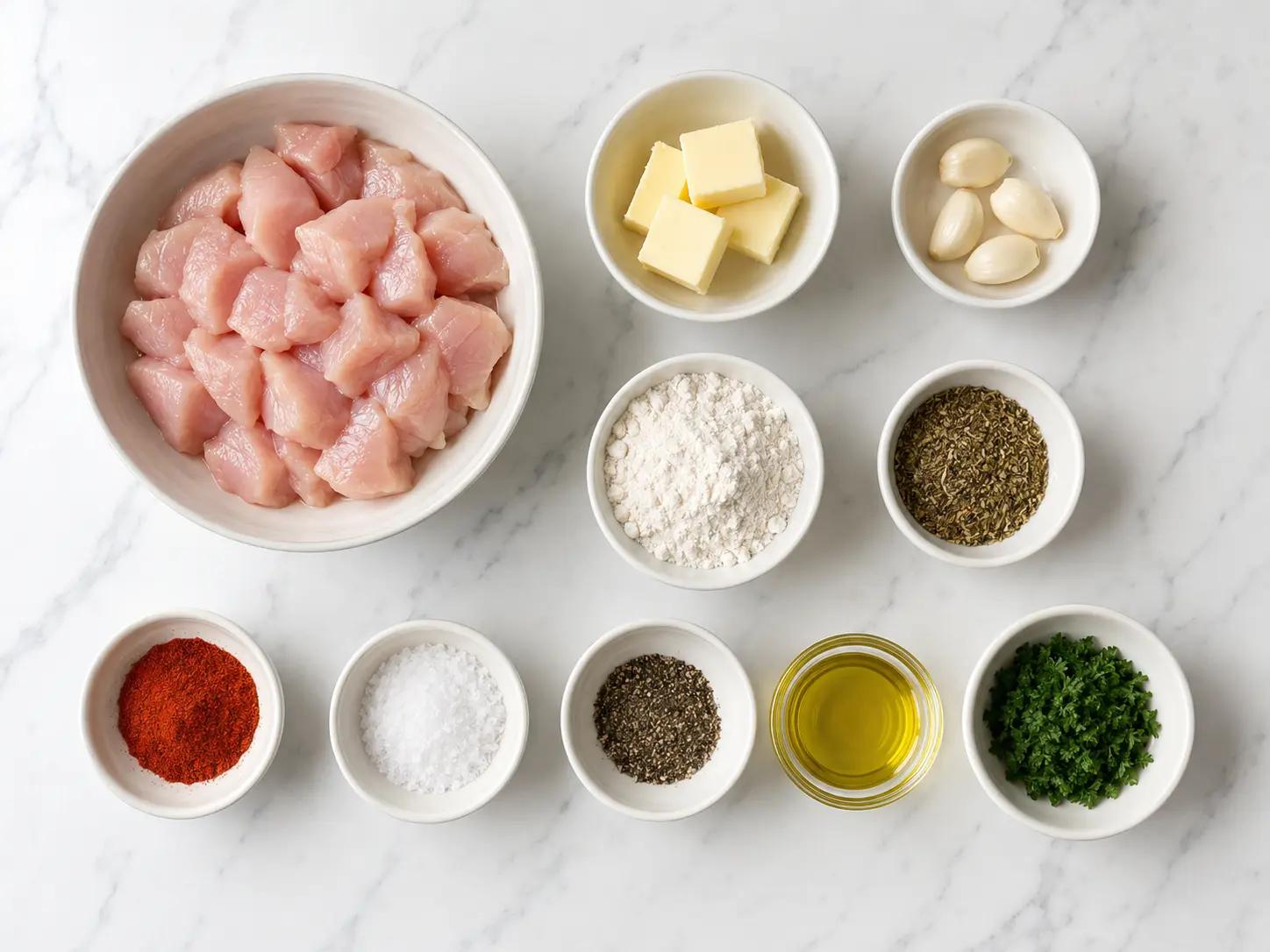
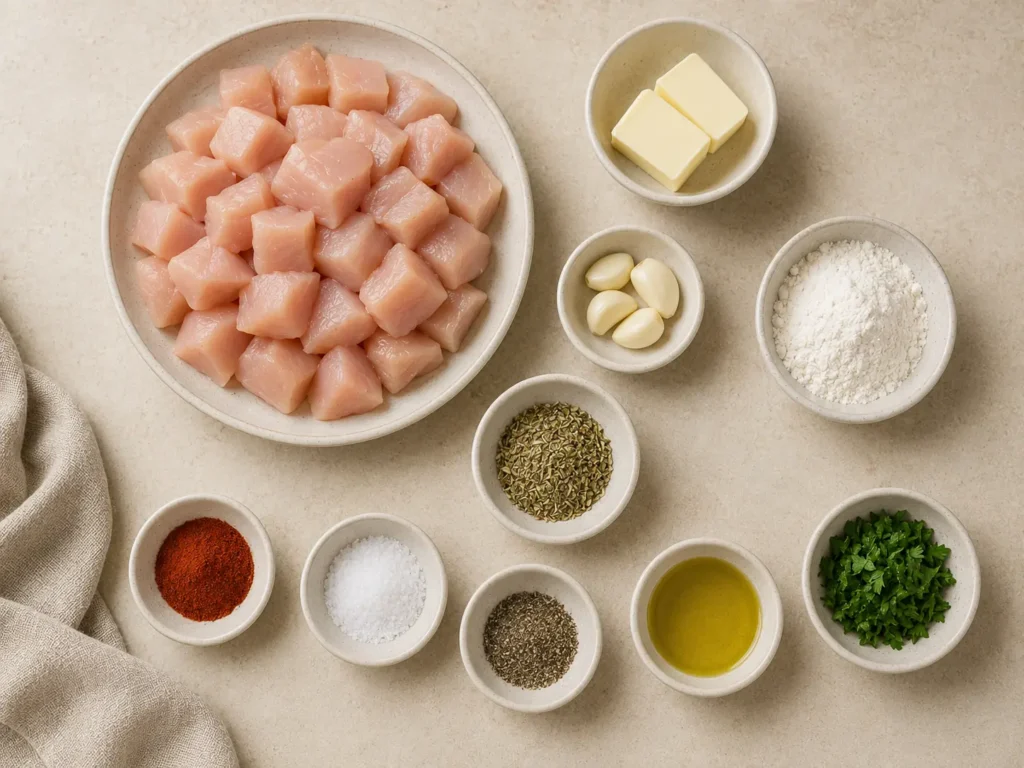
Key ingredients and practical swaps
Boneless, skinless chicken breasts (1 1/2 lbs / 680 g): Cut into uniform 1-inch (2.5 cm) cubes so every piece reaches doneness at the same moment. Boneless, skinless chicken thighs can be swapped in at the same weight and stay slightly richer, though they need an extra 1 to 2 minutes in the skillet.
All-purpose flour (2 tbsp / 16 g), Italian seasoning, and sweet paprika: A thin, dry dusting absorbs lingering surface moisture, accelerates Maillard browning, and gives the melted butter something to cling to so it forms a glossy pan glaze rather than pooling as loose grease. For a gluten-free swap, use 1 tablespoon (8 g) cornstarch; skip heavy breading, which turns soggy in butter.
Unsalted butter (3 tbsp / 42 g) and extra-virgin olive oil (1 tbsp / 15 ml): Starting the sear in olive oil prevents milk solids from burning during the high-heat browning phase, while finishing with whole unsalted butter builds a rich, spoon-coating emulsion. If you enjoy herb-forward finishes, you can also melt a slice of homemade garlic herb butter over the warm chicken right off the heat.
Fresh garlic (4 cloves / 12 g) and flat-leaf parsley (1 tbsp / 4 g): Finely minced fresh garlic releases aromatic allicin and natural sugars into the warm butter in 30 to 60 seconds. Pre-minced jarred garlic tastes muted and browns unevenly, so stick to fresh cloves here.
Why these chicken bites brown fast without drying out
Cutting lean chicken breast into 1-inch (2.5 cm) pieces triples its exposed surface area compared with whole cutlets. That extra surface area is an advantage only if evaporation happens immediately on contact with metal. When damp chicken hits a crowded pan, surface water must boil off at 212°F (100°C) before the exterior can reach the 300°F+ (149°C+) window required for Maillard browning—by which time the interior muscle fibers have already contracted and squeezed out their moisture.
A 2-tablespoon (16 g) flour dusting solves both problems at once: starch granules bind trace surface moisture during the initial sear and then gelatinize when deglazed with 1 tablespoon (15 ml) of water and foaming butter, creating a cohesive, velvety glaze without heavy cream.
Doneness cues: visual vs. internal temperature
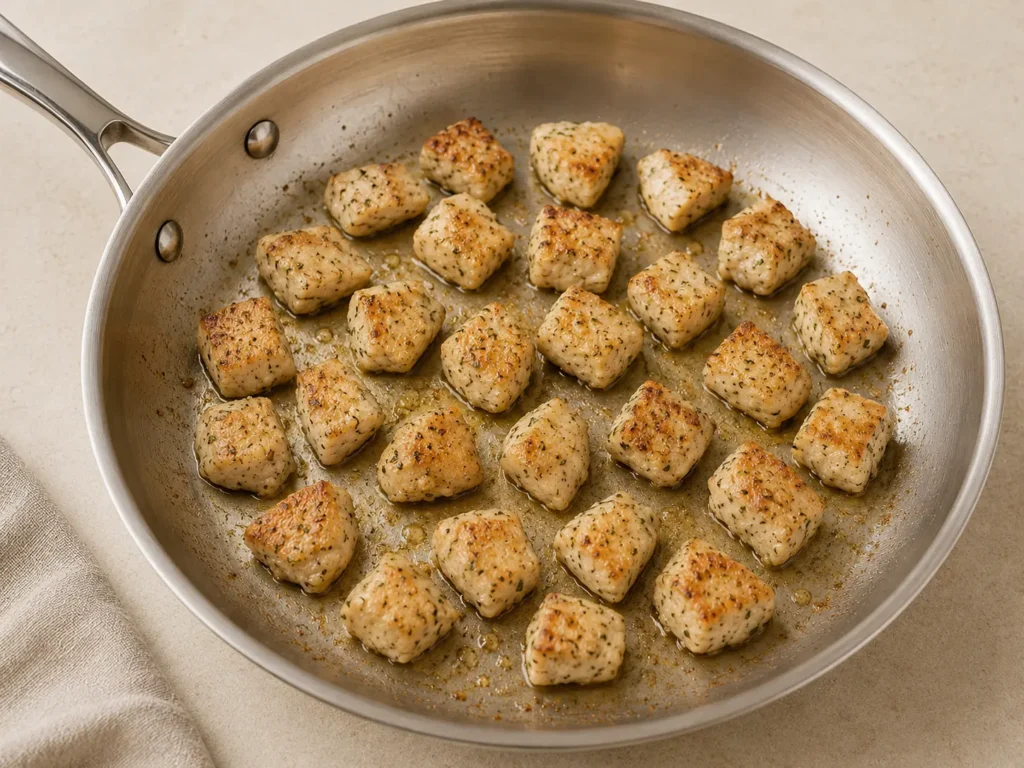
Visual and tactile cues: Properly seared chicken bites show golden-brown edges on at least two faces, opaque ivory sides with no translucent pink seams, and a slight spring when pressed with tongs. When the butter and minced garlic are tossed in over medium-low heat, the garlic should foam gently and smell sweet and nutty while remaining pale gold.
Verified food-safety endpoint: Because small cubes cook through rapidly, verify the center of the thickest piece with an instant-read thermometer and pull the skillet off the heat as soon as it reaches 165°F (74°C) per USDA Food Safety and Inspection Service guidelines. Leaving 1-inch breast pieces in a hot pan past 170°F (77°C) quickly turns the crumb dry and chalky.
Troubleshooting common issues
Problem: The chicken released gray liquid and steamed instead of browning. The pan was either overcrowded or the chicken was not patted dry before dredging. Use a 12-inch skillet so every cube has breathing room, or sear in two quick batches.
Problem: The minced garlic turned dark brown and tasted bitter. The garlic went into the skillet while the pan metal was still at high searing temperature. Lower the heat to medium-low first, add the cold butter so its water content cools the pan surface, and stir in the garlic for only 30 to 60 seconds.
Problem: The butter separated into an oily puddle instead of coating the chicken. High heat broke the butter emulsion. Splash in 1 tablespoon (15 ml) of water or broth off the heat and toss briskly so the gelatinized flour on the chicken binds the melted butter into a glossy glaze. If you want a richer cream-based pan sauce instead, pair the seared chicken with our garlic cream sauce.
Garlic Butter Chicken Bites Recipe
Garlic Butter Chicken Bites

Equipment
- 1 Large Skillet 12-inch stainless-steel or cast-iron pan
- 1 Knife for cubing chicken and mincing garlic
- 1 Cutting Board
- 1 Medium mixing bowl for dredging chicken
- 1 kitchen tongs for turning chicken pieces
- 1 Instant-read thermometer to verify 165°F (74°C)
Ingredients
For the Garlic Butter Chicken Bites
- 1 1/2 pounds boneless, skinless chicken breasts 680 g, patted dry and cut into 1-inch (2.5 cm) pieces
- 2 tablespoons all-purpose flour 16 g
- 1 teaspoon Italian seasoning 1 g
- 1/2 teaspoon sweet paprika 1 g
- 3/4 teaspoon kosher salt 4.5 g, plus more to taste
- 1/4 teaspoon freshly ground black pepper 0.6 g
- 1 tablespoon extra-virgin olive oil 15 ml
- 3 tablespoons unsalted butter 42 g, cut into 3 pieces
- 4 cloves garlic 12 g, finely minced
- 1 tablespoon water or low-sodium chicken broth 15 ml, as needed to emulsify the pan glaze
- 1 tablespoon fresh flat-leaf parsley 4 g, finely chopped
Instructions
Skillet Method
- Pat the boneless, skinless chicken breasts (1 1/2 lbs / 680 g) thoroughly dry with paper towels, then cut them into uniform 1-inch (2.5 cm) cubes. In a medium mixing bowl, toss the chicken pieces with the all-purpose flour (2 tbsp / 16 g), Italian seasoning (1 tsp / 1 g), sweet paprika (1/2 tsp / 1 g), kosher salt (3/4 tsp / 4.5 g), and black pepper (1/4 tsp / 0.6 g) until every surface is coated in a thin, dry, matte dusting.

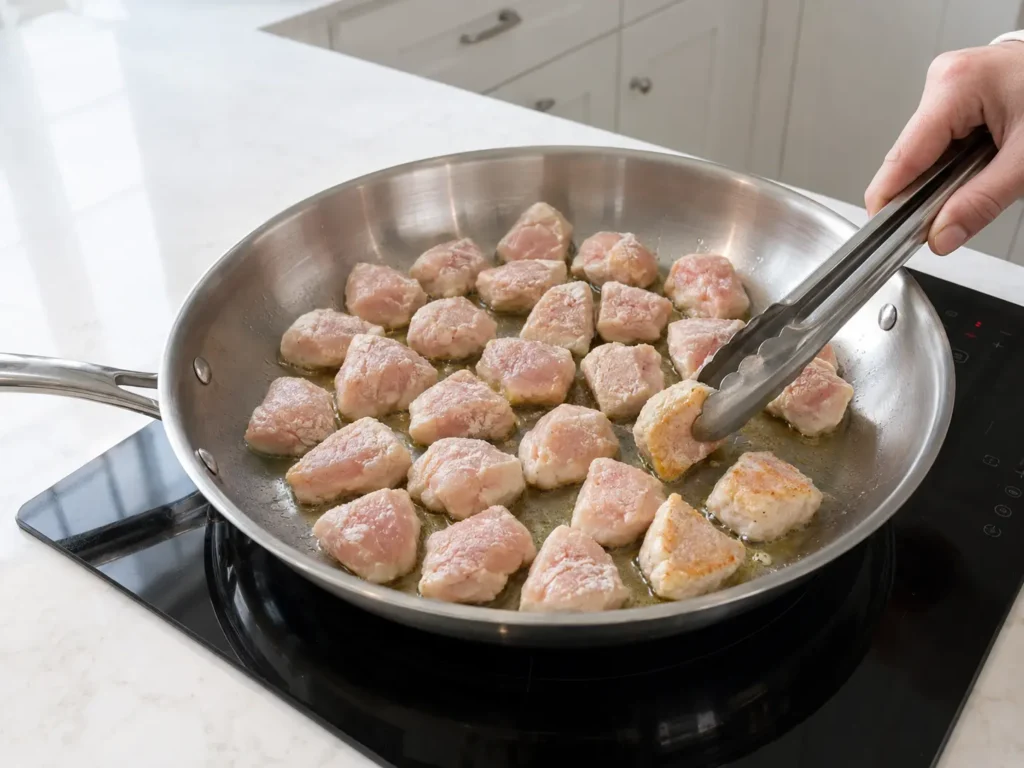
- Heat a 12-inch stainless-steel or cast-iron skillet over medium-high heat for 2 minutes, then add the extra-virgin olive oil (1 tbsp / 15 ml) and swirl until shimmering. Arrange the coated chicken pieces in a single uncrowded layer with space between cubes; cook in two batches if using a smaller pan so the meat sears instead of steaming.
- Sear the chicken undisturbed for 2 to 3 minutes until a golden-brown crust forms underneath and the cubes release cleanly from the pan. Flip with tongs and cook for another 2 to 3 minutes until lightly browned on the remaining sides and nearly cooked through (about 155°F / 68°C).
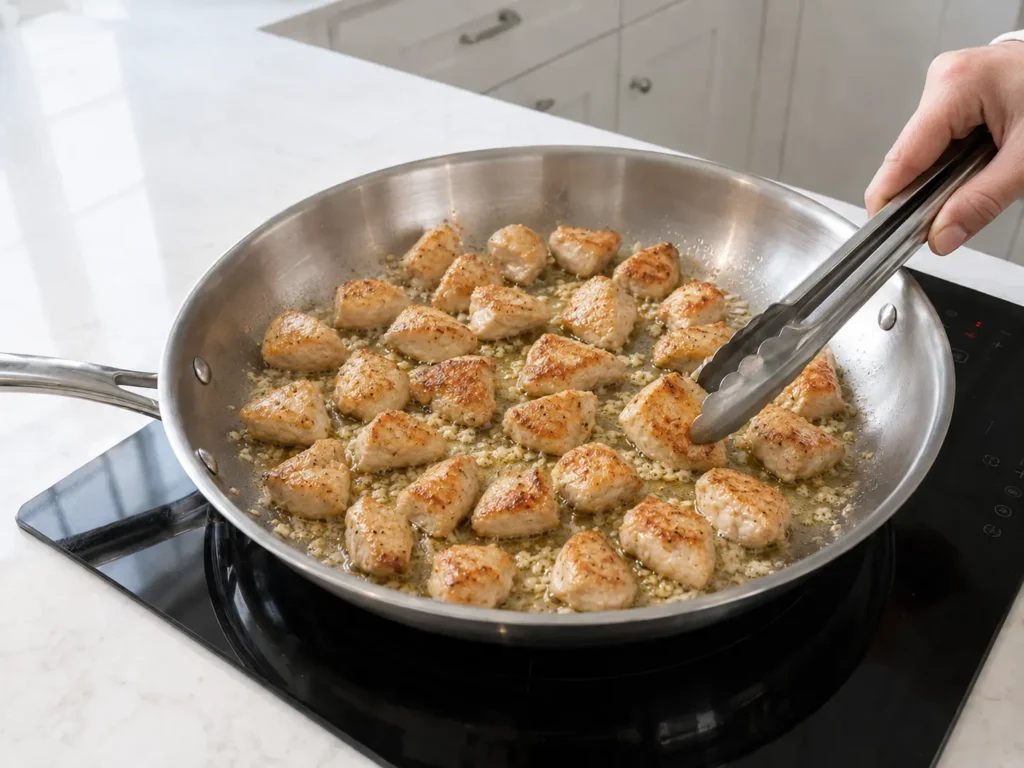
- Reduce the burner heat to medium-low and add the unsalted butter pieces (3 tbsp / 42 g) directly to the skillet. As the butter melts and foams, add the finely minced garlic (4 cloves / 12 g) and stir constantly so the garlic softens in the warm butter without scorching.
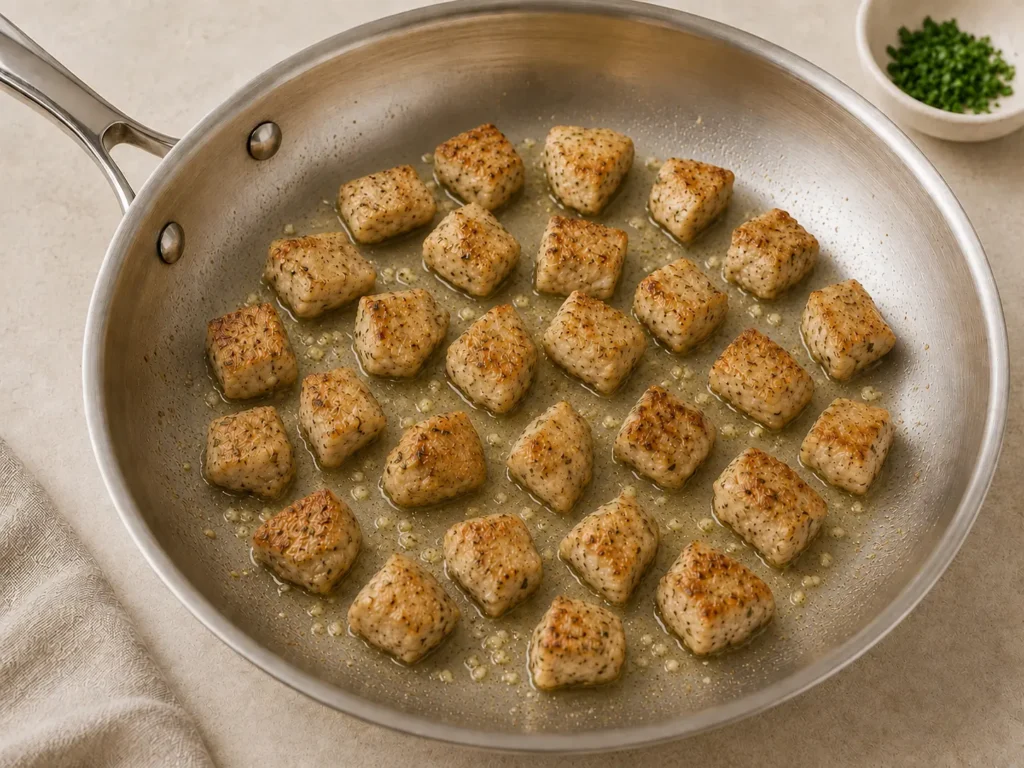
- Toss the chicken continuously in the foaming garlic butter for 30 to 60 seconds until the garlic smells sweet and aromatic. Add 1 tablespoon (15 ml) water or broth to deglaze the pan and form a glossy coating that clings to the chicken, stopping as soon as the thickest piece registers 165°F (74°C) on an instant-read thermometer.
- Remove the skillet from the heat immediately, scatter in the finely chopped fresh parsley (1 tbsp / 4 g), and toss once more. Taste and adjust salt and pepper if needed, then transfer the chicken bites and pan glaze to a warm serving dish right away.
Notes
Nutrition
How to store garlic butter chicken bites
Cool leftovers within 1 hour of cooking and transfer them to a shallow airtight container. Store in the refrigerator at 40°F (4°C) or below for 3 to 4 days in accordance with USDA leftover storage standards. You can also freeze cooled portions in freezer-safe bags for up to 2 months, though the butter glaze will be slightly less glossy after thawing overnight in the refrigerator.
Reheating and serving
Reheat chilled chicken bites in a skillet over medium-low heat with 1 to 2 tablespoons (15 to 30 ml) of water or chicken broth, tossing for 3 to 4 minutes until the sauce re-emulsifies and the internal temperature reaches 165°F (74°C). Serve hot over steamed jasmine rice, buttered egg noodles, or alongside our 20-minute garlic butter shrimp for a surf-and-turf skillet dinner.
Frequently asked questions
Can I use chicken thighs instead of chicken breasts?
Yes. Cut boneless, skinless chicken thighs into the same 1-inch (2.5 cm) pieces and allow 1 to 2 extra minutes of searing time. Verify the thickest pieces reach 165°F (74°C) on an instant-read thermometer.
Do I have to coat the chicken with flour?
The chicken will still cook without flour, but the thin 2-tablespoon dusting helps the cubes brown evenly and binds the melted garlic butter into a glossy coating. For a gluten-free swap, use 1 tablespoon (8 g) cornstarch.
How do I keep the garlic from turning bitter?
Lower the burner heat to medium-low and add the butter and minced garlic only after the chicken is already browned and nearly cooked through. Stir constantly for 30 to 60 seconds and splash in 1 tablespoon (15 ml) of water if the pan darkens too quickly.
How should I store and reheat garlic butter chicken bites?
Refrigerate cooled chicken bites in an airtight container at 40°F (4°C) or below for 3 to 4 days. Reheat gently in a skillet over medium-low heat with a splash of water or broth until warmed to 165°F (74°C).
1 thought on “Garlic Butter Chicken Bites (One-Skillet Dinner)”